
 +91-98558-85133
 +1(702)760-3099

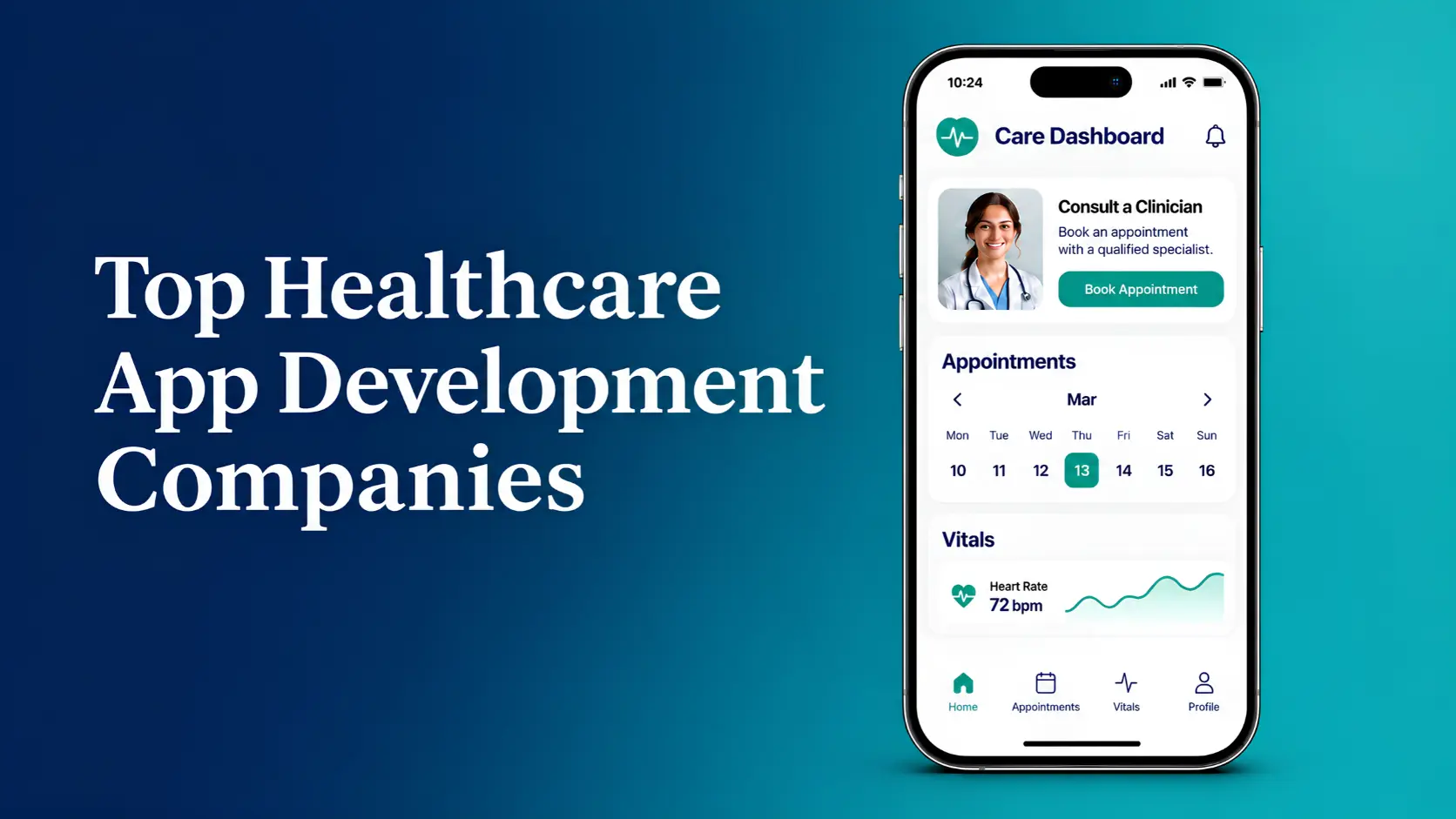

Choosing the right healthcare app development company requires evaluating its experience in building patient apps, telemedicine platforms, EHR/EMR integrations, and AI-powered healthcare solutions. This article compares healthcare app development companies based on their services, technical capabilities, team size, and client ratings.
The American Medical Association's 2026 physician survey found that 81% of physicians use AI professionally, up from 38% in 2023.
AI capabilities are becoming an important consideration when selecting a development partner.
01QUICK COMPARISON
Top Healthcare App Development Companies: Quick Comparison
Compare these companies by their founding year, team size, healthcare services, and client ratings.
| Company | Founded | Team Size | Healthcare Focus | Client rating |
|---|---|---|---|---|
| Trigma | 2008 | 200+ | Healthcare apps, telemedicine, AI, RCM | 4.9/5 |
| Octal IT Solution | 2007 | 300+ | Healthcare apps, EHR/EMR, telemedicine, RPM | 4.9/5 |
| Jafton | 2013 | 120+ | Mobile healthcare apps, telehealth | 5.0/5* |
| TechAhead | 2009 | 250–300 | Telehealth, EHR/EMR, remote monitoring, AI | 4.9/5 |
| GeekyAnts | 2006 | 450+ | Healthcare apps, EHR/EMR, telemedicine | 4.9/5 |
02THE SHORTLIST
Healthcare App Development Companies to Consider
These companies offer different capabilities across mobile app development, healthcare software, AI, and digital health. The following profiles explain their services and the types of healthcare solutions they can develop.
COMPANY 01 / 05
1. Trigma
FOUNDED
2008
TEAM SIZE
200+ engineers, AI specialists, designers, and strategists
CLIENT RATING
4.9/5
Trigma is a software development and AI solutions company that builds mobile applications, custom software, and AI-powered platforms for businesses across industries. Its AI healthcare app development services cover patient-facing applications, telemedicine, healthcare integrations, and Revenue Cycle Management (RCM) automation.
With a team of 200+ professionals and experience serving businesses across 20+ countries, Trigma supports the development of healthcare products from initial planning and UI/UX design to development, integration, and ongoing support.
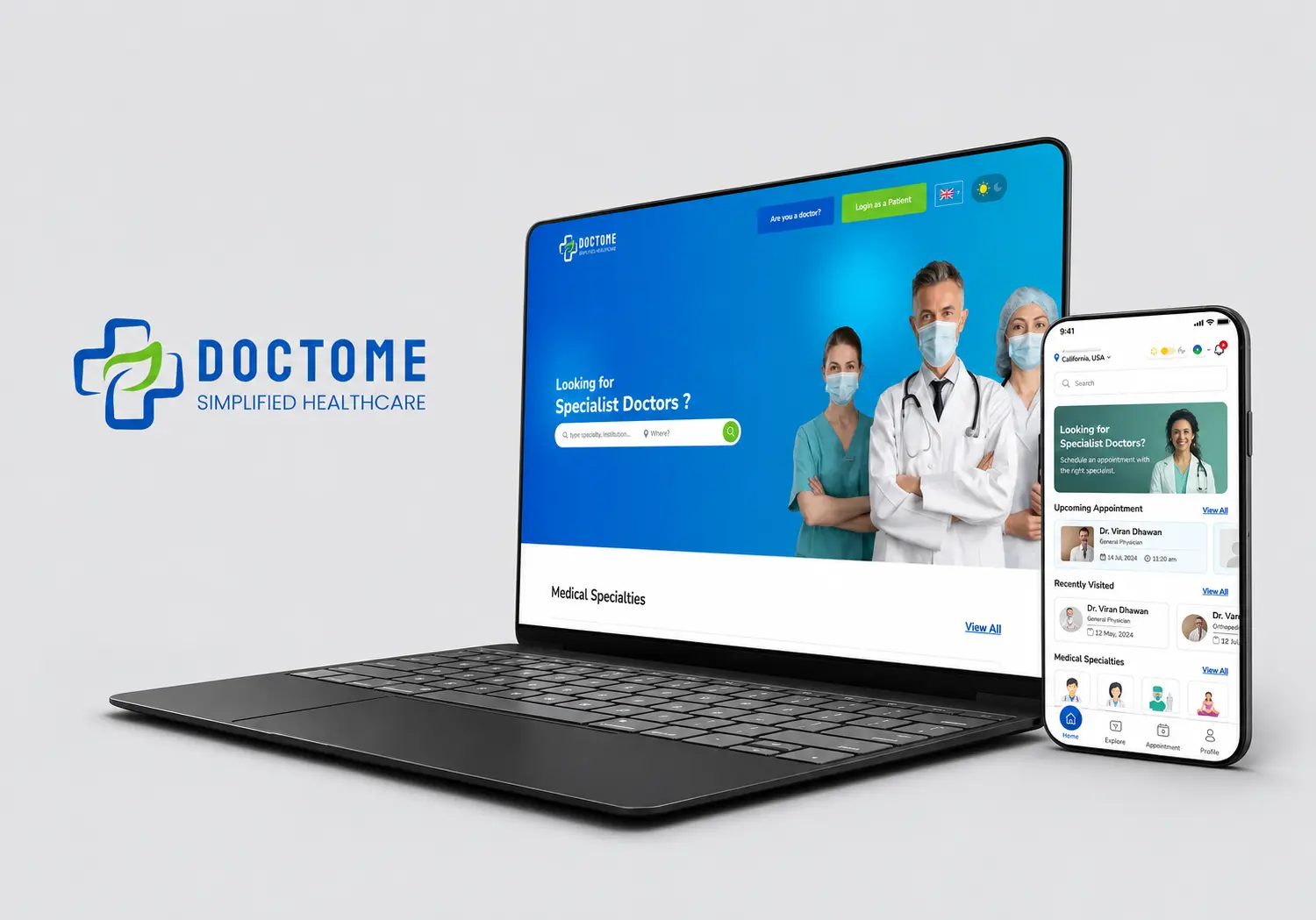
Its healthcare capabilities cover both patient-facing services and the administrative workflows behind healthcare delivery. For example, Doctome brings doctor discovery, appointment booking, virtual consultations, health records, messaging, reminders, and payments together in one telemedicine application. Trigma also offers AI-powered telemedicine solutions that support virtual consultations, patient engagement, and remote healthcare services.
For healthcare providers and RCM companies, Trigma develops AI-powered Healthcare RCM solutions that support authorization, billing, claims, and payer follow-ups. Its AI voice agents automate insurance calls, capture claim updates, and reduce manual follow-up work.
Trigma also has experience connecting business applications and healthcare-related systems, including data synchronization between e-commerce, order processing, scheduling, and ERP platforms.
Trigma has received strong client ratings and positive feedback across leading, reputable business review platforms. Its 4.9/5 client rating reflects feedback that frequently highlights communication, responsiveness, technical knowledge, and reliable delivery.
Expertise:
- Healthcare mobile and web app development.
- Custom healthcare software development.
- Telemedicine and virtual care platforms.
- AI-powered healthcare applications.
- Healthcare RCM software and automation.
- Agentic AI and AI voice agents.
- Healthcare system integration and data synchronization.
Why Consider Trigma?
- 200+ engineers, AI specialists, and strategists.
- Experience in custom software, mobile applications, and AI development.
- Development capabilities across patient care and healthcare operations.
- AI-powered RCM automation from case preparation to payer follow-up.
- Strong client feedback and established review reputation.
HEALTHCARE APP DEVELOPMENT WITH TRIGMA
Build Your Healthcare App
Build patient apps, connect healthcare systems, and automate routine insurance follow-up.
- HIPAA considerations
- EHR/EMR integrations
COMPANY 02 / 05
2. Octal IT Solution
FOUNDED
2007
TEAM SIZE
300+ professionals
CLIENT RATING
4.9/5
Octal IT Solution provides mobile app development, custom software development, and healthcare IT services for healthcare providers and HealthTech businesses. Its healthcare offerings cover applications for patients and providers, telemedicine platforms, EHR/EMR systems, and hospital and practice management software.
The company also develops pharmacy management applications and remote patient monitoring solutions. Its integration capabilities help connect healthcare applications with laboratories, pharmacies, wearable devices, and other third-party systems.
Beyond application development, Octal works with healthcare data management, interoperability, cloud technologies, analytics, and workflow automation. These services can support healthcare businesses looking to develop new digital products or improve their existing systems.
Octal has grown to a team of more than 300 professionals, with services spanning mobile development, AI, cloud, and enterprise software.
Expertise:
- Healthcare mobile and web app development.
- EHR/EMR and hospital management systems.
- Telemedicine and mHealth applications.
- Remote patient monitoring.
- HL7/FHIR integrations.
- Healthcare data management and workflow automation.
COMPANY 03 / 05
3. Jafton
FOUNDED
2013
TEAM SIZE
120+ professionals
CLIENT RATING
5.0/5*
Jafton is a software development company focused on mobile applications and custom digital products. It works with startups and established businesses on product development, from initial planning and design to development and ongoing support.
For healthcare businesses, Jafton's mobile development capabilities can support patient-facing applications, telehealth services, and digital tools for medical professionals.
Its broader services include product strategy, UI/UX design, iOS and Android development, web applications, and custom software. This makes the company relevant to healthcare startups looking to develop mobile-first products or bring a digital healthcare idea to market.
Jafton's company history states that it was founded in 2013 and grew to a team of more than 120 professionals working across eight countries.
Expertise:
- iOS and Android app development.
- Healthcare and telehealth applications.
- Web application development.
- Custom software development.
- Product strategy and UI/UX design.
- Digital product support and maintenance.
COMPANY 04 / 05
4. TechAhead
FOUNDED
2009
TEAM SIZE
250–300 professionals
CLIENT RATING
4.9/5
TechAhead develops mobile applications, web platforms, and custom software for businesses, including healthcare organizations and digital health companies. Its healthcare services cover telemedicine, remote patient monitoring, and applications that connect patients, healthcare providers, and medical devices.
The company also works with EHR/EMR integrations, IoT devices, cloud platforms, and AI-enabled analytics. These capabilities can help healthcare businesses connect clinical information, patient-facing applications, and remote monitoring systems.
TechAhead's wider development services include AI/ML engineering, mobile development, enterprise software, and cloud transformation. Its team of approximately 250–300 professionals supports businesses looking to develop or modernize digital products.
Expertise:
- Healthcare mobile and web app development.
- Telemedicine and virtual care.
- EHR/EMR integration.
- Remote patient monitoring.
- Healthcare IoT solutions.
- AI-enabled healthcare applications.
- Cloud engineering and software modernization.
COMPANY 05 / 05
5. GeekyAnts
FOUNDED
2006
TEAM SIZE
450+ publicly listed employees
CLIENT RATING
4.9/5
GeekyAnts is a digital product engineering company that builds mobile applications, web platforms, and custom software for businesses. Its healthcare services cover EHR/EMR development, telemedicine, patient portals, and applications for healthcare organizations.
Its healthcare app development capabilities include appointment management, patient and physician dashboards, health record access, video consultations, chat, payments, and medication management.
The company also works with healthcare data integration, interoperability, and AI-enabled product development. Its broader engineering services include cloud solutions, application modernization, and user experience design.
GeekyAnts has teams across India, the US, and the UK, with more than 450 employees publicly listed across its professional company profile.
Expertise:
- Healthcare mobile and web app development.
- Custom healthcare software.
- EHR/EMR systems and patient portals.
- Telemedicine and virtual care applications.
- Healthcare integration and interoperability.
- AI-powered product development.
03PARTNER SELECTION
How to Choose a Healthcare App Development Company
Choose a healthcare app development company that understands your workflows, protects sensitive data, and can connect the systems your business already uses.
Before selecting a development partner, consider these factors:
- 01
Healthcare Workflow Experience
Check whether the team understands the type of product you need, whether it is a patient app, telemedicine platform, EHR/EMR system, remote monitoring tool, or RCM software. - 02
Security and Privacy
Ask how the team handles authentication, access permissions, encryption, audit logs, data storage, and the privacy requirements that apply in your target market. - 03
Healthcare Integrations
Check whether the company can connect your application with EHR/EMR systems, laboratories, pharmacies, billing platforms, medical devices, and other tools. Ask about HL7 and FHIR where relevant. - 04
AI Development and Oversight
Discuss how the team tests AI outputs, manages data access, monitors performance, and routes uncertain or high-impact decisions to qualified professionals. - 05
Ongoing Support
Confirm who will maintain the application, manage updates, monitor performance, and support new features after launch.
04HEALTHCARE SOFTWARE
Types of Healthcare Apps and Software Companies Can Build
Healthcare app development companies build different products depending on the people who will use them and the workflows the software needs to support.
Patient-Facing Healthcare Apps
Patient-facing apps help people manage routine healthcare tasks, including booking appointments, viewing records, accessing prescriptions, receiving reminders, making payments, and contacting healthcare providers.
Telemedicine and Virtual Care Platforms
Telemedicine platforms let patients consult healthcare professionals remotely through video, audio, or messaging. They may also include appointment scheduling, digital prescriptions, follow-up messages, and access to medical records.
EHR and EMR Software
EHR and EMR systems give authorized healthcare users a place to store, update, and access patient information. They may connect with billing, laboratory, pharmacy, and other clinical systems.
Hospital and Clinic Management Software
Hospital and clinic management software supports patient registration, appointment scheduling, staff workflows, billing, inventory, and administration. The required modules depend on the size of the facility and how its teams work.
Remote Patient Monitoring Applications
Remote patient monitoring apps connect with wearables and medical devices to collect measurements such as blood pressure, glucose levels, heart rate, and oxygen saturation. Patients and care teams can use this information to track changes and decide when follow-up may be needed.
Mental Health and Wellness Applications
Mental health and wellness apps support online counseling, therapy scheduling, mood tracking, wellness programs, and communication with care professionals. Privacy and access to human support are important parts of these products.
Healthcare Revenue Cycle Management (RCM) Software
Healthcare businesses also need software to manage the financial side of patient care. Revenue Cycle Management (RCM) software supports the process from patient registration and insurance checks through claim submission, payment, and follow-up. Hospitals, clinics, medical billing companies, and RCM providers may use a single platform or connect several systems to manage these tasks.
05AI IN HEALTHCARE
Role of AI in Modern Healthcare Applications
AI helps healthcare businesses improve patient communication, support clinical teams, and reduce repetitive administrative work. Its value depends on the task, the quality of the information, and the level of professional review required.
01
Patient Communication and Virtual Assistants
AI assistants can answer common service questions, help patients find the right department, guide appointment requests, and send reminders. They should make it clear when a patient needs help from a healthcare professional.
02
Clinical Documentation and Information Support
AI tools can summarize records, organize clinical notes, and retrieve information from approved sources. Healthcare professionals should review AI-generated content before it is added to a medical record or used in care decisions.
03
Remote Monitoring and Predictive Insights
When connected to wearables and medical devices, AI can help identify patterns in patient measurements and flag readings for review. Alert thresholds, data quality, and escalation paths should be planned with the care team.
04
Administrative and RCM Automation
AI can support eligibility checks, document preparation, claim status follow-ups, denial information capture, and payer communication. These tools help staff handle repeatable work while specialists continue to manage exceptions, appeals, coding judgment, and other decisions that need human review.
06HOW TRIGMA HELPS
Building Healthcare Applications and Automating Healthcare Workflows With Trigma
Trigma brings together healthcare app development, AI engineering, custom software development, system integration, and RCM automation. This allows healthcare businesses to work with one development partner across patient-facing applications and the administrative systems that support care delivery.
Develop Healthcare Apps for Patients and Providers
Trigma develops mobile and web applications around the needs of healthcare businesses, patients, and medical professionals. These can include appointment management, patient portals, healthcare records, messaging, virtual consultations, and other digital services.
Doctome is one example of this work. The telemedicine application brings doctor search, appointment booking, virtual consultations, health records, messaging, reminders, and payments into one platform.
Trigma can also help businesses plan custom applications based on their existing workflows, user requirements, and integration needs.
Add AI Capabilities to Virtual Care
AI can make healthcare applications more useful by supporting patient communication, appointment handling, and healthcare information management.
Trigma's TellDoc AI is an AI-powered telemedicine solution that combines virtual consultations and appointment scheduling with automated triage and routing, AI-supported symptom analysis, personalized health recommendations, and dashboards for doctors and administrators.
These capabilities can help healthcare businesses build digital care services with AI features that support both patients and providers.
Connect Authorization Preparation With Payer Follow-Up
Trigma's AI healthcare RCM solution connects pre-authorization, case preparation, billing review, claim submission, and payer follow-up.
It organizes clinical notes, patient information, insurance details, and treatment records into a structured case file. Missing information can be flagged for review, helping RCM teams prepare cases faster. Trigma's solution is designed to make case preparation up to 10 times faster, while qualified professionals remain responsible for reviewing clinical documentation and billing codes before submission.
For insurance A/R worklists, AI voice agents can navigate payer IVRs, communicate with insurance representatives, and capture claim statuses, denial details, payment updates, and next actions.
The workflow also supports individual and batch calls, transcripts, call history, payer reference numbers, and reporting. This gives RCM teams a clearer record of payer communication and helps them manage pending accounts without placing every call manually.
Connect Healthcare and Business Systems
Healthcare businesses often use separate systems for patient services, scheduling, billing, orders, and internal operations. These systems need to exchange information accurately to avoid duplicate work and data mismatches.
Trigma provides custom integration and data synchronization services to connect business applications and existing platforms. Its AI healthcare app development capabilities support the development of connected healthcare applications. Its integration work includes connecting e-commerce, order processing, scheduling, and ERP systems for a prosthetics and orthotics business.
This type of integration capability is useful for medical technology and healthcare businesses that need information to move reliably between multiple applications.
07COMMON QUESTIONS
FAQs
Can a healthcare app connect with our existing EHR or EMR system?
Yes. A healthcare app can connect with existing EHR/EMR systems through supported APIs and data exchange standards such as HL7 and FHIR. The available integration depends on the system and its access requirements.
Can one development company build both patient apps and RCM software?
Yes. A development partner with healthcare application and RCM expertise can build patient-facing platforms as well as software for billing, insurance verification, claims, and payer follow-ups.
How can AI reduce manual work in healthcare RCM?
AI can help prepare authorization cases, organize clinical and patient information, check claim statuses, capture denial details, and automate routine insurance follow-up calls.
What should we consider before integrating AI into a healthcare app?
Check data privacy, system compatibility, model accuracy, user access, and human review requirements. Clinical and financial decisions should remain with qualified professionals where judgment is required.
What affects healthcare app development cost?
The main factors are application features, user roles, integrations, security requirements, platform support, and development complexity. AI features and connections to healthcare systems can increase the scope.
How long does it take to develop a healthcare application?
The timeline depends on the application scope, design requirements, integrations, and testing needs. A basic patient app generally requires less development than a multi-user platform with EHR integration, telemedicine, and AI features.
08NEXT STEPS
Build Healthcare Applications That Meet Your Needs
Choose a development partner that understands your users, workflows, integrations, and security needs, whether you are planning a patient app, telemedicine platform, connected healthcare system, or AI-powered RCM solution.
Trigma develops healthcare apps, AI-powered telemedicine, custom software, and RCM automation.


