performance icon
Top IT Services Company 2025 Top Software Developers 2025 Top Generative AI Company 2025 G2 High Performer Winter 2025 G2 Leader Winter 2025 AI Deployment Company 2024 Top Software Development Company in USA for 2024 Top ReactJs Company in USA for 2024
trigma-logo

RPA Use Cases You Need to Know in 2024

Did you know that companies across all fields are increasingly adopting RPA to drive higher efficiency and productivity in their operations?

With rapid growth, the market size of the RPA industry is expected to reach a staggering $14.745 billion by 2029. To understand the technology behind this growth, check out our Robotic Process Automation Tech Guide 2024. This guide offers a comprehensive overview of RPA tools, platforms, and implementation strategies. The growth is clearly driven by the immense potential of software bots, that not only perform their assigned work but also automate repetitive tasks and streamline operations.

In this blog, we will explore the 5 key applications of RPA across various industries. We'll also examine real-life examples of companies deploying RPA Automation to achieve unprecedented growth and productivity

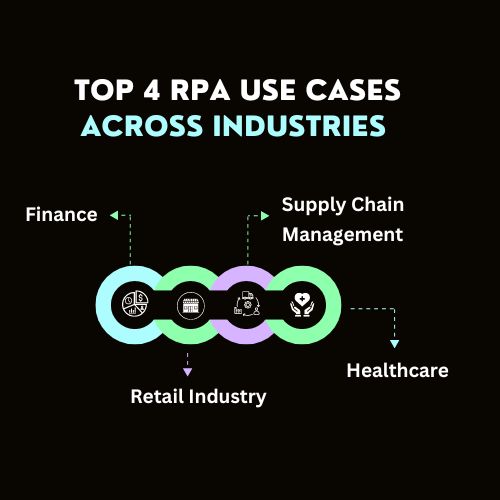
Top 4 RPA Use Cases Across Industries
Top 4 RPA Use Cases

RPA, with its groundbreaking technologies, is revolutionizing the tech ecosystem. Here are some impactful RPA use cases across various industries:

Finance

In the finance sector, RPA automates critical processes like invoice processing and regulatory compliance to enhance the accuracy of financial analysis and forecasts. 

Major Components:

1. Invoice Processing

RPA automates data extraction from invoices, validates purchase orders, and inputs data into financial systems. Example: A global bank achieved an 80% reduction in invoice processing time using RPA, resulting in cost savings and improved accuracy.

2. Regulatory Compliance:

RPA automates regulatory tasks like KYC (Know Your Customer) and AML (Anti-Money Laundering), ensuring organizational regulatory adherence and enabling institutions to focus on strategic tasks.

Healthcare

RPA in healthcare is projected to grow at 9.3%, reaching a valuation of $94 billion by 2033. It drives innovation by automating patient appointment scheduling, reminders, report generation, and record updates. This enhances efficiency and data management for healthcare providers.

Major Components:

1. Patient Scheduling

RPA bots can automate appointment scheduling, reminders, and follow-ups, reducing no-shows and optimizing resource utilization.

2. Data Management

RPA streamlines patient data handling, ensuring accurate and up-to-date records. This is crucial for efficient care delivery and informed decision-making.

Retail Industry

RPA is a game-changer for the retail sector, automating optimal inventory levels and enhancing customer service.

Major Components:

1. Inventory Management

RPA bots can monitor inventory, trigger replenishment orders, and manage pricing dynamically, ensuring optimal inventory levels and minimizing stockouts.

2. Customer Service

RPA-powered chatbots and virtual assistants provide instant support by automating customer query resolution and order tracking. This results in faster response times and customer satisfaction.

Supply Chain Management

RPA is optimizing supply chains across industries by streamlining order processing and manufacturing operations.

Major Components:

1. Order Processing

RPA bots can monitor inventory, trigger replenishment orders, and manage pricing dynamically, ensuring optimal inventory levels and minimizing stockouts.

2. Supply Chain Manufacturing

RPA streamlines vendor management, logistics tracking, and inventory management, resulting in enhanced coordination and reduced operational costs.

Real-World RPA Case Studies

Examining successful RPA implementations provides valuable insights and inspiration for your automation journey.

Cleveland Clinic

1. Cleveland Clinic 

Cleveland Clinic uses RPA to automate scheduling and patient data management. This automation improves patient satisfaction by streamlining scheduling processes and reducing waiting periods. Additionally, it reduces the workload on doctors, allowing them to focus on more important tasks.

Walmart

2. Walmart 

Walmart implemented RPA in their supply chain management by automating inventory management and order processing. This automation improved their accuracy, reduced situations of overstock and understock, and streamlined order processing, ultimately enhancing customer satisfaction.

ANZ Bank

3. ANZ Bank

ANZ Bank implemented RPA to automate repetitive tasks in their operations. This automation has reduced operational costs by 40% and increased overall efficiency by 50% by eliminating manual efforts.

Final Thoughts

RPA is not just a tool for efficiency but a pivotal shift in the digital transformation of the entire tech industry.  By automating mundane and repetitive tasks, businesses can drive growth in their businesses.

Whether you're in finance, healthcare, retail, or supply chain management, RPA offers a plethora of opportunities to streamline operations and achieve a competitive advantage. The case studies mentioned above demonstrate the tangible benefits that RPA can bring to your organization.

Still unsure whether RPA or traditional automation is the right fit for your business? Our blog post, RPA vs. Traditional Automation 2024: Which is Better?, offers a detailed comparison to help you make an informed decision.

Contact us to learn how we can help you automate your way to success.

RPA Vs Traditional Automation: Which is Better?

With the rapid changes in the business environment, automation has become a paramount technology for organizations. It is a critical component that enhances efficiency and productivity while reducing overall costs. Consequently, it provides a competitive edge in the field of automation. Among the various automation options available, Traditional Automation and Robotic Process Automation (RPA) stand out as essential and distinct approaches for businesses.

Traditional Automation involves using scripts and specialized tools to automate predefined tasks. This method requires deep integration with IT systems and coding databases, often leading to high costs and significant time investment. Additionally, it necessitates specialized expert guidance. RPA, on the other hand, automates repetitive and regular tasks using “bots”, minimizing human intervention and reducing costs. It also offers quick deployment and greater flexibility in adapting to environmental changes.

In this blog, we will delve into the key differences between RPA and Traditional Automation, exploring their unique benefits and limitations to help you decide the best fit for your organization.

What is Traditional Automation?  

Traditional automation involves using scripts and tools like batch files or scripting languages like Python, Powershell, to automate operations. It normally requires integration with various IT infrastructures and a vast coding experience.

Key Characteristics of Traditional Automation:

1. Scripted Tools

Relies on scripts and programming languages to perform tasks.


2. Integration Required

Needs deep integration with existing IT systems and databases.


3. Complex Implementation

Often complex and time-consuming to set up, thus requiring specialized skills.


4. IT Infrastructure Challenges

Adapting to changes in IT infrastructure can be challenging, putting up the need for significant programming.


3 Key Benefits of Traditional Automation

2. Customization

1. Customization

While designed for repetitive tasks, it can be tailored to meet the specific needs of businesses through reprogramming.

High Efficiency

2. High Efficiency

Traditional automation handles large-scale, repetitive tasks very effectively, reducing the time and effort required from humans to manage specific tasks.

High Scalability

3. High Scalability

Capable of handling complex workflows and large volumes of data, it is suitable for large organizations with intricate processes.

3 Key Limitations of Traditional Automation

1. High Development Cost

Requires highly skilled and trained personnel, resulting in high installation and development costs.

2. Limited Flexibility

Adapting to new processes in workflows is challenging and often requires costly and time-consuming programming.

3. Potential for Disruption

Updates and maintenance can lead to downtime or disruptions in automated processes.

What is Robotic Process Automation (RPA) Software?

Robotic Process Automation

Robotic Process Automation (RPA) involves using software bots to automate repetitive and regular tasks within an organization. These bots mimic human actions, interacting with applications and systems just like a human would. To get a deeper understanding of RPA technology and its applications, Check out our comprehensive Robotic Process Automation Tech Guide 2024.

RPA Key Characteristics:

1. Cost Efficiency

Requires little to no programming, making it accessible to non-technical users.

2. Quick Deployment

Can be implemented rapidly, allowing businesses to realize benefits quickly.

3. Adaptive and Flexible

Easily adapts to changes in processes and can be reconfigured without extensive coding

4. Cost-Effective

Reduces operational costs by automating tasks without the need for extensive coding or IT resources.

Key Benefits of Robotic Process Automation (RPA)

1. Higher ROI

Businesses can realize a good return on investment (ROI) due to the fast deployment and ease of RPA integration.

2. Improved Accuracy

Automating tasks reduces the chances of human error, increasing overall accuracy and data quality.

3. Cost-Effective

RPA requires lower development and maintenance costs, necessitating less technical expertise and a shorter time frame for implementation, as compared to traditional automation.

Key Limitations of Robotic Process Automation (RPA)

Complexity of Tasks

RPA is designed for handling straightforward and rule-based tasks. When it comes to complex decision-making,it may still require human expertise.

Security Challenges

As RPA bots interact with multiple systems, ensuring data security and access controls becomes important. For example, unauthorized access to sensitive information or accidental data leaks could occur.

RPA vs. Traditional Automation

In Which Scenarios Can RPA Be Advantageous?

1. Repetitive Tasks

RPA excels at automating tasks that are regular and repetitive in nature, allowing human resources to focus on more creative and innovative ideas.

2. Legacy System Integration

RPA can integrate with existing legacy systems used by organizations, reducing overall costs and avoiding costly upgrades.

3. Customer Service

Enables 24/7 customer support through chat bots or virtual assistants, resolving complex customer queries effectively and quickly.

4. Supply Chain Management

Tasks such as order processing, shipping, and inventory management can be automated through RPA, reducing errors and increasing efficiency.

5. Healthcare

Helps automate claims processing, patient data entry, and scheduling appointments.

6. Data Extraction and Processing

RPA can extract data from various sources, process it, and generate reports, reducing manual efforts and errors in data handling.

For real-world examples of how RPA is transforming these industries, explore our collection of RPA case studies across different industries.

Final Thoughts

Both RPA and traditional automation have their own set of advantages and are suited for different environments. Traditional automation excels in highly customized, large-scale tasks, while RPA offers agility, cost-effectiveness, and ease of implementation for repetitive, rule-based processes.

Choosing between RPA and traditional automation depends on your organization's specific needs, budget, and existing IT infrastructure. By carefully analyzing these factors, you can select the automation approach that best aligns with your goals and drives efficiency and growth.

Ready to take the next step in your automation journey? Contact us at Trigma for a free consultation to explore how RPA can transform your business.

How to Build a Finance App: A Complete Development Guide

The finance industry or fintech industry is growing at a faster pace. As per the Mordor Intelligence report ,it is expected to reach USD 312.92 billion by 2024. The growth rate of this industry is expected to be 14% by 2029.

Fintech, short for financial technology, is not just a buzzword but a game-changer, a revolution in the entire industry. With the recent fintech boom in the market, it has created a lucrative opportunity for investors, businesses, and startups alike. It is creating an impactful change in the entire market.

There are various successful startups that are billion-dollar companies today in the fintech industry. Some of them are Stripe, Paytm, Revolut, PayPal, Adyen, and many more. These companies identified opportunities and grabbed the market with their immersive solutions.

In this blog, we will discuss the finance app development process so that your business can also thrive in the market.

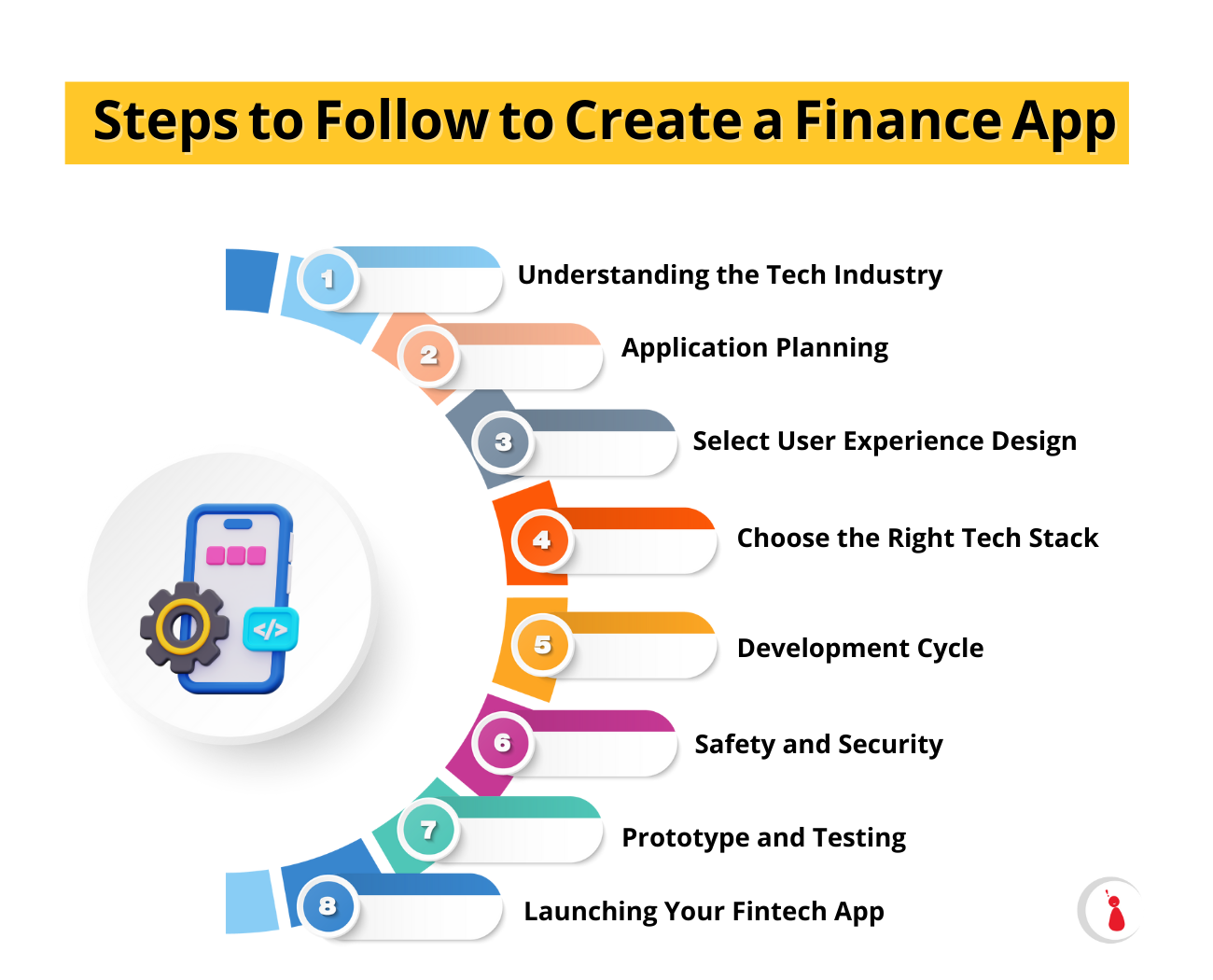
Steps to Follow to Create a Finance App

For developers and businesses, here is the complete guide to developing a responsive finance app.

Steps to create Finance App

1. Understanding the Tech Industry

The finance industry is the integration of technology into offerings in the financial services industry, enhancing and fulfilling customer experiences. It is a new way of doing business where financial services are provided to people by incorporating technology into their systems. Finance spans a wide range of technologies and services like banking, insurance, payments, cryptocurrency, investment, and lending. It is your choice which industry you are comfortable with and want to choose.

2. Application Planning

Application Planning includes conducting market research and identifying if your idea validates in the market. This step comprises identifying the need for your product and assessing whether customers genuinely want it, as well as identifying your major competitors. Application planning ensures selecting a niche for which you are serving in the market. It is an essential process for every company because here every company gets an idea if their idea has the ability to execute in the market or not.

3. Select User Experience Design

In the competitive finance world, it is important to know your customer's preference. For that, UX (user experience) is to be enhanced by UI (user interface). Your application should be good and interactive enough that it would be easily understood by your consumers. A good quality user interface helps to retain your customer and build brand loyalty in their minds. If you are able to build an application that is user-friendly then half of your work is done.

4. Choose the Right Tech Stack

Choosing the appropriate technology is helpful for the scalability, customer retention, and performance of your app. It includes selecting frontend, backend, and database technologies. Frontend (React.js, Angular, Vue.js) is responsible for the user-facing part of the app, backend (Node.js, Python, Ruby on Rails) is responsible for handling backend operations like payments, security, and privacy, and the database is responsible for storage structures and managing your app’s data.

5. Development Cycle

Development cycle is a crucial stage for any company because, in this stage, the whole idea is to be executed in the form of an application. To make this stage more helpful and exciting, companies use agile methodology, which means the whole project is divided into phases emphasizing continuous improvement in the application. This methodology provides companies with a sense of flexibility and adaptability in their project. It includes all the steps from selecting your niche to conducting market research to choosing the right tech.

6. Safety and Security

Security is paramount in the development of fintech apps, as they contain important and sensitive data which, if leaked or breached, can cause a huge violation to the company. Your application should be made in such a way that it properly regulates user data effectively.

7. Prototype and Testing

Most companies test their product in the market to validate the application design and functionality. It includes gathering feedback from the users about the interface and viability of the product. In this stage, the necessary feedback is taken, and then the final application, including all the changes, is designed for the final launch.

8. Launching Your Fintech App

After successful feedback, we draw out the changes in the application and make the app ready for launch in the market. This phase includes all marketing campaigns like advertising, social media marketing, banner ads, and content marketing to raise awareness about the application. Lastly, we gather feedback about the application launched and check its validation in the market.

Successful Companies in Finance 

Robinhood

Robinhood

Robinhood is a stock trading app that modifies access to financial markets by offering commission-free trades.

Success Factors

  • Right target market
  • Disruptive pricing model
  • Social media integration
PayPal

PayPal

PayPal is a global online platform that supports online money transfers and offers alternative options to paper currency trade. It modifies the whole transaction market by offering all payment options online.

Success Factors:

  • First mover advantage
  • Strategic collaborations
  • Continuous innovation
Square

Square

Square provides payment and point of sale (POS) options, enabling businesses to accept card payments through a simple portable device.

Success Factors:

  • Solving a pain point
  • User-friendly
  • Diversified ecosystem

The success stories of companies like Robinhood, PayPal, and Square highlight to us the importance of understanding customer pain points and delivering the best solutions in the market. Thus, businesses must continuously adapt to changes in the environment by leveraging technology and making continuous innovations in their applications.

Final Thoughts

In summary, the fintech industry is continuously evolving at a faster pace driven by innovation and technology. For the successful design of your app, you can partner with Trigma. We will offer you customized solutions that serve your needs and budget. Serving the tech market for the last 15 years, we will offer you the best solutions ensuring your investment is optimized, and  able to serve the user-friendly app.

Crafting a Fintech Solution

Robotic Process Automation (RPA) Tech Guide 2024

Do you want to reduce your operational expenses? Are you looking for a solution to handle your repetitive tasks efficiently?

Imagine a world where all your repetitive and routine tasks are performed by software with the highest efficiency and productivity. This world is no longer fiction but is becoming a reality through Robotic Process Automation (RPA).

RPA automates routine tasks using software robots. By deploying these robots into business systems, companies can enhance competence and significantly reduce their overall costs. As more organizations recognize the potential of RPA, its adoption is rapidly increasing, making it a transformative technology in the market.

In this blog, we will delve deeper into the fascinating world of RPA and explore its role in automating tasks.

What is RPA?

Robotic Process Automation (RPA) refers to the use of software robots or 'bots' to automate routine and repetitive tasks, enhancing performance within organizations. RPA often integrates with digital systems and software, enhancing customer service and operational activities.

Key Components of RPA

To understand RPA, it's important to know its major components:

Bots

  • Attended Bots: These bots work alongside humans and require human intervention at specific points to improve overall performance. 
  • Unattended Bots: These bots operate independently and perform scheduled tasks without human intervention.

Control Center

The control center is a centralized platform for managing, deploying, and monitoring robotic tasks. It ensures that all automated processes run smoothly and effectively.

Automation Workflow

This is a visual interface that facilitates the creation and implementation of workflows within an organization. It encompasses activities such as scheduling, deploying, and monitoring tasks.

Recorder

The recorder is a crucial component that involves recording human tasks for automation. It acts as a parameter for the activities to be performed by the bots, ensuring that the automated processes accurately replicate human actions.

These components work together to create a seamless and efficient automation process, allowing businesses to focus on more strategic activities while the bots handle routine tasks.

How RPA Works

For businesses and operators, understanding the detailed working of Robotic Process Automation (RPA) is crucial. Here's a step-by-step breakdown:

RPA Step by Step Guide
  • Process Identification

This step involves identifying the processes suitable for automation. It includes repetitive tasks, rule-based tasks, and target-based tasks.

  • Automation Workflow Design

This phase involves defining the steps a bot needs to follow for the automation work process. It ensures that the workflow is clear and efficient.

  • Bot Development

Bots are programmed to execute predefined automated tasks. This involves recording human actions to replicate them accurately in the bots' operations.

  • Testing

Bots are tested in a controlled environment to ensure their efficiency and productivity. This step is crucial for identifying and resolving any issues before deployment.

  • Deployment

Once tested and approved by management, the bots are deployed in a real environment to perform automation tasks.

  • Monitoring Tasks

Continuous monitoring ensures that the bots are functioning as expected. Regular maintenance allows for adaptation to changes in the environment, ensuring long-term efficiency and effectiveness.

By following these steps, businesses can successfully implement RPA, leading to enhanced efficiency and productivity.

Types of RPA

Understanding the types of RPA allows organizations to select the right approach based on their needs and processes. Here is a breakdown of the various types of RPA:

Attended RPA

Attended RPA involves bots that work alongside human employees and are typically triggered by human actions.

Characteristics
  • Real-time interaction with humans
  • Human decision-making
  • Provides assistance in tasks

Unattended RPA

Unattended RPA involves bots that operate without human intervention.

Characteristics
  • 24/7 operation
  • Capable of handling high-volume tasks
  • Does not involve human judgement

Hybrid RPA

Hybrid RPA combines both attended and unattended bots, allowing bots to work independently as well as with human intervention.

Characteristics
  • Flexibility in tasks
  • Requires both human judgement and automation
  • Enhances overall productivity

Cognitive RPA

Cognitive RPA incorporates artificial intelligence and machine learning to handle complex tasks that involve decision-making and can adapt over time.

Characteristics
  • Customer interaction
  • Fraud detection

By understanding these types, organizations can effectively choose and implement the most suitable RPA approach to optimize their processes.

Benefits of RPA for Businesses

RPA is significantly important for businesses, especially in light of new market trends and changes. Some of the key benefits are explained below:

Reduced costs

Cost Efficiency

RPA can substantially reduce costs by automating repetitive tasks. Bots operate 24/7 without breaks, leading to decreased manpower costs. This helps achieve scalability in operations and productivity, ensuring organizational growth.

Quality Assurance

Accuracy and Consistency

Using bots ensures a higher level of accuracy and reduces the risk of human errors. This guarantees that processes are executed accurately, enhancing the overall quality of output.

Fostering Innovation and Experimentation

Fosters Creativity and Innovation

By automating repetitive and routine tasks, RPA allows employees to focus on more productive and strategic tasks. This shift enables them to increase their creativity and fosters innovation, leading to the development of new solutions.

Flexibility and Agility

Flexibility and Adaptability

RPA can be integrated with existing systems and applications without requiring major changes to the IT infrastructure. This flexibility helps organizations automate a wide range of processes, ensuring they can adapt to changes in the environment.

By leveraging these benefits, businesses can optimize their operations, improve accuracy, and foster a culture of innovation and adaptability.

Applications of RPA

RPA is utilized in various industries and offers numerous benefits to stakeholders. Here is a list of some key industries and how they benefit from RPA.

Finance and Accounting

RPA assists in extracting data from invoices, validating information, and entering it into accounting systems. It ensures the accuracy of accounts by matching transactions of different types.

Human Resources

Automation helps in regulating and verifying new employee documents. Additionally, it ensures the payroll process is accurate and helps maintain an automated report of employee salaries.

Supply Chain Management

RPA helps regulate inventory levels by generating purchase orders when inventory reaches threshold levels. It streamlines order fulfillment and vendor management processes by ensuring proper order completion and the right onboarding of vendors with specific needs.

Healthcare

RPA automates patient data management and provides real-time conclusions. Tasks such as extracting data from systems and creating patient reports can be automated and efficiently handled by bots.

Banking and Financial Services

In banking, RPA automates processes such as loan processing and KYC (Know Your Customer). Bots improve customer satisfaction by understanding and resolving issues more accurately and promptly.

Banking and Financial Services

By implementing RPA, these industries can significantly improve efficiency, accuracy, and overall productivity, benefiting both the organizations and their stakeholders.

Challenges of RPA

In an ongoing and evolving tech market, RPA faces several challenges related to the automation of tasks. Here are some of the key challenges that businesses encounter:

Development of RPA

RPA bot development is a dynamic process. According to a survey, 69% of RPA projects fail to complete due to their complexity. Developing bots requires constant adjustments to meet changing demands and environmental conditions. While humans can easily adapt to changes, altering the entire IT infrastructure is much more challenging.

Change Management

Employees may resist changes brought by automation. This resistance can stem from fears of job loss or changes in their job roles. Employees often find it difficult to quickly adapt to new situations and technologies.

Bot Management

Effective management of bots is crucial for maintaining quality functioning. As the number of bots increases, the complexity of managing them also rises, making it a challenge for organizations to handle automation tasks efficiently.

Privacy and Security Risks

Automation involves handling sensitive information within the organization. Regular scanning and usage of this sensitive information can pose security risks and potentially harm the operational functioning of the organization.

By acknowledging and addressing these challenges, businesses can better navigate the complexities of implementing RPA and optimize their automation processes.

Future of RPA

The future of RPA looks promising, evolving continuously with significant changes and trends in the industry. There is ample scope and opportunity in the market for RPA's innovative solutions. Its integration with various technologies, including artificial intelligence, is advancing and addressing market challenges.

Implementing RPA systems can significantly improve efficiency and productivity across functions. Numerous industries are increasingly adopting RPA to enhance their operations. 

As RPA continues to evolve, businesses can expect greater efficiencies and innovations, making it a pivotal technology in driving operational excellence and competitiveness in the market.

Exploring ChatGPT-4o: The Future of AI Conversations

Imagine a world where you can have real-time conversations with technology—a technology that can perceive your emotions, understand your feelings, and address your problems just like a human. Wouldn't it be great to have access to such technology? Well, the wait is over!

Welcome to the era of “ChatGPT-4o.”

ChatGPT-4o, also known as ChatGPT-4, is the latest version of OpenAI's language model. This new flagship model is capable of real-time conversations, responding in a human-like manner, and understanding emotions to provide solutions to your problems.

OpenAI announced ChatGPT-4o on May 13, 2024. During a live demonstration, Mira Murati showcased its features, generating excitement in the tech market by significantly enhancing customer experiences.

Let’s dive deeper into what makes ChatGPT-4o so remarkable.

What Exactly is ChatGPT-4o?

ChatGPT-4o is the latest flagship model launched by OpenAI. Mira Murati introduced this technology at a global event in San Francisco, providing detailed descriptions of its features and innovations.

In ChatGPT-4o, the "o" stands for 'Omni,' representing the integration of text, voice, and vision into a single model. This innovation allows it to function more efficiently and deliver quicker results. ChatGPT-4o is a groundbreaking advancement in the tech industry due to its ability to revolutionize human-computer interaction with its expressive capabilities and understanding of emotions.

What are the Capabilities of ChatGPT-4o?

ChatGPT-4o introduces several new features that make it exciting and powerful. Here are some of its key capabilities:

Natural Language Processing

ChatGPT-4o significantly improves natural language processing capabilities compared to previous versions. It can understand and generate human-like content in real-time with high accuracy, effectively handling complex queries and generating the right responses for users.

Real-Time Interaction

This is a standout feature of ChatGPT-4o, allowing for real-time conversations and emotional engagement. The ability to generate real-time responses enhances user engagement by making interactions more meaningful.

Customization

ChatGPT-4o can be tailored to meet specific business and industry needs, providing customized solutions. This flexibility makes it an ideal tool for businesses looking to integrate AI into their services.

Real-Time Image Analysis

The new version of ChatGPT acts as a real-time image analysis. Users can share the images and receive observations in real-time. For instance, you can share pictures of trading charts, and ChatGPT-4o can analyze and provide insights on stock performance, offering real-time market scenario updates.

4 Industry Use Cases of ChatGPT-4o

Let’s find out how ChatGPT-4o excels in diverse fields by exploring these key industry applications.

Education - ChatGPT-4o

Education

ChatGPT-4o can significantly enhance the education sector by solving students' live queries. It provides the right solutions and relevant support materials, creating a favorable learning environment. This technology can revolutionize education by enabling students to solve their problems through tech, without needing a mentor. It can create quizzes and act as a personal tutor. Students can access any study material or course at any time with ChatGPT-4o.

Fitness - ChatGPT-4o

Fitness

Your fitness journey can easily be monitored with the help of ChatGPT-4o. It acts as a personal coach by providing a tailored roadmap and identifying any common mistakes in your fitness routine. By analyzing your body movements and guiding you on the correct posture, ChatGPT-4o offers live feedback to help you focus on areas that need improvement.

Digital Marketing - ChatGPT-4o

Digital Marketing

ChatGPT-4o can enhance your SEO efforts by suggesting the right keywords and meta descriptions, improving your website's search rankings. It helps in data analysis by identifying trends and insights, aiding in forming effective marketing campaigns for consumers

Customer Service Support (ChatGPT-4o)

Customer Service Support

ChatGPT-4o automates customer service, creating more realistic and interactive conversations. It answers queries in real-time, enhancing user experience and reducing customer wait times. By providing a personalized support system, ChatGPT-4o adds significant value to customer service.

How Much Does ChatGPT-4o Cost?

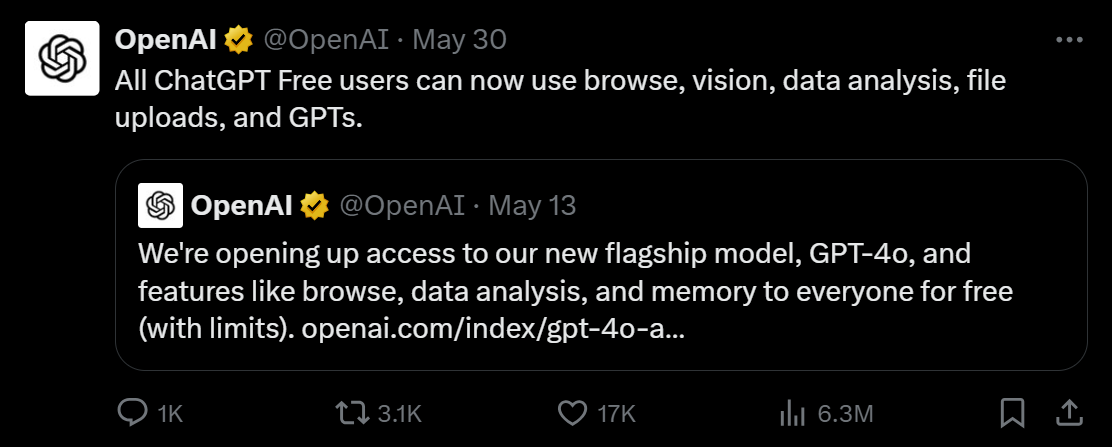
OpenAI's latest flagship initiative, ChatGPT-4o, is available to users for free, offering the same features to free users as paid ones. While earlier ChatGPT models restricted certain features to paid users, ChatGPT-4o aims to give access to free users too (with limits). However, free usage comes with limitations on searches.

Here is the official announcement from OpenAI regarding access.


Open AI

In summary, ChatGPT-4o is a significant innovation in the tech industry, offering various benefits and bringing transformation to multiple sectors. Its real-time interaction and feedback features are particularly effective. By understanding emotions and providing precise answers, ChatGPT-4o represents a massive leap forward in technology. Utilizing ChatGPT-4o can offer numerous advantages for businesses, aiding in operational growth and efficiency.