+91-98558-85133
 +1(702)760-3099

60 Second Summary
- AI tutoring software delivers personalized, one-on-one learning using ML and NLP.
- Lessons adapt in real time, with gamification to boost engagement.
- Educators get instant insights into student progress and identify learning gaps.
- Building an AI tutor needs clear goals, the right tech stack, and strong data privacy.
- Trigma helps EdTech businesses build scalable, secure AI tutoring platforms that improve learning outcomes and engagement.
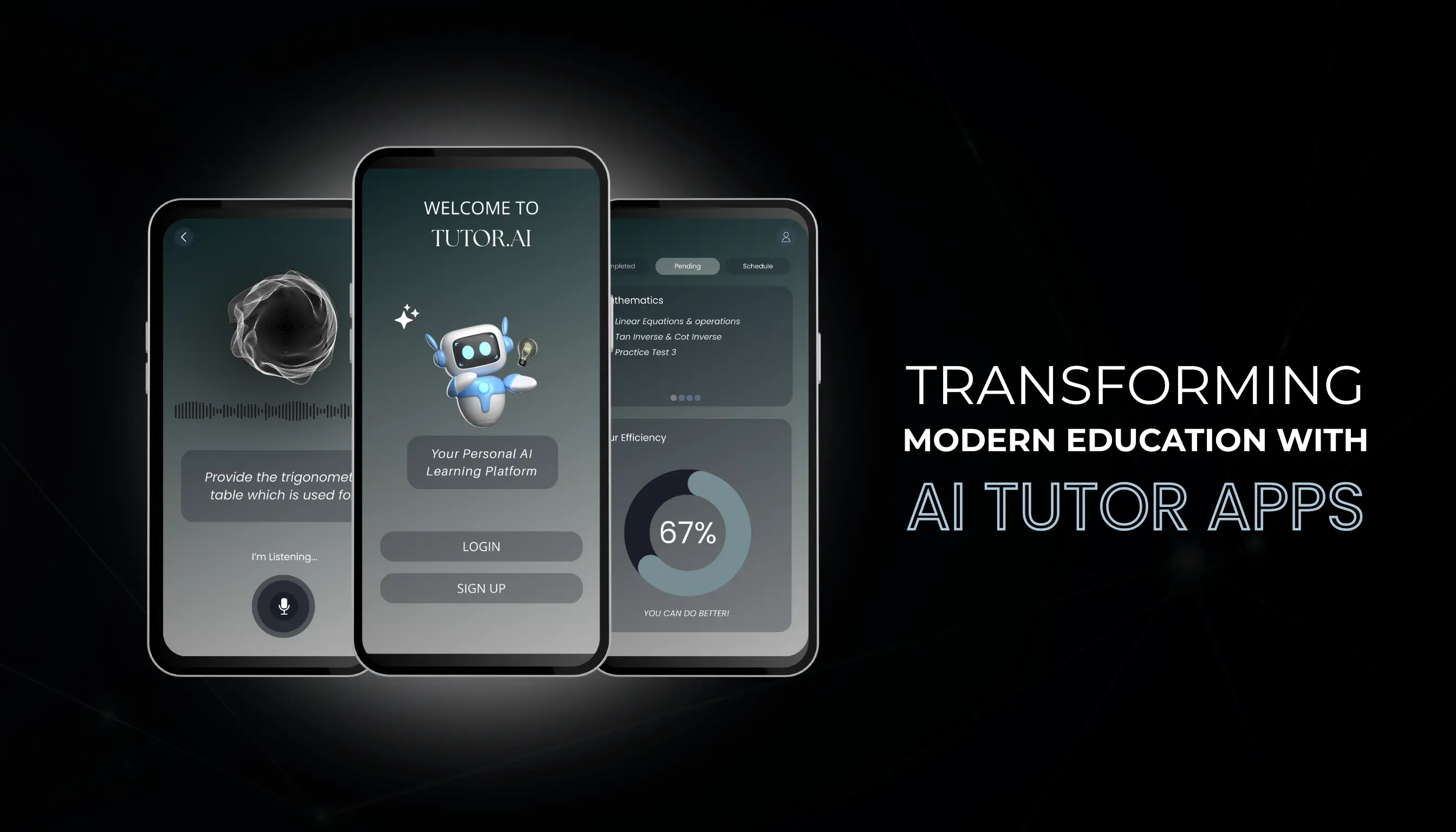
What happens when every student gets a personal tutor available 24/7, infinitely patient, and tailored to their learning pace?
That's exactly what AI tutor apps are making possible today. In an era where one-size-fits-all education no longer works, AI-powered tutoring software is reshaping how students learn and how educators teach.
In this blog, we'll explore how AI tutor apps are transforming education, the key use cases behind them, and why EdTech leaders are racing to build smarter, more personalized learning platforms.
An Overview of AI Tutoring Software
An intelligent tutoring system is a kind of AI-powered software designed to provide one-on-one instruction and feedback to students.
Much like a human tutor, this AI based learning platform aims to replicate the effectiveness of human tutoring by giving students personalized feedback and even planning the curriculum while keeping everything at their pace.
These tutoring systems use intelligent capabilities such as natural language processing and machine learning and turn learning into a game like experience.
Results? Better grades, more focus, and a love for learning. And teachers can track progress instantly.
But this is just the start of how Artificial Intelligence in education is turning learning into interactive experiences, assessing what a student knows and doesn't know, and then filling those academic gaps.
Use Cases of Building an AI-Powered Tutoring Solution
Tools such as Generative AI are transforming the way education is delivered, reducing the workload of educators and creating customizable resources for students according to their unique needs.
Here's why building such AI-powered learning platforms not only improves the teacher’s efficiency but also makes learning more personalized.
Creates Personalized Learning Paths for Students
Every learner has different routes to success. While some want to keep their fundamentals strong, others want to hone their advanced concepts.
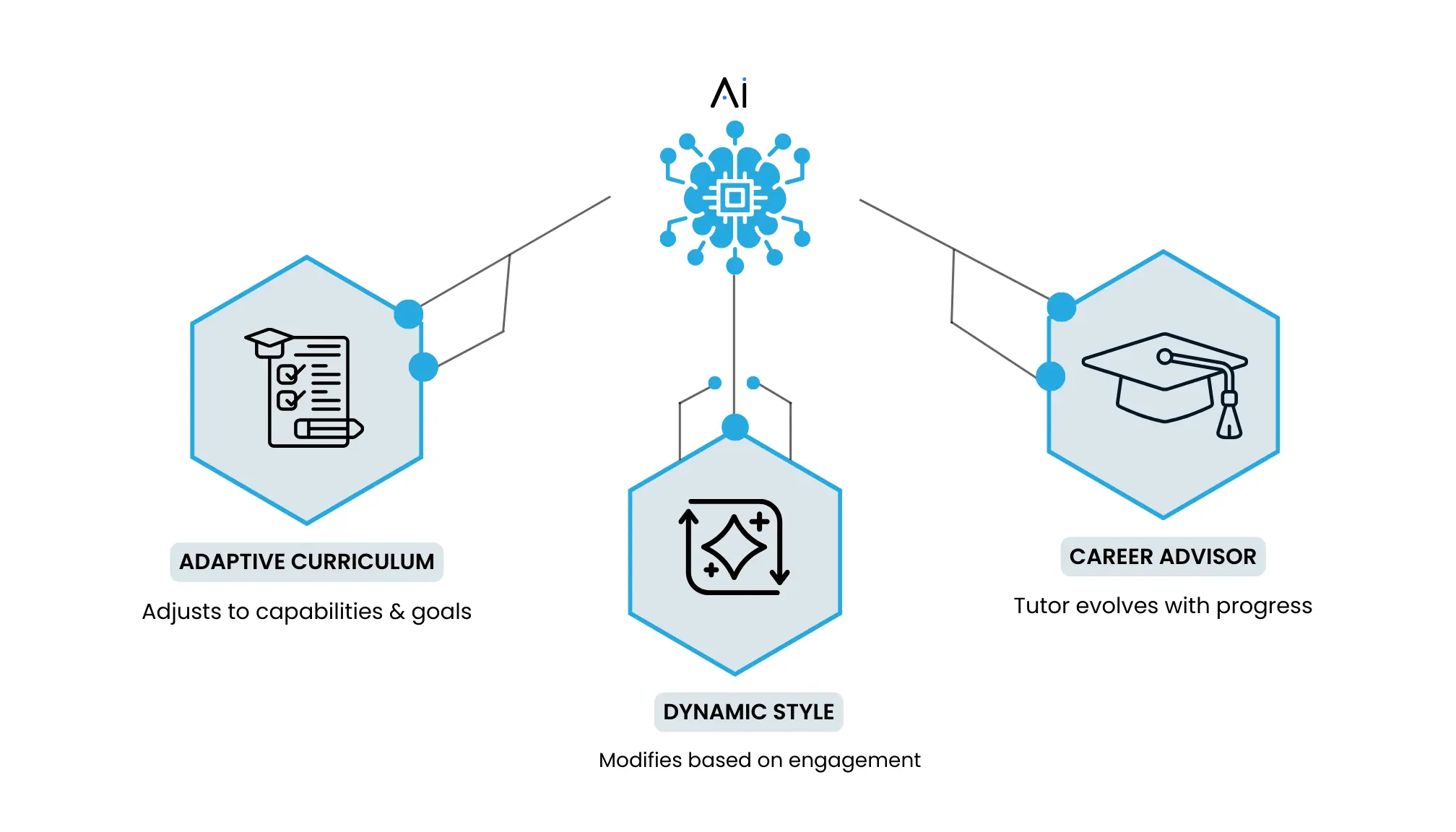
That's where AI steps in by building personalized learning paths for students. This means learning has become smarter and faster where teachers can:
-
- Adapt to each learner's capabilities
- Change the course curriculum according to the learner's changing needs
- Modify the learning style based on the learner's engagement
Greg Hart, Coursera CEO, shares that his learning platform "Coursera" follows a personalized approach.
"At the time of onboarding a student on our platform, we ask them as many relevant questions as are needed for us to know what type of courses we can offer.
Like we would ask them:
-
- Your current job
- Your current objective
But his vision is to make personalization an ongoing process on the Coursera platform. Greg wants to keep learning from how users interact with AI coaches and then use that information to better match their goals.
In the future, that coach will later convert into an AI career advisor because that AI tutor knows the ins and outs of a student's learning progress, their educational background, etc.
Adaptive Learning Pathways
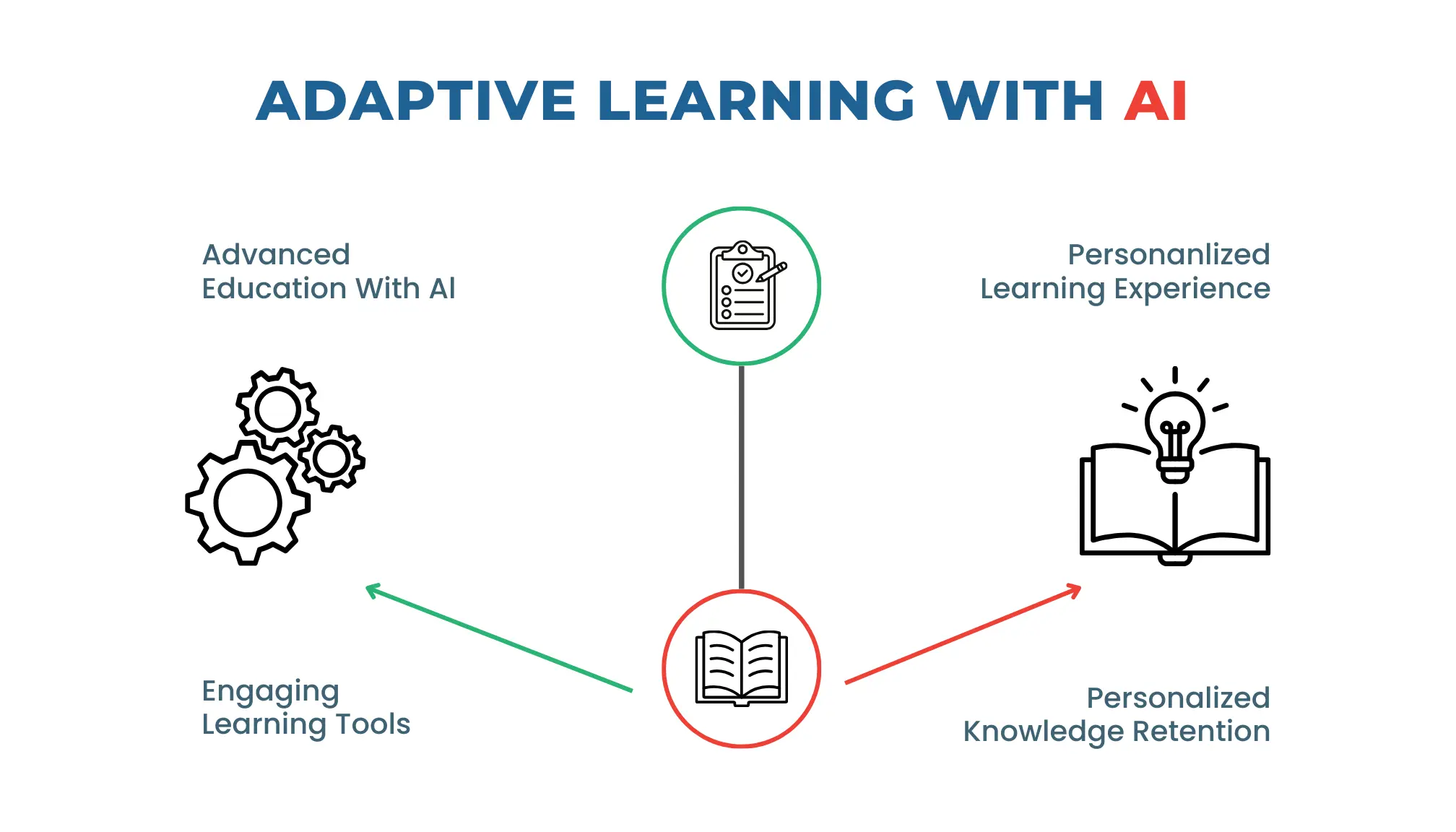
In traditional classrooms, students can raise their hands, challenge the teacher, and get their doubts solved, but learning is confined to the classroom setting.
AI learning platforms, however, keep the conversations going and make learning more adaptive, personalized, context-aware, and engaging.
How? They don't just create content or deliver lessons; rather, keep the content adaptable as per students' understanding and their learning capabilities.
This means if a student is making the same type of errors over and over, then this 24/7 AI tutor will keep telling them about their progress and the errors they made.
Dr edYOU's platform is a prominent example of an AI-driven tutoring assistant (Dr Emma).
While medical students practice clinical scenarios and simulate patient interactions, Dr Emma guides them on how they can refine their diagnostic and treatment skills.
In a low-risk environment, they can learn to work in clinical settings, and this makes learning an ongoing and continuous process.
Track Student's Performance
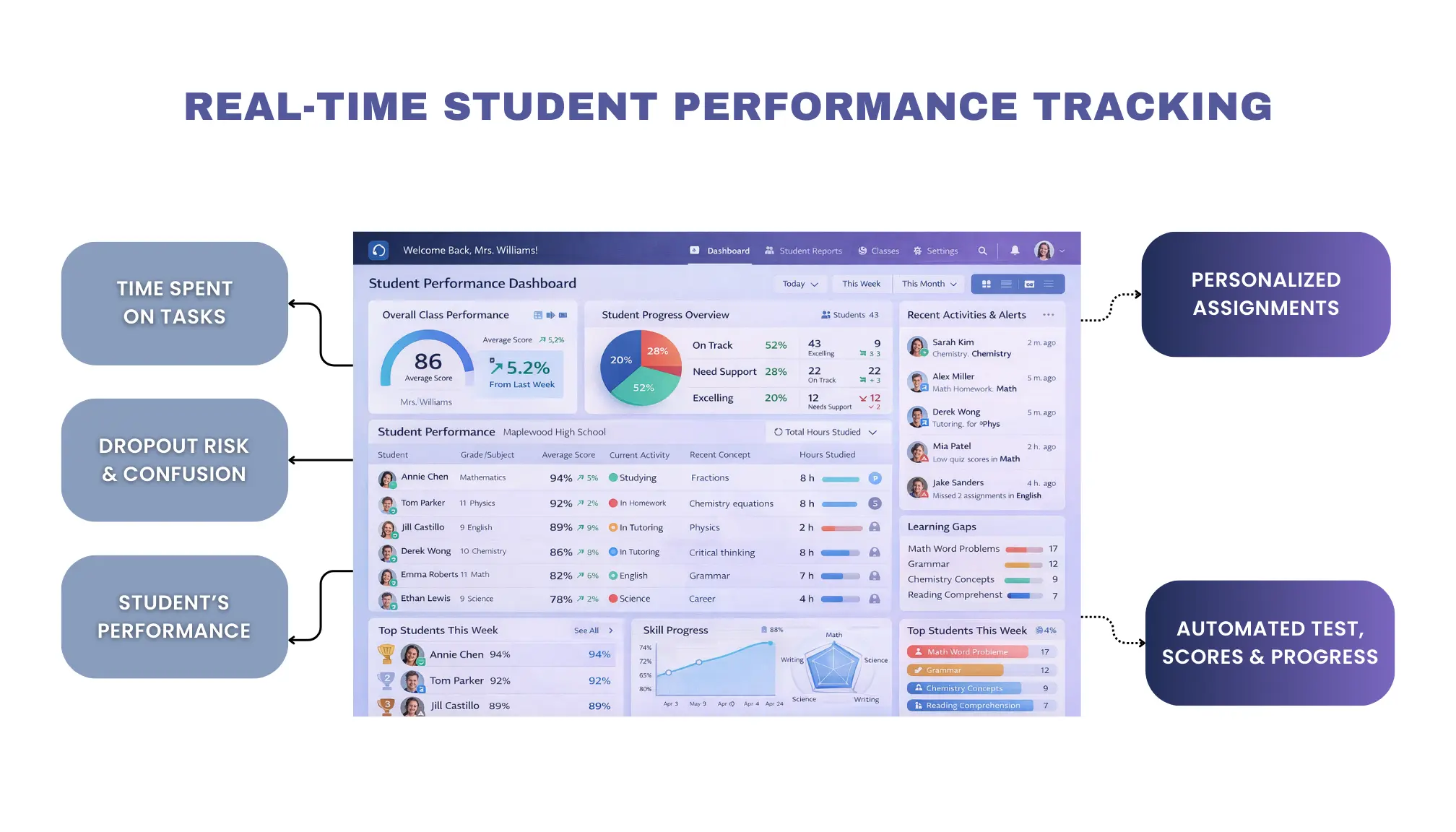
What if these intelligent tutoring systems provide you with real-time data on which students have grasped the concept effectively and which ones are still struggling with it? That's not possible with traditional learning methods.
But investing in AI tutoring systems is a game-changer because it tells you exactly which student needs what. It knows the student's progress, prepares personalized assignments, and calculates the test scores.
This way, learning is never a one-size-fits-all approach because these AI learning assistants can understand each student's profile based on metrics such as:
-
- Time spent on tasks
- Student's performance
- Dropout risk
- Areas of confusion
3 Real-World Examples of AI-Driven Learning Platforms
With AI, tutoring in education has become “ALL TIME AVAILABLE”. Students using AI tutoring made 2 years of learning progress in just 2 weeks.
Quite impressive? But the real gains come from personalization.
When you provide a personalized AI tutor to students, you're ultimately providing an expert that understands their pace, level, strengths, and where they need help.
Let's discuss popular examples of AI tutoring platforms that provide immersive learning experiences to students.
1. Varsity Tutors
Varsity Tutors launched live + AI tools to enhance the student learning experience and give teachers back their valuable time.
For students, they introduced -
-
- AI-powered practice sessions such as quizzes and flashcards,
- 24/7 academic support,
- Expert-led immersive live classes, and
- AI-generated summaries highlighting their progress.
Not only this, but this AI-powered tutoring platform saves 7-10 hours weekly for teachers by helping them plan their lessons and reducing their admin workload.
2. Zoom AI
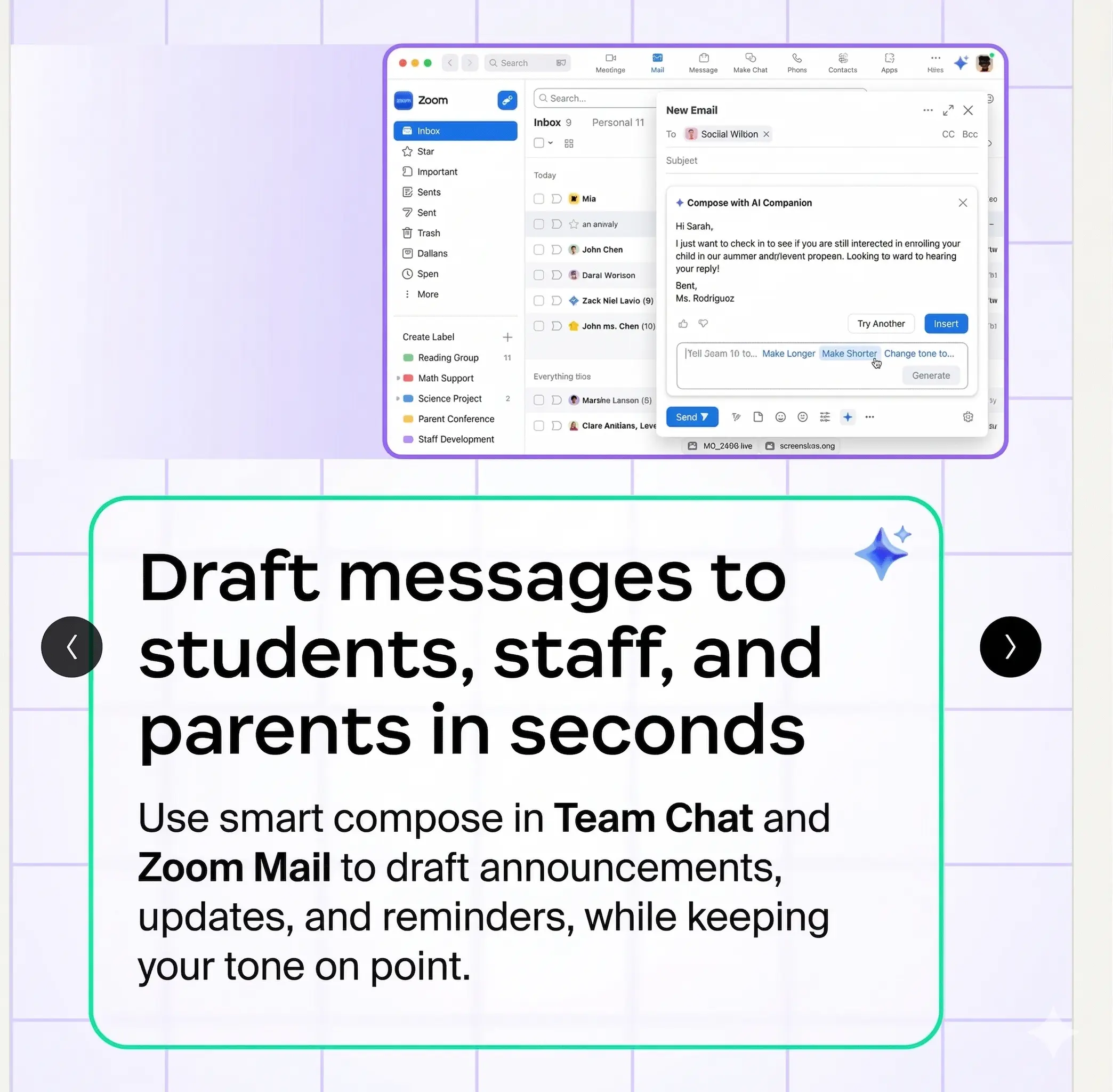
Zoom AI Companion takes learning to the next level by doing more than saving you time.
Consider Zoom as the personalized virtual assistant that gives educators a full-time teaching assistant by:
- Creating lesson plans, quizzes, and discussion prompts from already existing course material
- Drafting student feedback in seconds, reducing manual workload
- Analyzing engagement trends to see which students are falling behind
- Generating AI-powered summaries for students who join later
3. KhanMigo (By Khan Academy)
KhanMigo is an AI-powered tutor designed to help students in 2 subjects (humanities + math & science).
For learners, KhanMigo will not provide direct answers; rather, it tests their skills, identifies the gaps in their learning journey, and then guides them.
Similarly, for teachers, this AI assistant will help them with
-
- planning their lessons,
- calculating student scores,
- creating quiz questions, and more.
What used to take hours can now be done in a few minutes.
That's how it not only saves time but also makes learning ongoing, engaging, and immersive.
How to Build an AI Tutoring Platform in 6 Simple Steps?
These AI-driven learning platforms start with having a clear goal in mind, such as whether you want to enhance the learner's experience or free up quality teachers' time.
Here’s a simple guide to help you build an AI driven learning solution:
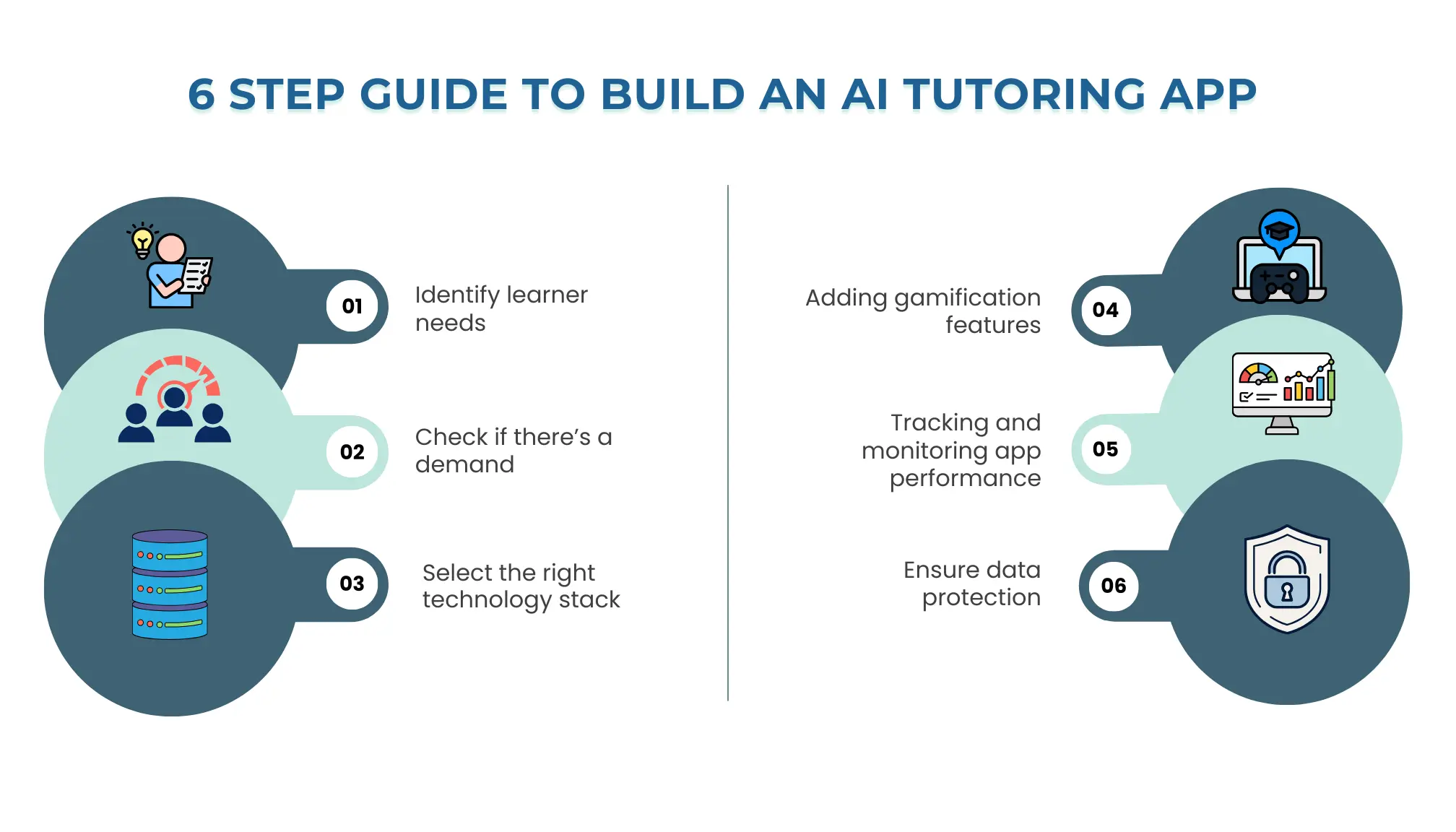
1. Identify Learner Needs
Before building an AI tutoring system, you need to understand your target audience first. For example, do you want to build an app for K-12 learners or an adult learning platform, or is it a basic test preparation app?
Then decide what subjects the AI tutor will teach, such as math, languages, science, etc.
For creating a language-based learning tool, you will require an NLP chatbot. In that case, collaborating with a custom AI chatbot development company is a game-changer.
While if you want to create a STEM platform, then you need to think of creating visual interfaces in an app.
2. Check if There's Demand for Your AI Tutoring Solution
If you want to succeed in the edtech landscape, you should ask these things:
-
- Identify gaps such as what features are missing in current edtech platforms
- Are learners being ignored, such as remote students or niche subjects?
- How is your product different from Duolingo or Khan Academy?
3. Select the Right Technology Stack
You need to choose the right technology stack that aligns with your educational goals to make learning more interactive and adaptive.
Here's the recommended tech stack you can choose for tutoring software development:
Category Technology Stack
Backend Python, node.js
Frontend/UI React, Vue, Flutter
AI/ML frameworks TensorFlow, Pytorch library
NLP and GPT integration Open AI APIs, Hugging face
Cloud and database Firebase, AWS, Google cloud
4. Adding Gamification Features
To make learning more interactive and engaging, you can add features such as gamification, progress bars, and other interactive elements to your tutoring platform.
5. Tracking and Monitoring the App Performance
Tracking data metrics from time to time is important so that you can iterate the platform features.
Once the AI-powered learning system is developed, you need to monitor the app performance to see the analytics and see how users are liking or disliking the app and its features.
Later on, you can work on enhancing the user interface and its features.
6. Ensure That the AI Tutoring App Protects Learner's Data
As the AI-powered learning platform collects students' data, you should ensure that it complies with data privacy measures such as FERPA regulations.
How Can Trigma Help You Build an AI-Powered Tutoring System?
Trigma has enhanced learning experiences for both students and educators by creating multiple edtech platforms in the past.
Our app developers have successfully delivered an AI-powered storytelling app for Readaptive Minds. The app turned reading into an "interactive and enjoyable experience."
This learning platform works in such a way that the child engages with the story and then the AI tutor conducts an adaptive assessment to test their skills.
Result?
40% improvement in reading efficiency and 70% increase in reader engagement.
Notes: AI’s predictive capabilities allow healthcare providers to identify potential health risks before symptoms appear. By analyzing historical patient data, genetics, and lifestyle information, AI can forecast the likelihood.
Need help in developing an AI powered learning platform?
FAQs
What's the cost of creating an AI tutoring software?
The AI tutor app development cost ranges between $30,000 to $250,000. The cost varies depending on factors such as features, data needs, and the complexity of the project.
What's the timeline for creating an AI-driven learning platform?
Creating an MVP takes around 3-6 months, while it may take around 9-18 months to create a fully scalable app.
What data is needed for training the AI tutor app?
We use high-quality datasets to train the AI tutor app, such as lessons, quizzes, and student interactions.