+91-98558-85133
 +1(702)760-3099

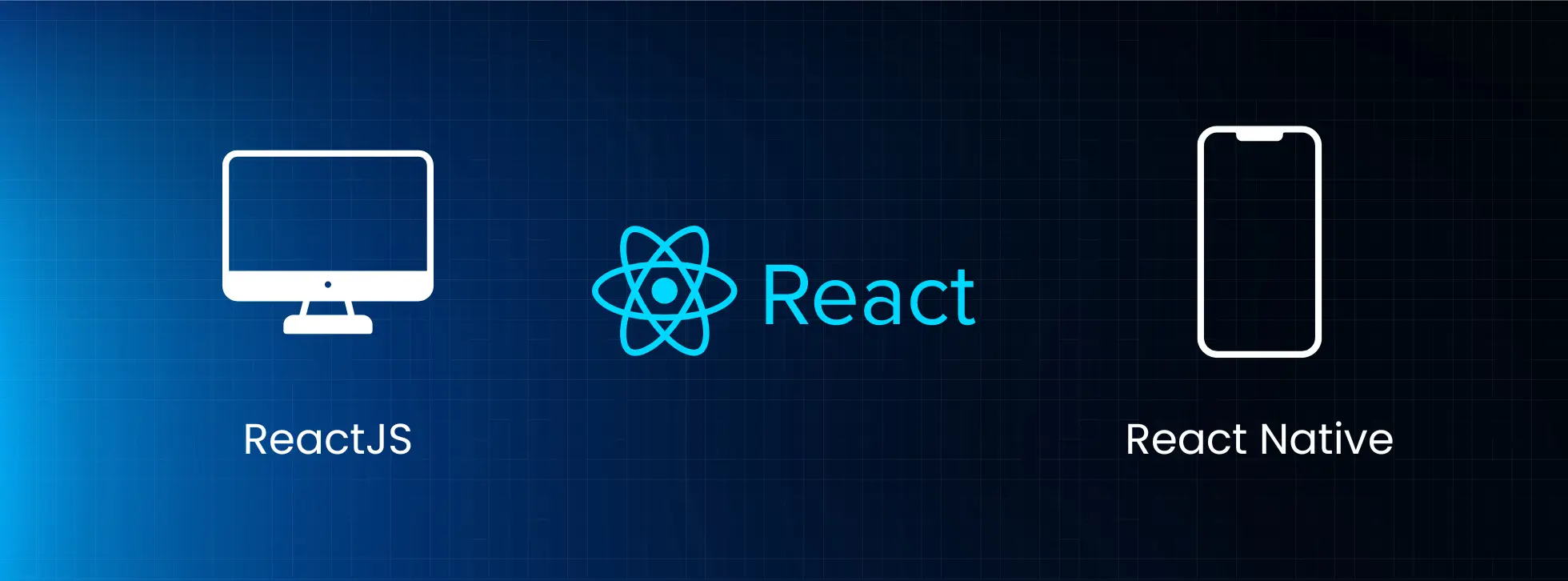
In the realm of web and mobile development, React JS and React Native stand out as two influential frameworks, each designed for specific tasks. Created by Facebook, these technologies are renowned for their efficiency and versatility. In this blog, we’ll break down the differences between React JS and React Native, highlighting their advantages, and ideal use cases.
React JS
React JS is an open-source JavaScript library designed for building user interfaces (UIs) for web applications. It manages the view layer of applications, allowing developers to create complex UIs using small, reusable pieces of code known as "components." React JS includes an HTML page where components are rendered, and these components contain the HTML code displayed in the user interface. We recommend React JS as one of the top web app development platforms.

Advantages of Using React JS
■ Easy to Learn and Use
For software development experts who are comfortable with JavaScript, learning React JS is simple. Its component-based architecture and straightforward syntax enable quick comprehension. Web applications may be quickly created even by inexperienced developers, which makes it a great platform for both types of developers who want to speed up development.
■ Quick Rendering using Virtual DOM
React JS leverages a virtual DOM to reduce direct DOM manipulation, resulting in quick and effective updates. This results in a smoother and less laggy user experience by rapidly reflecting changes without reloading the entire page, which enhances the speed of dynamic online applications.
■ Reusable Components
Because of React JS-component-based architecture, developers can reuse code in other application components. This modularity guarantees consistency and expedites development. The ability of developers to update or modify components on their own lowers mistake rates, streamlines maintenance, and expedites the development of complicated programs.
Use Cases of React JS
■ Single Page Applications (SPAs)
For SPAs, where users interact with dynamic interfaces without having to reload the entire page, React JS is perfect. It guarantees fluid transitions and quick navigation, improving the user experience all around. React JS is a major component of Facebook and Gmail, two popular SPAs that provide responsive, real-time updates.
■ Dynamic Web Applications
Building dynamic web apps that need constant user input and real-time updates is made easier using React JS. Because of its virtual DOM and state management, it can render content more quickly and interact with users seamlessly. This makes it ideal for online forms, social media platforms, and e-commerce websites that need to respond quickly to user requests.
■ Content Management Systems (CMS)
CMS interfaces may be quickly, easily scaled, and customized with React JS. Developers can create adaptable front-end interfaces that quickly deliver fast performance by effectively communicating with back-end data. CMS systems can be modular and reusable, thanks to their component-based architecture, which accelerates development and simplifies maintenance.
React Native
React Native is an open-source JavaScript framework used to build cross-platform mobile apps for iOS, Android, and Windows. Unlike React JS, which uses web components, React Native is among the top mobile app development frameworks used for designing innovative mobile apps. It uses native components, allowing developers to build apps that feel native with a single JavaScript codebase. Developed in 2013 and released publicly in 2015, React Native initially focused on iOS but now supports Android, making it a powerful tool for mobile app development.

Advantages of Using React Native
■ Native Performance
By utilizing native components and APIs, React Native provides near-native performance, guaranteeing a fluid and responsive user experience. It bridges the gap between JavaScript and native languages, which improves the overall efficiency of the program by enabling optimal performance and functionality comparable to completely native applications. This is in contrast to hybrid frameworks.
■ Strong Support
React Native enjoys robust support from both Facebook and a sizable and vibrant developer community. Development is made easier by large libraries, frequent updates, and readily usable components. To guarantee that developers may get assistance, materials, and direction for each development difficulty, the community also provides plugins, tools, and solutions.
■ Integration with Existing Apps
It is possible to integrate React Native with native apps that already exist with ease. With React Native, businesses don't have to start from scratch when updating sections of their app; this allows for faster adoption of new features and more gradual upgrades while preserving the essential elements of the current apps.
Use Cases of React Native
■ Cross-Platform Mobile Apps
With React Native, developers can create cross-platform applications for iOS and Android from a single codebase. This keeps the user experience native-like while cutting down on development expenses and time. For businesses that require consistent performance across several platforms without the hassle of managing multiple codebases, it's perfect.
■ E-commerce Apps
Creating quick, scalable e-commerce apps with secure payment methods, cart management, and seamless browsing is made possible using React Native. Customer satisfaction is increased because of its ability to provide a seamless, native-like experience across devices, enabling consumers to connect with items and finish transactions with ease.
■ Educational Apps
Creating interactive educational apps with multimedia material, such as films, quizzes, and live sessions, is a great use case for React Native. Users can access the app on any device, thanks to its cross-platform compatibility, which offers a constant learning experience. Features like in-app communication and real-time feedback are simple for developers to integrate.
Key Differences Between React JS And React Native
| Key Characteristics | React JS | React Native |
|---|---|---|
| Purpose | Designed for web applications | Designed for mobile applications |
| Styling | Supports CSS and CSS-in-JS | Uses JavaScript objects for styling |
| Deployment | Deployed on web servers | Packaged for app stores |
| Navigation | Uses React Router for web navigation | Uses React Navigation for mobile navigation |
| Components | Utilizes standard web components (HTML) | Uses native mobile components |
| Community and Ecosystem | Large ecosystem for web development | Focused community for mobile app development |
| Examples | Instagram, Wix, Facebook | Pinterest, Myntra |
Wrapping Up
React JS and React Native, both developed by Facebook, cater to different development needs. React JS is best for building dynamic, interactive web applications such as SPAs and content management systems, with reusable components for efficient UI design. In contrast, React Native is ideal for building cross-platform mobile apps that deliver a native-like user experience on both iOS and Android. Each framework excels in its domain—React JS for web applications and React Native for mobile development.
Choosing between React JS and React Native depends on your project’s needs—whether you want a dynamic web application or a high-performance mobile app. At Trigma, we specialize in both, delivering tailored solutions for your web and mobile development goals. Let our expert team guide you through the best technology for your business!
Get in touch with Trigma today and turn your vision into reality!