+91-98558-85133
 +1(702)760-3099

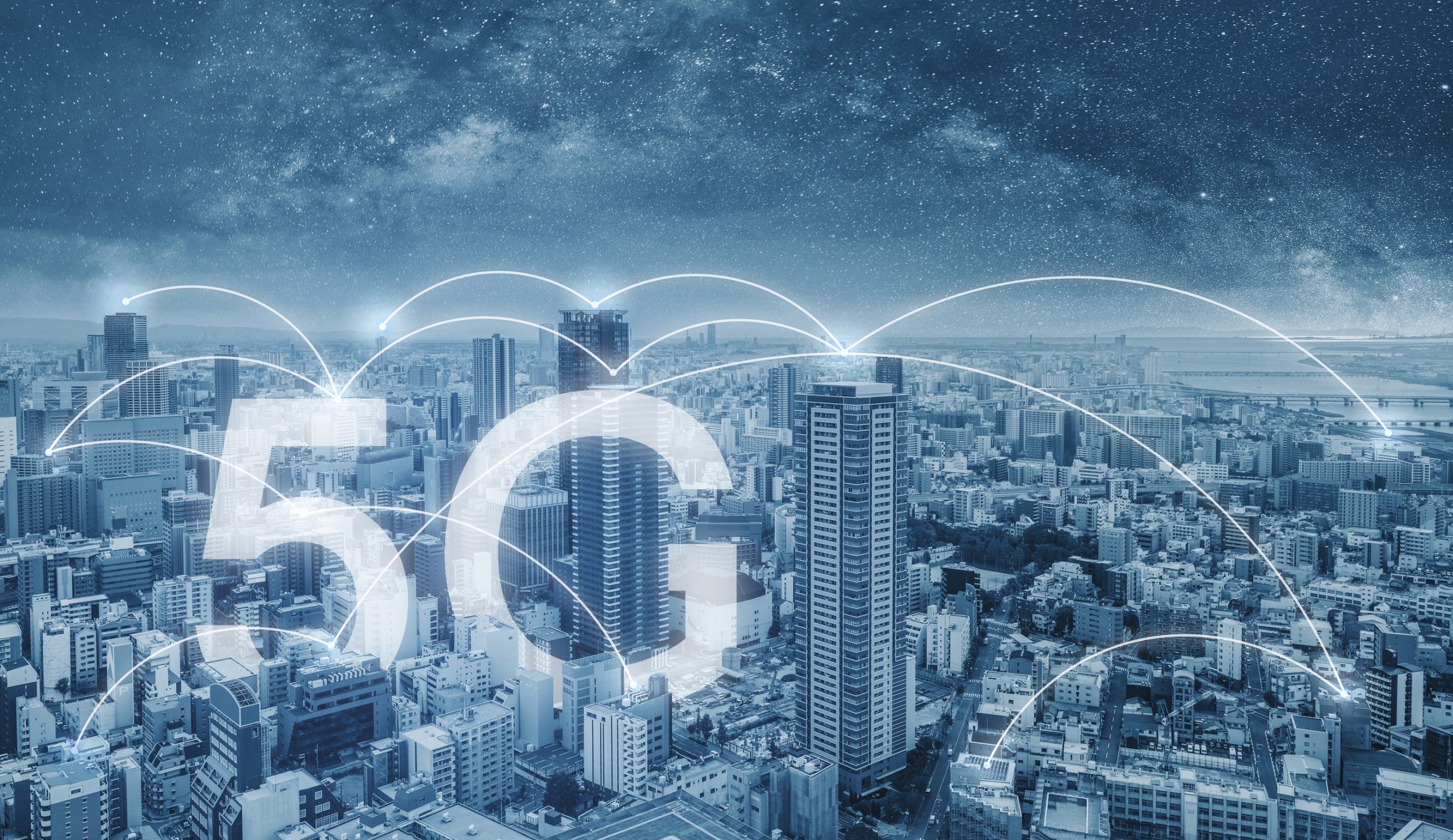
In the rapidly evolving world of telecommunications, 5G technology has emerged as a revolutionary force, offering lightning-fast data speeds, ultra-low latency, and seamless connectivity for businesses and consumers alike. However, this technology is concerned about potential health effects and has sparked a widespread debate.
In this blog, we will evaluate the scientific evidence and explore what businesses need to know when investing in 5G-enabled digital transformation.
What is 5G Technology?
5G stands for fifth-generation wireless technology, the latest evolution of mobile networks that brings faster speeds, lower latency, and greater capacity than previous generations. It’s not just an upgrade, it’s a major step forward in how devices, machines, and systems are connected and communicate.
Key Features of 5G
1. Ultra-fast speeds
Download speed of up to 10Gbps - nearly 100x faster than 4G.
2. Ultra-low latency
Response times as low as 1 millisecond, ideal for real-time applications like autonomous vehicles, remote surgeries, and industrial automation.
3. Massive device connectivity
Supports up to 1 million devices per square kilometer, enabling smart cities, IoT ecosystems, and connected factories.
4. Improved reliability and coverage
Enhanced network stability even in densely populated areas.
5. Energy efficiency
Optimized to consume less power per bit of data, making it more sustainable for IoT and mobile devices.
Why 5G Matters?
Here’s why 5G matters and why businesses, governments, and consumers are investing in its adoption:
1. Speed that powers innovation
5G delivers data speeds up to 10-100 times faster than 4G, enabling instant app loading, seamless streaming, and fast downloading. This speed empowers innovation in fields like telemedicine, remote work, e-learning, and real-time data analytics.
2. Ultra-low latency
Latency (network response time) in 5G is as low as 1 millisecond, compared to 30-50 ms in 4 G. This latency is essential for autonomous vehicles, remote robotic surgeries, AR/VR experiences, and smart manufacturing systems.
3. Massive device connectivity
5G supports up to 1 million devices per square kilometer. That’s crucial for:
- Smart cities
- IoT ecosystems
- Connected homes and wearables
- Industrial automation
The network can handle large volumes of simultaneous connections without slowing down.
4. Improved reliability and efficiency
5G offers more stable network performance, better energy efficiency for connected devices, and greater network slicing (customized bandwidth for specific use cases). This makes it ideal for mission-critical applications in sectors like healthcare, defense, and finance.
5. Accelerator for emerging tech
Technologies like artificial intelligence (AI), augmented reality (AR), blockchain, and edge computing all rely on fast, stable, and scalable networks. 5G provides the infrastructure for innovations to help them move from lab to market.
Why Are People Worried About 5G?
Here are the most common reasons people are worried about 5G.
1. Health concerns over radiation exposure
Many people believe that the radiofrequency (RF) radiation emitted by 5G towers and devices could cause health problems, including cancer, infertility, and neurological disorders. Well, it’s actually a concern as 5G uses higher frequency bands than previous networks, and more and more small antennas are installed closer to homes and offices.
2. Fear of the unknown
People are naturally wary of the new technologies they don’t understand, especially when it comes to invisible forces like radiation. It can be a concern as technical jargon creates confusion, and misinformation is easier to spread than the actual facts.
3. Environmental concerns
The dense deployment of 5G infrastructure may negatively affect birds, bees, and other wildlife. It shows that electromagnetic radiation could disrupt animal behaviour and raises concerns about environmental impact.
4. Conspiracy theories linked to 5G
Some of the theories have falsely claimed that 5G is linked to COVID-19, immune system damage, and mental health disorders. It’s a concerning factor as social media and viral content are spreading these theories very quickly, and spreading distrust in the minds of people.
The fear around 5G is largely driven by misinformation, rapid change, and a lack of clear communication. As with any emerging technology, it’s crucial to base decisions on verified science, transparent regulation, and ongoing education.
Myths and Facts Related to 5G
1. 5G radiation is dangerous
Myth: 5G emits high levels of radiation that are harmful to human health.
Fact: 5G uses non-ionizing radiation, which does not carry enough energy to damage DNA or cause cancer. This type of radiation is also used in household devices like microwaves, Bluetooth, and baby monitors.
Regulatory bodies such as the Federal Communications Commission and the International Commission on Non-Ionizing Radiation Protection (ICNIRP) have set strict exposure limits. 5G operates well within those safety margins.
2. More 5G towers = more health risk
Myth: The installation of more 5G antennas increases radiation exposure and health risks.
Fact: Yes, 5G does require more small cell towers, especially in urban areas. However, these towers operate at much lower power than traditional 4G towers due to their closer proximity to users.
Moreover, because high-band 5G signals travel shorter distances, they weaken faster and pose less exposure risk over distance. While you see more antennas, your actual radiation exposure remains extremely low. More antennas don’t mean more danger; it means more efficient signal delivery.
3. 5G weakens immunity
Myth: 5G is responsible for the spread of COVID-19 or lowers the immune system’s ability to fight disease.
Fact: The claim has been widely debunked by global health authorities. Viruses, including SARS-CoV-2, cannot travel on radio waves or mobile networks. Countries without 5G have a COVID outbreak too. Organizations like the WHO and the CDC have categorically denied any link between 5G and COVID-19.
Why B2B Leaders Should Embrace 5G?
While public skepticism may persist, forward-thinking businesses should understand that 5G is not a threat; it’s an opportunity. Here’s how 5G is enabling the next generation of innovation:
1. Real-time data and automation
5G enables quick communication between devices that is essential for smart factories and IoT, self-driving vehicles, remote surgeries, and predictive maintenance in manufacturing.
2. Enhanced remote work & collaboration
Ultra-low latency means the minimal network response time with seamless video conferencing, AR/VR integration, and real-time cloud collaboration, ideal for hybrid work environments.
3. Smarter cities and infrastructure
5G powers the smart grid, traffic systems, and public safety networks, helping governments and enterprises reduce costs and improve services.
4. Better customer experiences
From immersive AR in retail to instant digital transactions in banking, 5G improves both frontend and backend efficiency.
5. Competitive advantage
Companies that adapt early to 5G unlock the first mover advantage, positioning themselves as innovation leaders in their industries.
Final Thoughts
5G is more than just the next step in wireless technology; it’s a catalyst for innovation, efficiency, and competitive advantage. While concerns around health and safety have surfaced, decades of scientific research and regulatory framework confirm that 5G is safe when used responsibly.
As businesses shift towards smarter, faster, and more connected operations, 5G offers the infrastructure needed to support digital transformation at scale. From real analytics to intelligent automation, the possibilities are immense. The future is wireless, intelligent, and fast.
Embrace 5G with Confidence
At Trigma, we help businesses build secure, future-ready 5G solutions, from smart apps to intelligent enterprise systems.