+91-98558-85133
 +1(702)760-3099

Key Takeways
- AI integration is now essential for organizations seeking efficiency, automation, and competitive advantage.
- Over 71% of companies have already adopted some form of AI for business, and adoption is accelerating.
- A structured, 7-phase roadmap helps ensure smooth and scalable AI implementation in business.
- AI use cases span customer support, sales, marketing, supply chain, finance, HR, and product development.
- Custom AI solutions often outperform ready-made tools in accuracy, long-term ROI, and integration flexibility.
- Responsible governance, data privacy, and bias monitoring are crucial for safe and compliant AI adoption.
- Avoid common AI pitfalls such as poor data quality, unclear goals, and inadequate security controls.
Artificial Intelligence has moved from a niche innovation to a mainstream business priority. Almost over 71% of organizations use AI in at least one business function, showing a clear shift towards large-scale AI business integration. This number reflects that AI is no longer simply enhancing operations; it is reshaping industries, redefining customer experiences, and transforming how businesses operate.
As machine learning (ML), generative AI, predictive analytics, NLP, and computer vision technologies continue to advance, the organizations that adopt AI strategically gain a significant advantage and enhance their customer experience. Whether you’re a startup, a mid-sized company, or an enterprise, the question should no longer be “Should we adopt AI?”, but “How do we integrate AI the right way to unlock real business value?”
In this guide, we’ll explore the core benefits of AI, use cases across industries, the biggest integration challenges, why custom solutions outperform generic tools, and a step-by-step framework to integrate AI into your business successfully.
Why AI Is Essential For Modern Businesses?
AI is no longer just an innovative trend; it’s a core capability that drives measurable outcomes. Most industries, from AI in healthcare to AI in finance, logistics, retail, and manufacturing, have already adopted AI at some level. Here’s why businesses can’t ignore it:
01. Mainstream AI adoption
Most companies across industries already use AI in at least one area, though only about one-third have successfully scaled it organization-wide. This gap represents a massive opportunity for businesses that choose to move early.
02. AI leaders are outperforming the market
Enterprises that have integrated AI into their business model have made 1.5x higher revenue growth and 1.6x greater shareholder returns, compared to non-adopters and slow adopters.
03. AI delivers tangible costs & productivity benefits
Many global companies expect AI to generate material cost savings, with many forecasting reductions in targeted functions such as operations, customer support, and supply chain.
04. AI spend is expected to surge
Many business leaders plan to increase their AI investments over the next three years, suggesting competitors may already be preparing to accelerate AI adoption across their operations.
The Roadmap to Integrate AI Into Your Business
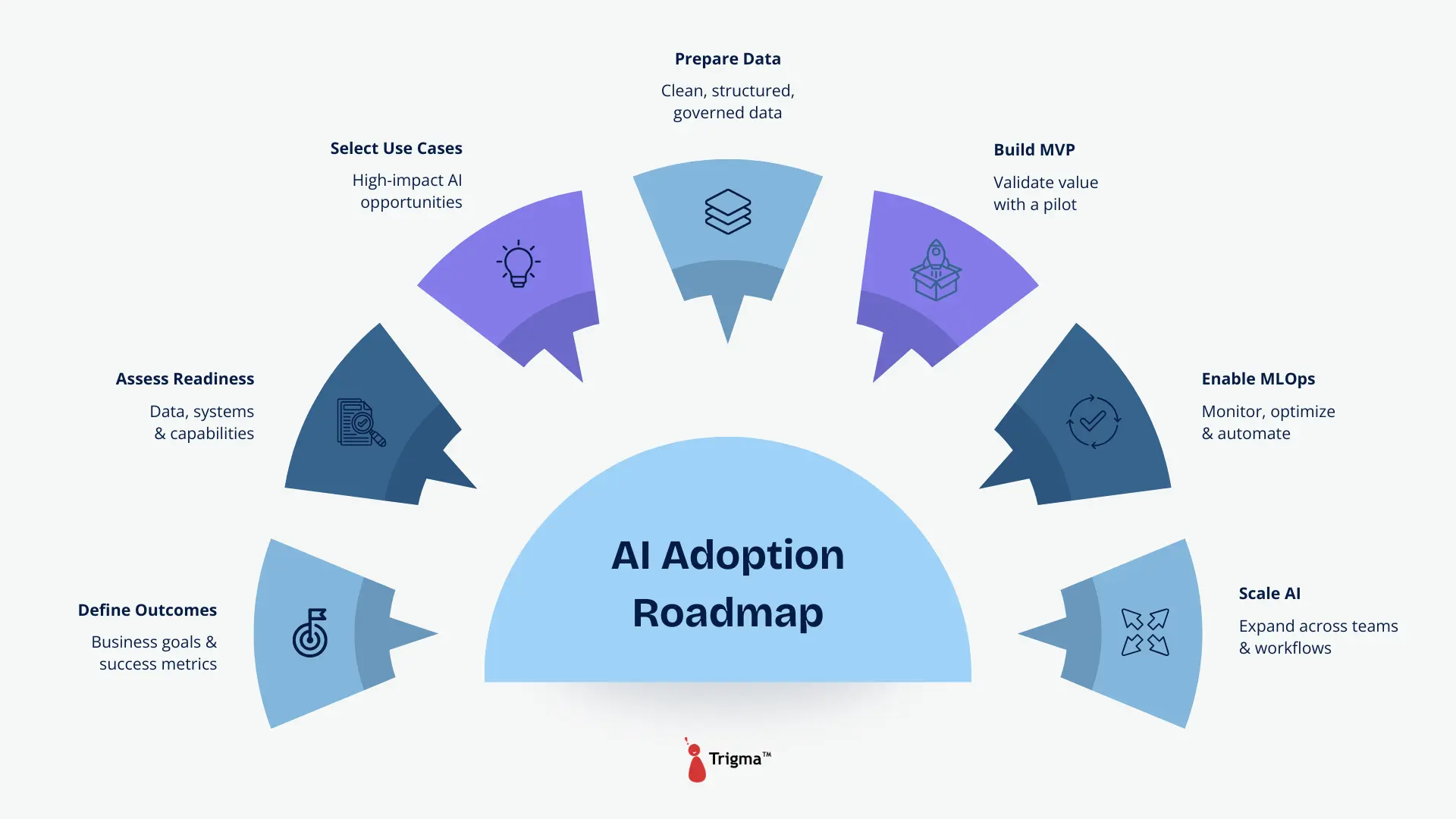
Below is the practical, actionable framework used by leading enterprises for successful AI adoption.
1. Define clear business outcomes
Before bringing in AI, it’s important to know exactly what you want to achieve. Instead of focusing on technology first, think about the real improvements you want to make in your day-to-day operations, whether that’s through reducing costs, speeding up workflows, delivering faster customer support, or improving accuracy in critical tasks. When your goals are defined clearly, choosing the right AI solution for business becomes much easier and far more effective.
2. Understand your current readiness
AI adoption doesn’t require perfection on day one; it requires awareness. This phase focuses on understanding where your organization stands today in this competitive market, the quality and availability of data, and the maturity of your existing systems. Evaluate the foundation of your idea before building a new structure. With a set structure of strengths and gaps, you can move forward with confidence and plan accordingly.
3. Pick high-value use cases
Once your goals and readiness are defined, the next step is to pinpoint where AI can deliver the most value. Instead of deploying AI everywhere, prioritize a few high-impact use case areas where you can unlock quick wins or resolve long-standing inefficiencies. These could include customer queries, predicting inventory needs, personalizing user experiences, or streamlining internal operations.
4. Prepare and structure your data
AI is only as strong as the data behind it. Before deploying any model, ensure your data is accurate, organized, secured, and accessible. This phase includes cleaning legacy data, standardizing formats, integrating disconnected sources, and establishing strong privacy and governance practices. Solid data ensures your AI systems are reliable and scalable for the future.
5. Build a functional MVP
Instead of aiming for a full-scale AI system upfront, start with a Minimum Viable Product (MVP). MVPs somehow become an essential for smooth AI implementation. This simplified functional version of your selected use case allows you to test real-world performance, gather user feedback, and validate business value early. The MVP approach reduces risk, speeds up learning, and helps redefine the solution before scaling.
6. Operationalize AI with MLOps
Once your MVP demonstrates value, the next step is to make it production-ready. MLOps, the combination of machine learning and operational best practices, ensures your model runs reliably at scale. This includes continuous monitoring, automated updates, issue detection, and performance optimization. MLOps keeps your AI ecosystem stable and aligned with evolving business needs.
7. Scale AI across the organization
With a successful use case in place, your organization is ready to expand AI into other functions, customer support, HR, finance, marketing, operations, and beyond. Scaling involves building reusable components, establishing government frameworks, upskilling internal teams, and integrating AI across existing workflows. As adoption grows, your organization becomes more data-driven, better and better positioned for long-term ROI.
Transform Your Business with Expert AI Integration
Unlock automation, improve efficiency, and accelerate growth with custom AI solutions built specifically for your business.
How You Can Perform AI Integration In Your Existing Businesses
For most companies, the goal isn’t to start from scratch; it’s to integrate AI into their existing business without interrupting their daily operations. Here is a detailed process for them too:
1. Modernize your legacy systems with AI
Even if your systems aren’t built for AI, integration is still possible. Using APIs, automation software, and custom AI development, businesses can add predictive analytics to existing dashboards, implement NLP chatbots without modifying backend systems, or use computer vision models alongside current security or operational tools. This will help you gain value without rebuilding your infrastructure.
2. Add AI as a layer, not a replacement
Instead of replacing your entire workflows, businesses can add AI as an enhancement layer. AI can be added for business process automation, AI-driven recommendations in your current CRM, demand forecasting added to your ERP, and an intelligent chatbot integrated into your website or app. This reduces risk and allows your team to adapt gradually.
3. Minimal downtime, maximum impact
A well-planned AI integration ensures no disruption to your live systems, parallel testing, smooth rollout through MLOps practices, and continuous monitoring and optimization. This approach helps you adopt AI carefully, safely and profitably.
4. Start with a high-impact use case
For existing businesses, the fastest way to start is with high ROI generated areas.
- AI in healthcare → automated documentation, triage support
- AI in logistics → route optimization, demand forecasting
- AI in finance → fraud detection, risk scoring
- AI in retail → personalization engines, inventory prediction
- AI in manufacturing → predictive maintenance
Once approved technically, AI can be scaled across the organization.
Practical Use Cases
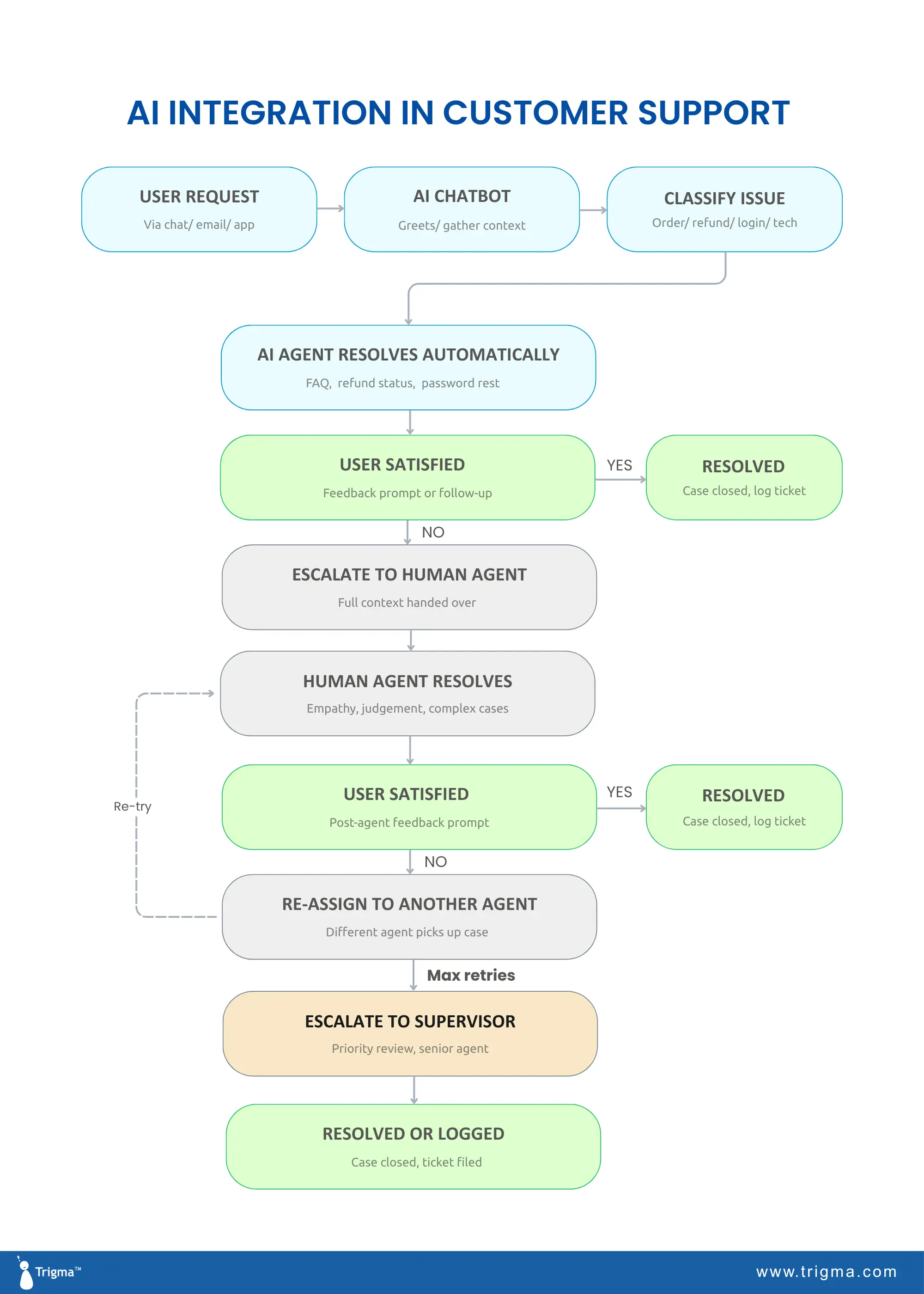
1. Customer Support
Customers expect instant, accurate, and personalized support. AI helps businesses deliver exactly that. AI-powered chatbots and virtual assistants now handle routine customer queries 24/7, from tracking orders to addressing common troubleshooting issues. Instead of waiting in long queues, customers get immediate assistance, while human agents focus on complex cases.
AI-based sentiment analysis tools read customer emotions in emails, chats, and social messages. This helps support teams identify frustrations early, respond faster, and reduce churn. For many brands, integrating AI has meant higher satisfaction scores, shorter resolution times, and significantly lower support costs in a shorter period.
2. Sales & Marketing
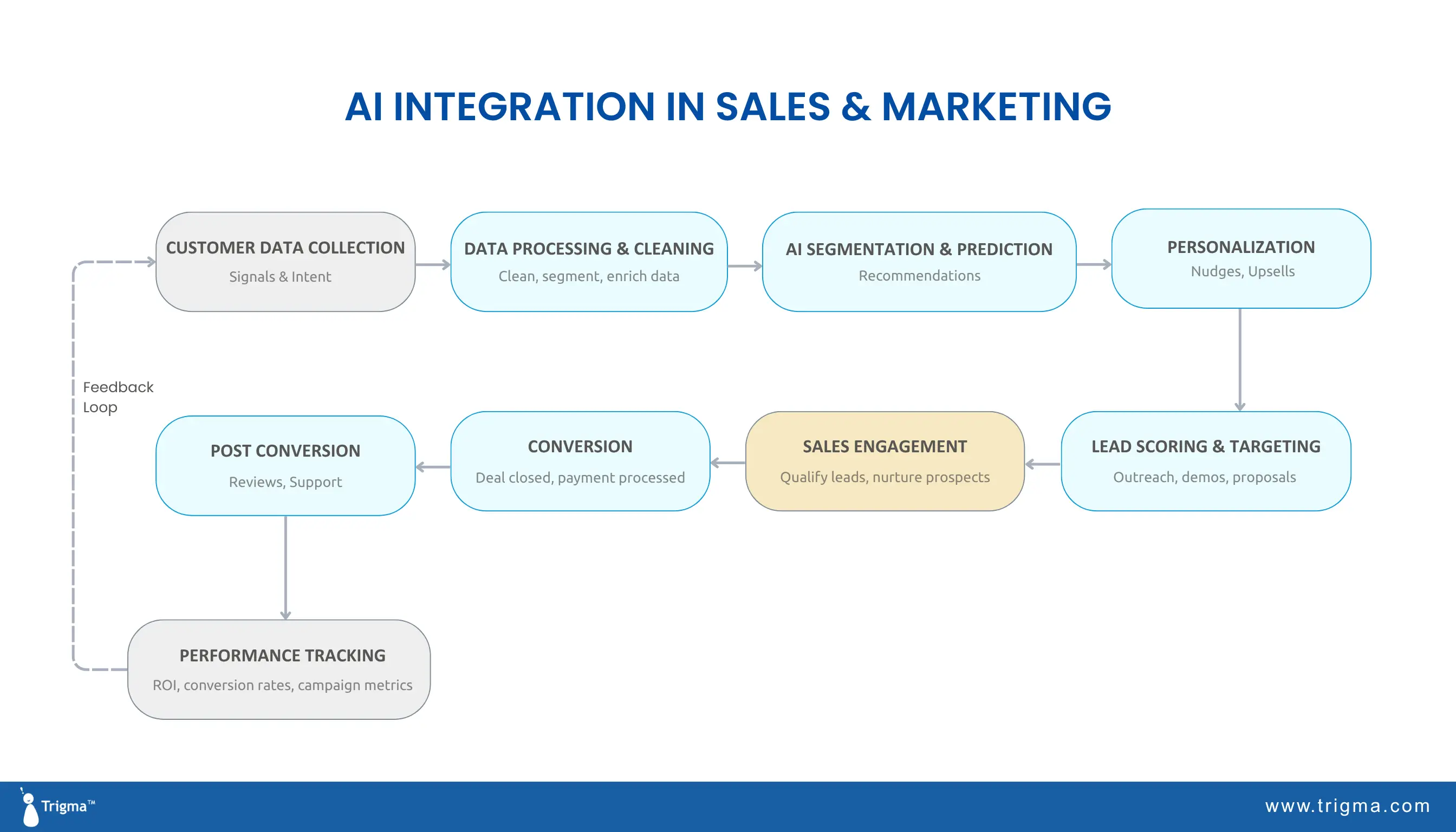
AI is becoming the backbone of modern engines. Sales teams benefit from AI-driven lead scoring, automated follow-ups, and predictive intelligence that identifies which prospects are likely to convert. By analyzing customer behaviour and past interactions, the system suggests the right message, the right time, and the right channel.
In marketing, AI helps brands deliver hyper-personalized experiences. Instead of generic campaigns, customers now receive tailored recommendations, dynamic website content, and behaviour-driven emails, leading to higher engagement and stronger conversions. Marketers also rely on AI for ad optimization, audience segmentation, and real-time performance tracking. It can lead to better ROI and campaigns that practically optimize business operations.
3. Operations & Supply Chain
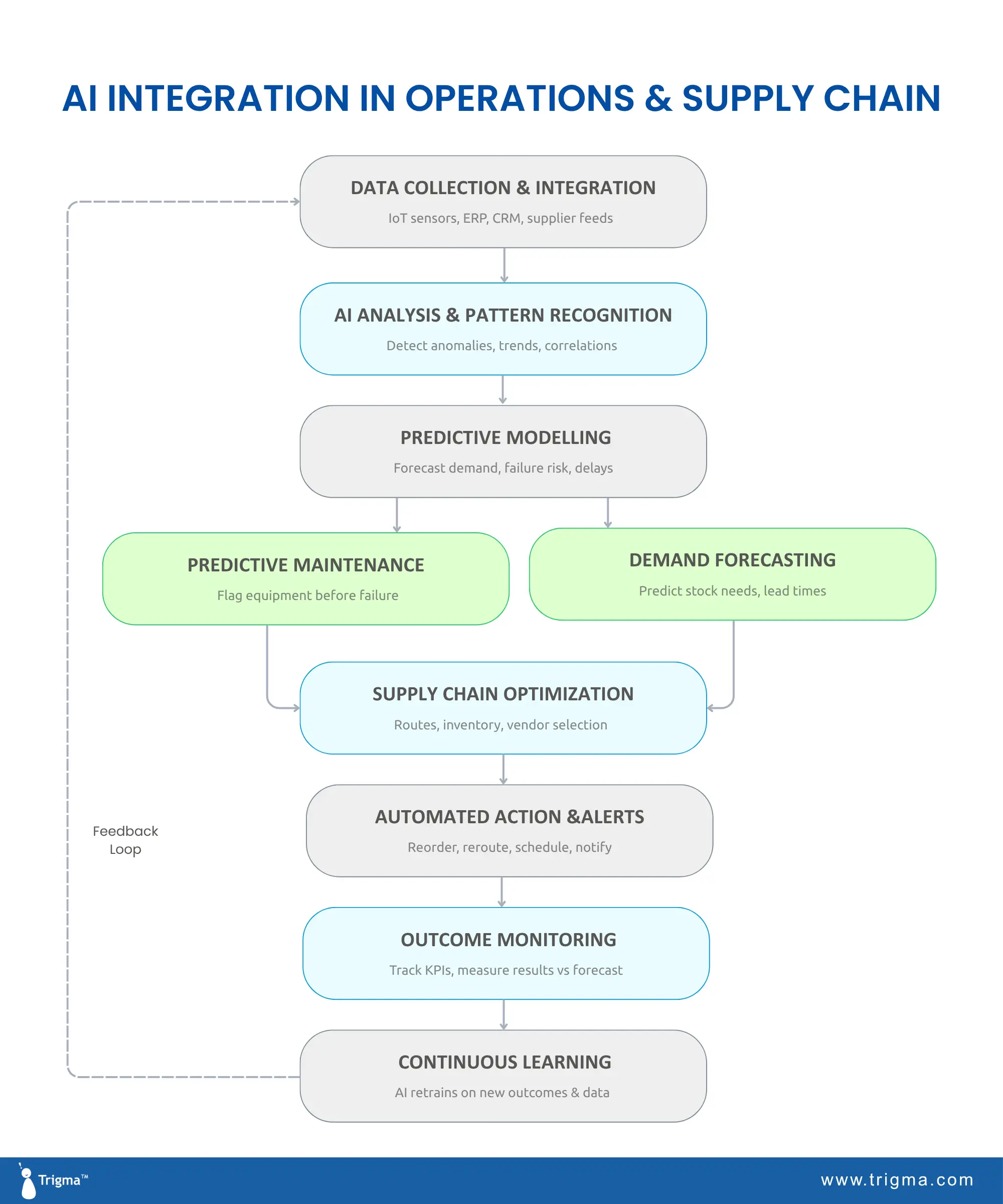
AI brings speed, accuracy, and predictability into one of the most complex parts of any business operations. From automating manual workflows to optimizing production schedules, AI helps companies run smoothly. Document-processing tools can scan invoices, extract data, and update ERPs in seconds, removing countless hours of manual effort.
In supply chains, AI-based demand forecasting predicts the right inventory levels, helping businesses avoid overstocking and stockouts. Logistics become more precise with real-time route optimization, warehouse automation, and anomaly detection in shipments.
4. Finance
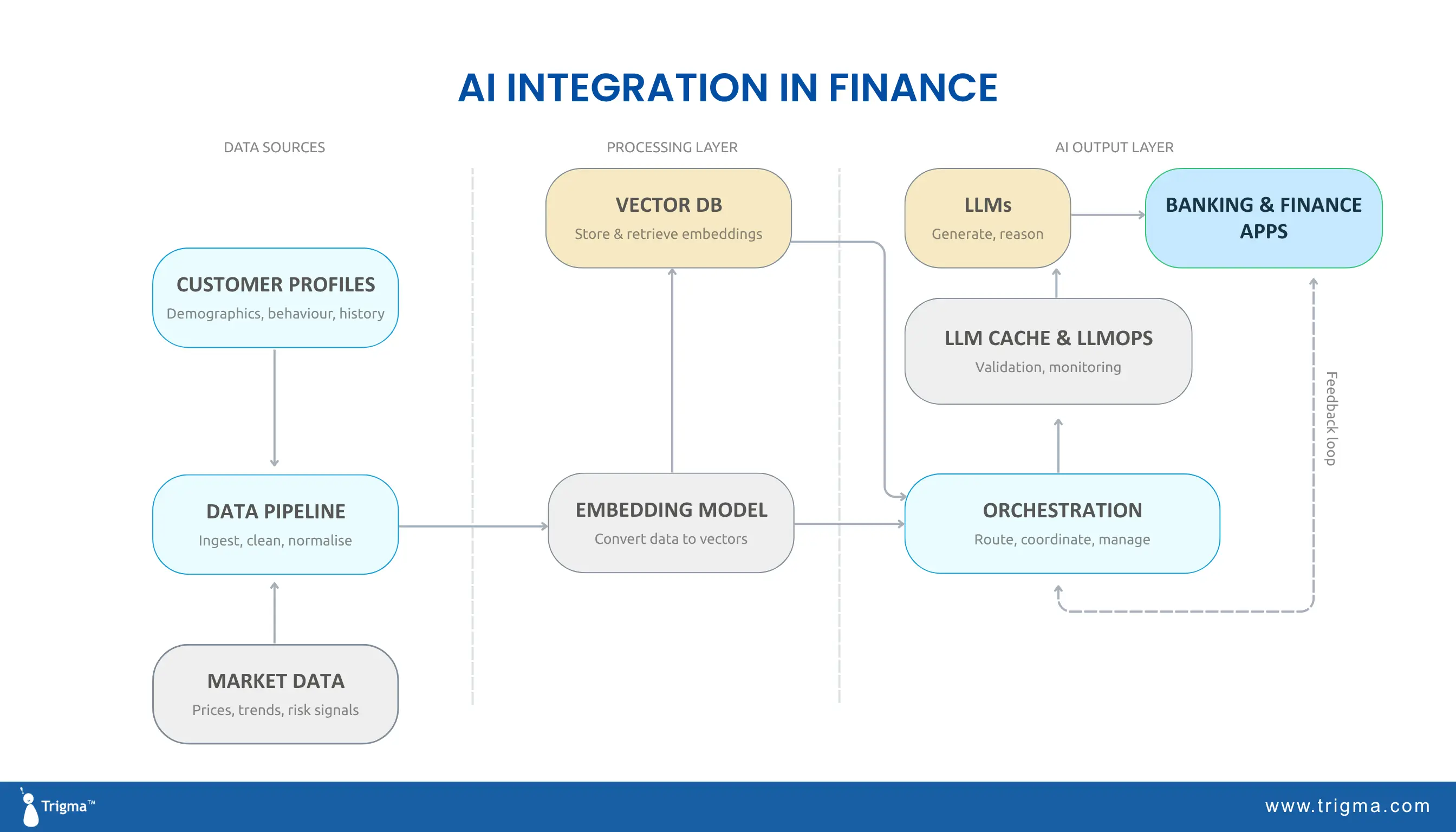
AI strengthens all three pillars of modern finance, ie, accuracy, speed, and risk control. AI-powered financial systems automatically detect anomalies in transactions, identify financial fraud, and ensure compliance with regulatory standards. These systems analyze millions of data points quickly, exceeding human capability.
Forecasting tools use historical data, market trends, and behavioural insights to predict revenue, cash flow, and spending more accurately. This gives finance teams better clarity, especially during strategic planning and budgeting. For businesses dealing with high transaction volumes, AI minimizes errors, accelerates closing cycles, and strengthens overall financial governance.
5. HR & Internal Operations
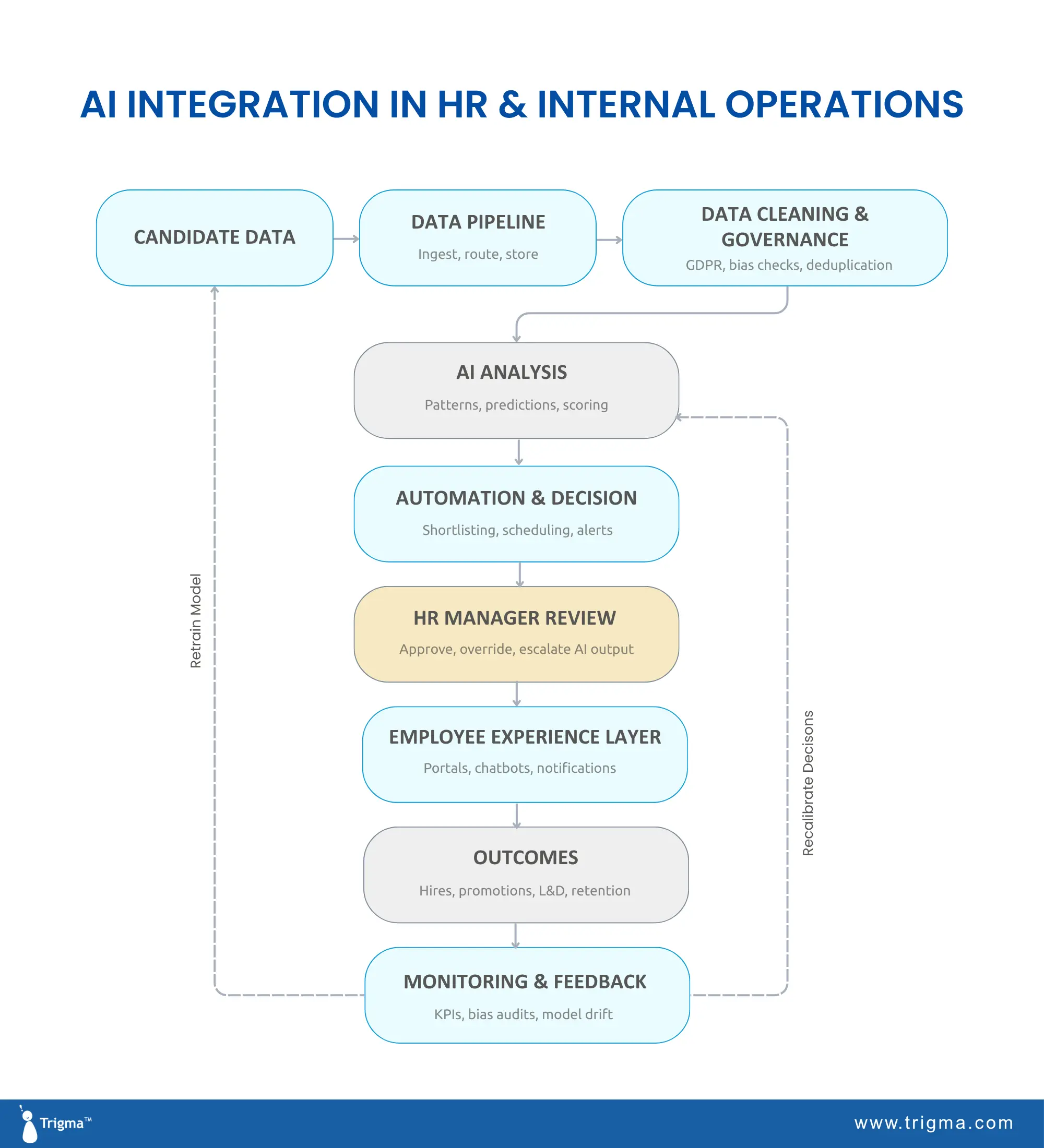
HR teams often struggle with repetitive tasks, long hiring cycles, and employee management challenges. AI simplifies these processes. AI-driven recruitment systems scan resumes, shortlist the best candidates, and even assess behavioural fit using pattern analysis. This reduces hiring time and improves the quality of talent.
For internal operations, AI tools automate workflows like employee onboarding, payroll processing, attendance tracking, and policy compliance. AI-based internal helpdesks answer routine employee questions instantly, freeing HR teams to focus on strategic initiatives. AI also supports employee well-being and retention by analyzing engagement patterns and predicting burnout risks early.
6. Product Development
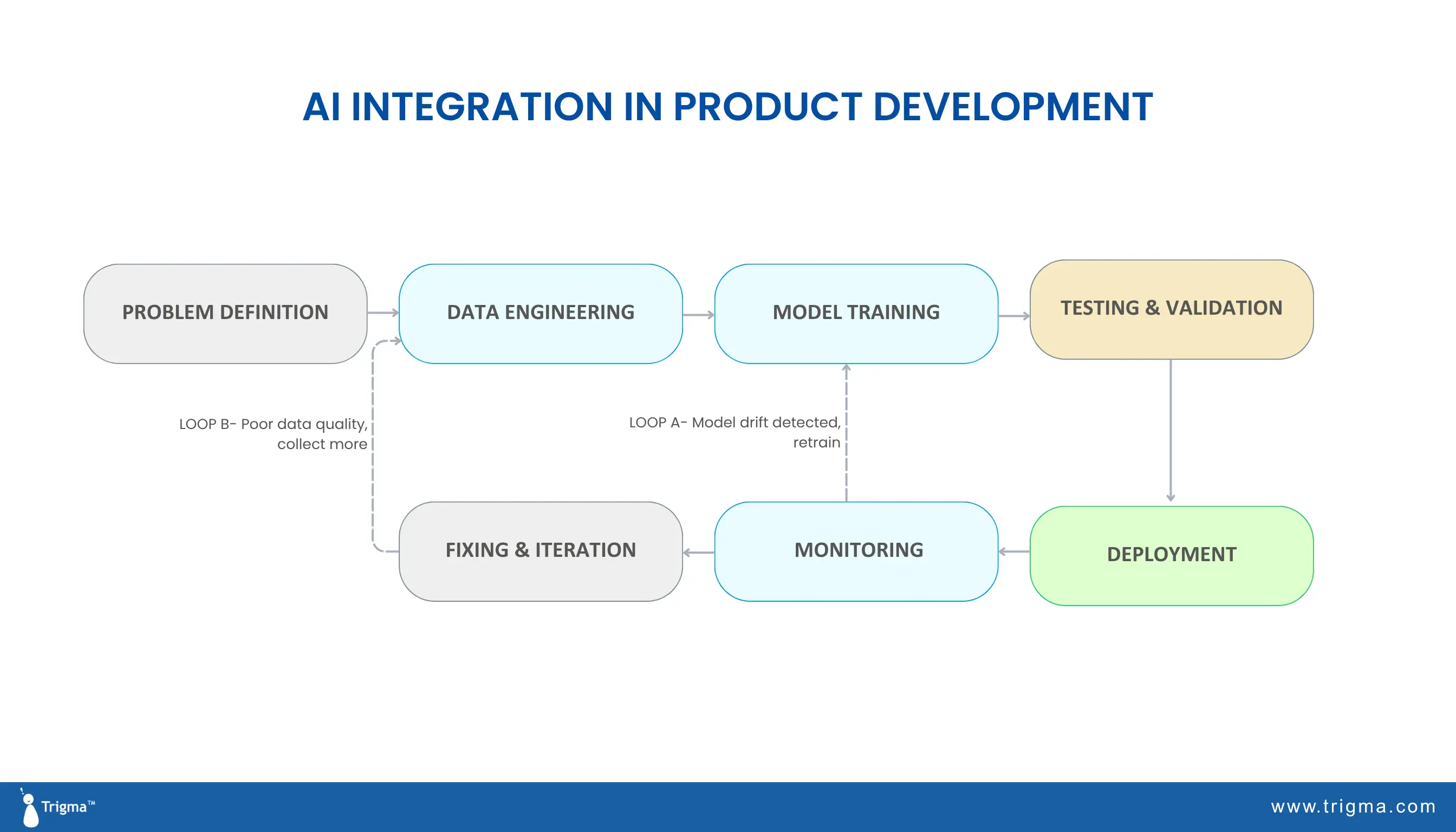
AI is accelerating innovation by helping product teams build smarter, faster, and more efficiently. Predictive analytics reveals exactly what customers want, helping teams design products with greater precision. AI-based A/B testing, user behaviour heatmaps, and feature-impact forecasting enable data-driven product decisions, not assumptions.
For tech products, AI assists in code generation, QA testing, bug detection, and automated deployments. Manufacturing industries use AI for prototyping, simulations, and quality checks.
7. Healthcare
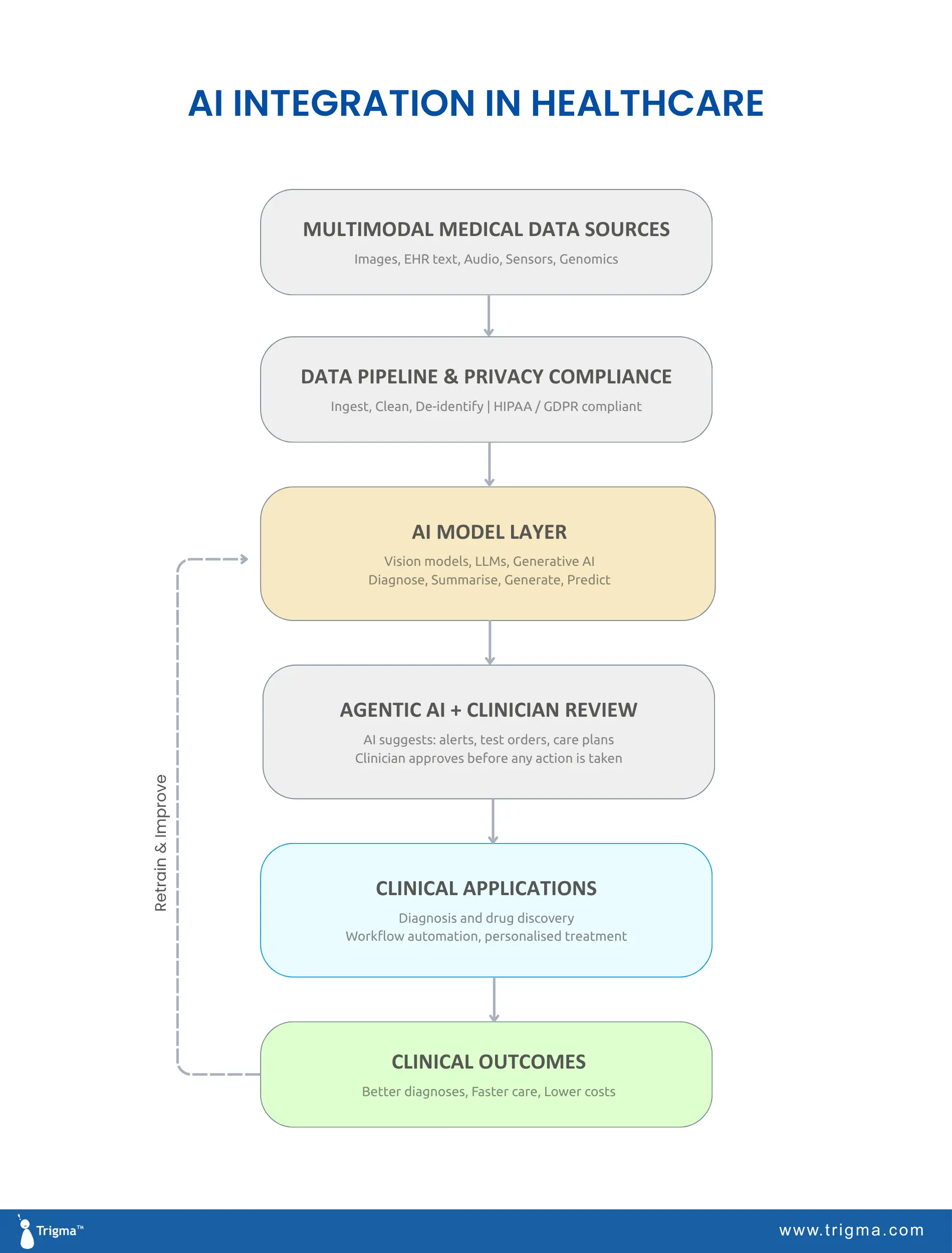
AI is redefining healthcare by improving operational efficiency and clinical outcomes. AI-powered diagnostic tools analyze medical images such as X-rays, MRIs, and CT scans with high precision, enabling early detection of conditions such as cancer, anomaly detection, and significantly improving patient outcomes.
On the clinical side, AI enables personalized treatment planning by analyzing history, genetics and symptoms to recommend the most effective care pathways. Additionally, AI administrates claims processing, appointment scheduling, and documentation. Drug discovery is also accelerating with AIwith shortening timelines for identifying viable compounds and predicting clinical trial outcomes.
8. Real Estate
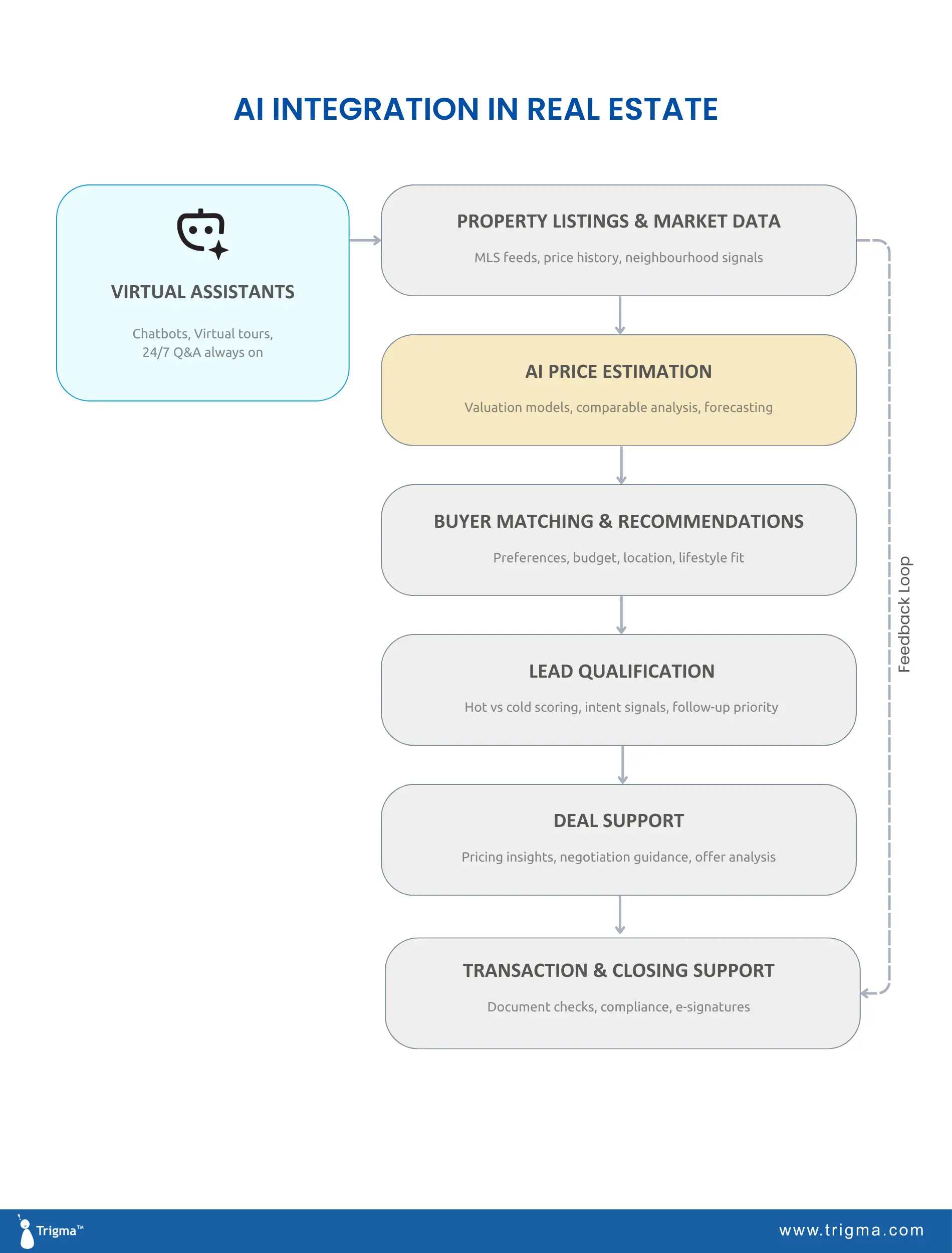
Real estate is reshaping the industry by making property search valuation and transactions smarter. AI- driven recommendation engines analyze buyer preference, budget, and location data to surface relevant listing faster. Automated valuation models use machine learning to assess property prices based on comparable sales and market trends, giving buyers, sellers, and investors accurate valuations in real time.
For property management, AI automates tenant screening, lease renewals, and maintenance scheduling, reducing overhead and improving satisfaction. Virtual AI-powered tours and chatbots allow buyers and renters to explore properties and get answers around the clock.
9. eCommerce
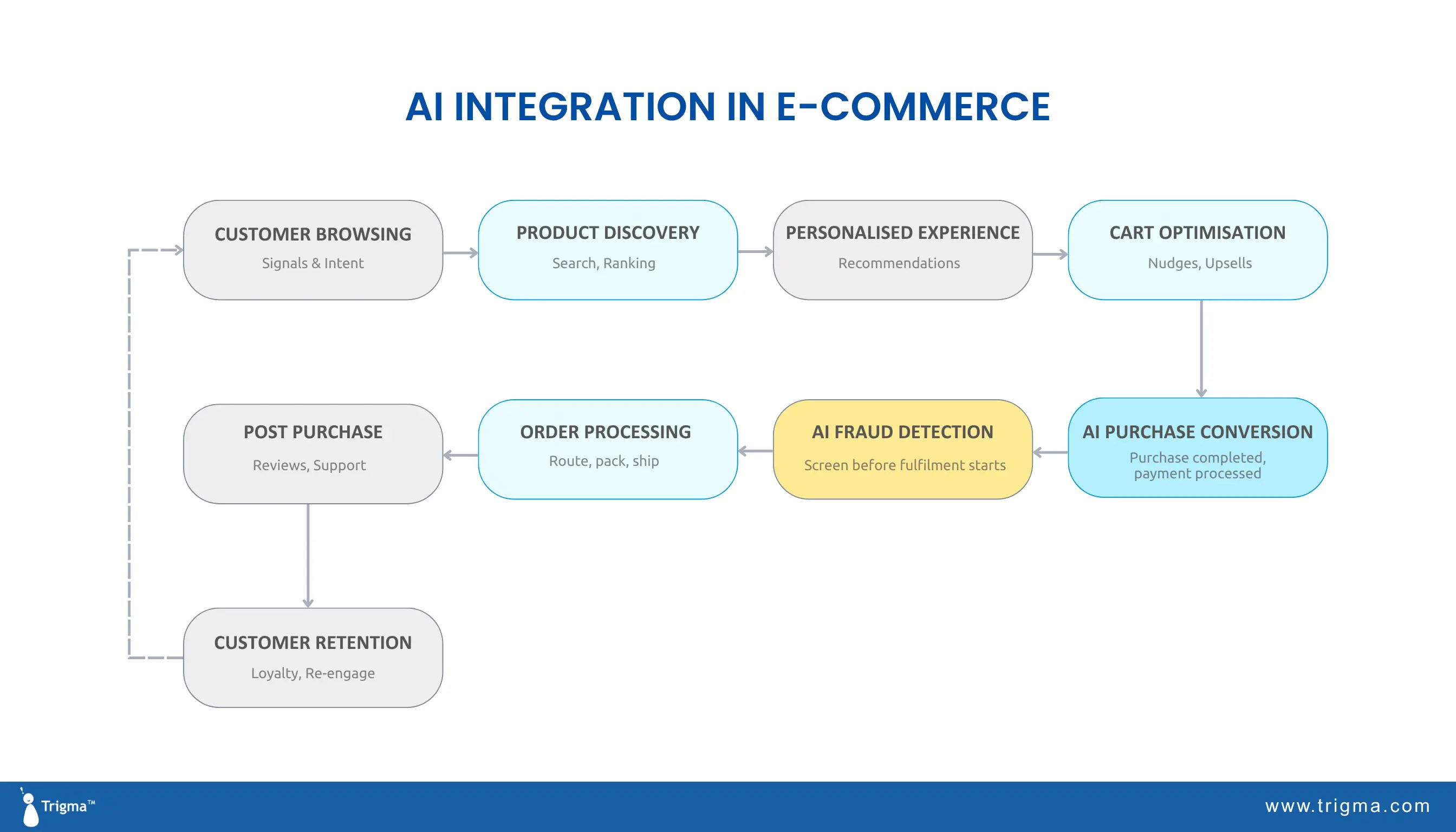
AI has become the engine behind modern eCommerce growth, powering everything from discovery to delivery. Recommendation engines use deep learning to personalize the shopping experience, driving higher order values and repeat purchases. Dynamic pricing algorithms adjust prices in real time based on demand, competition and inventory.
However, AI-powered search uses natural language processing to help customers find products through conversational queries.
10. Edtech
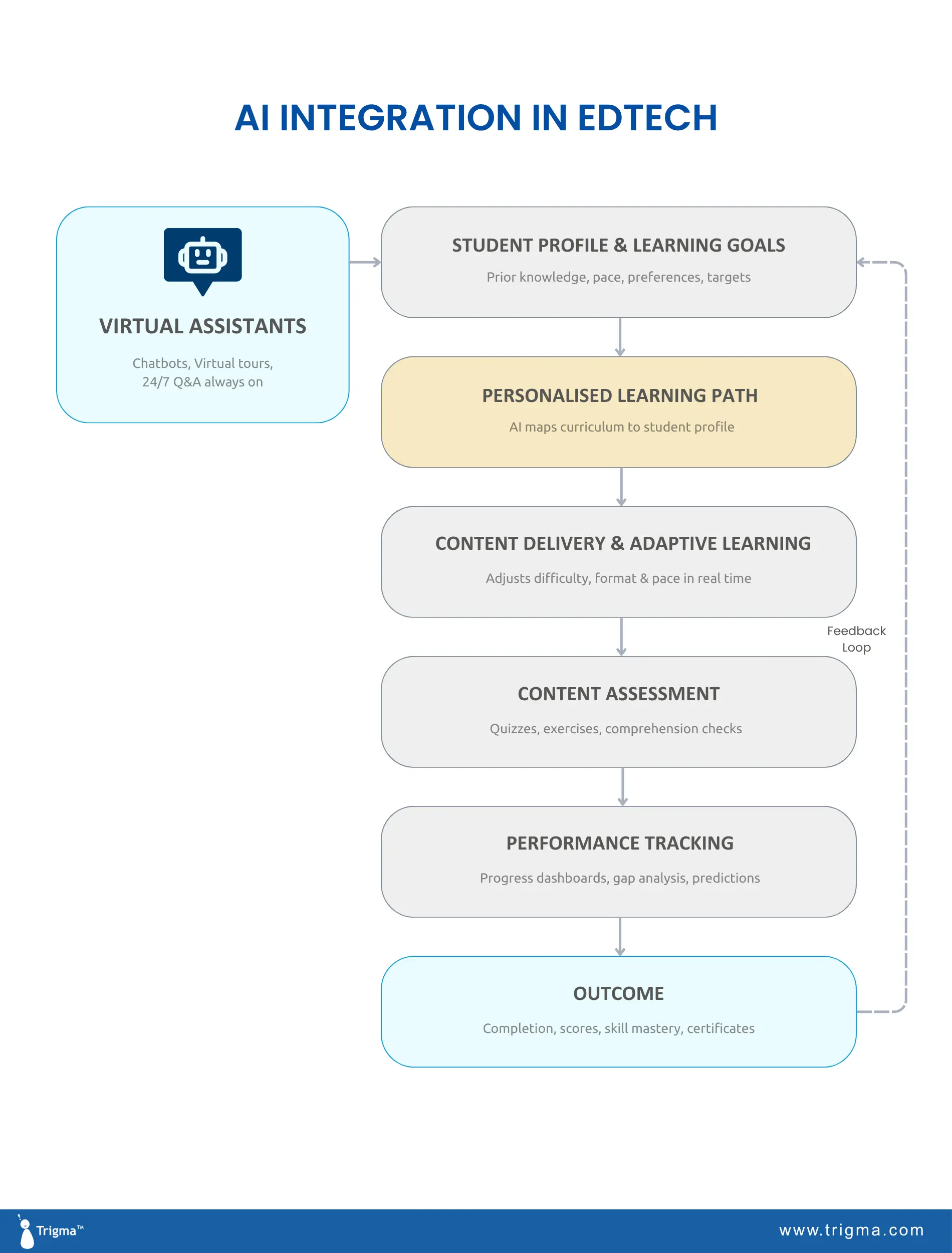
Edtech is revolutionizing education by enabling personalized, adaptive and scalable learning experiences. Adaptive learning platforms analyze each student’s performance, pace, and knowledge gaps in real time. AI-powered tutoring systems provide instant feedback and guided problem-solving, available 24/7, while automating tasks like grading, attendance tracking, and progress reporting for educators.
At the institutional level, AI predicts the dropout rates of students early by analyzing engagement metrics and attendance patterns, enabling timely intervention.
Cost Consideration for AI
AI adoption costs vary widely depending on the complexity, API integration, or custom model integration. Here is a detailed idea of the cost:
| AI Adoption Stage | Estimated Cost Range | What’s Included |
|---|---|---|
| Pilot Model | $10K – $80K | Data preparation, cloud infrastructure setup, API integrations, proof of concept (PoC), and MVP development |
| Mid-Level Deployment | $80K – $200K | Custom AI models, system integrations, workflow automation, MLOps pipelines, monitoring, and optimization |
| Full-Scale Transformation | $200K+ | Enterprise-grade data platform, multiple AI use cases, continuous model training, governance framework, and internal AI Center of Excellence (CoE) |
Governance, Ethics & Risk Management
Responsible AI isn’t optional anymore, it’s essential. As businesses scale their AI systems, the need for strong governance becomes even more critical.
Data privacy & consent
AI is only as trustworthy as the data behind it. Strong governance ensures that customer data is collected, stored, and used responsibly. This includes securing explicit consent, protecting sensitive information, and following privacy laws like GDPR or India’s DPDP Act. The goal is to ensure users always know how and why their data is being used.
Bias testing & fairness
AI systems learn from patterns, and sometimes those patterns reflect human biases. Regular bias testing helps ensure that your AI doesn't unintentionally discriminate against any group based on gender, age, ethnicity, or other protected attributes. Fairness isn’t just ethical, it's crucial for maintaining trust and preventing legal challenges.
Alignment with global regulations
AI laws are rapidly evolving. New frameworks from the EU AI Act to global data protection laws demand higher transparency, safety, and accountability. Aligning with these regulations from the beginning helps businesses avoid penalties, legal risks, and compliance gaps while building future-ready systems.
Common Pitfalls To Avoid
Integrating AI can unlock massive value, but only if businesses avoid the mistakes that slow adoption, inflate costs, or cause projects to fail. Many companies jump into AI with excitement, only to realize later that they overlooked foundational steps. Here are the most common pitfalls to watch out for, and how to avoid them:
1. Starting without a clear business goal
One of the biggest mistakes companies make is adopting AI simply because it’s trending. Without a well-defined problem to solve, AI projects often become expensive experiments with no real outcomes. Businesses can avoid this one highly by identifying two high-impact measurable use cases, like reducing support load, improving forecasting accuracy, and automating manual tasks.
2. Using poor-quality or unstructured data
AI cannot fix unstructured data. If the database is outdated, incomplete, or inconsistent, your model’s prediction will be unreliable. By investing early in data cleaning, building structured pipelines, and implementing strong data governance frameworks, companies can avoid this.
3. Ignoring governance, ethics & compliance
Many companies rush to deploy AI without establishing proper policies for data privacy, fairness, transparency, or regulatory alignment. For businesses in this AI space, building a responsible AI framework that includes bias testing, consent protocols, risk assessments, and compliance tracking is essential.
4. Underestimating security risks
AI systems can become targets for data breaches, model manipulation, or adversarial attacks. Businesses can avoid this by building secure data pipelines, enforcing role-based access, and conducting frequent vulnerability assessments.
5. Expecting instant results
AI delivers powerful outcomes, but that doesn’t just magic. Some organizations expect ROI in days, without even realizing that data preparation, model testing, and training take time. Businesses must set realistic timelines, where quick wins are achieved first while building towards larger transformations.
Ready to Integrate AI Into Your Business?
Whether you want to automate workflows, personalize customer experiences, or build intelligent decision-making systems, Trigma delivers AI solutions that create real business impact.
FAQs
1. How can I determine if my business is ready for AI?
Your organization is ready for AI if you have reliable data, repeatable processes, and clear goals for automation, optimization, or decision support. A readiness assessment helps identify your technical and operational maturity.
2. How do I measure the success of AI integration?
Track KPIs such as cost savings, reduced manual tasks, improved accuracy, faster operations, customer satisfaction, and increased revenue. Model performance and user adoption also reflect success.
3. How long does it take to implement AI in a business?
Basic AI workflows can be launched in 2-6 weeks. More advanced, custom-built AI systems may take 2–6 months, depending on data availability, model complexity, and integration requirements.
4. Can AI integrate with our existing software and tools?
Yes. AI can seamlessly integrate with CRMs, ERPs, HRMS, inventory systems, mobile apps, websites, and other third-party tools via APIs.