performance icon
Top IT Services Company 2025 Top Software Developers 2025 Top Generative AI Company 2025 G2 High Performer Winter 2025 G2 Leader Winter 2025 AI Deployment Company 2024 Top Software Development Company in USA for 2024 Top ReactJs Company in USA for 2024
trigma-logo

Popular On-Demand App Development Ideas for Startups

In today's fast-paced world, convenience and speed are not just preferences, they have become essentials for customers. Businesses that can meet these demands will stand out in the market.

Customers don’t want to wait; they need everything to be available at the click of a button. This need has led to the development of on-demand apps in the market, which not only satisfy customers but also provide them with quality products in no time.

Moreover, with changing market conditions, people prefer to order things right at their doorstep.

If you are thinking of getting into this market as a startup, now is the perfect time. Looking at these statistics, it's the perfect opportunity to build an on-demand development app. In this blog, we will discuss 10 on-app development ideas that will help you discover new business opportunities in the market.

On-Demand App Development Ideas for Newage Startups

The below-mentioned list will help you build an on-demand app as a startup.

1. Tutors Hiring App

Education is a rapidly growing sector and the demand for tutor hiring apps is there. On-demand tutoring apps are changing the way students access personalized learning.

In a rapidly growing market, students need instant and flexible solutions for their academics. Tutoring apps allow students to instantly book tutors based on their skills and expertise. They can interact with them through live calls and chats and resolve their doubts. Even tutors can also fix their exact rates and reach a wider number of students.

2. Psychologist Hiring App

People are becoming more aware of their mental health and seeking convenient ways to connect with experts. On-demand psychologist hiring apps offer immediate, confidential support in counseling, therapy, and mental wellness support with just one click. Users can schedule their appointments and set the rates as per their comfort. This will help users to have their conversations privately and allow experts to expand their services.

3. Consultation App

On-demand consultation app will help you to get expert advice at your fingertips. Every user wants their time to be valued and access to advice could be an easy and quick way to get personal guidance from industry experts and save valuable time. An on-demand app can provide consultation across various industries like business, law, healthcare, and finance. This ensures the users get advice when they need it, despite being wait for long hours. A user can find industry experts based on their experience and qualifications and ensure the best service.

4. Car Service Booking App

With the advancement of tech, the car service and repair market is expected to reach $25 billion by 2030 and grow at a CAGR of 12%. This is the best time to enter this market through an on-demand car service booking app. An on-demand service app makes it easier for users to book car services like repair, and maintenance at their convenience. They can choose a variety of services like oil changes, washing, and object replacement which they want in their services. This ensures personalized support to users ensuring high user satisfaction.

5. Interior Design Service App

Designing industry is the fastest-growing sector and developing an on-demand interior design app can be the most profitable business idea. As people are seeking more personalized and stylish living, the demand for interior designers has increased. A responsive interior design app can connect with professional designers and get tailored advice for their needs. Users can choose customized plans at their convenience and discuss them with designers over a call or chat. Users will get an affordable platform and designers can reach a larger customer base.

6. Babysitter App

Growing hustle, busy schedules, and personal commitments of parents make it difficult to give the best care to their babies. Parents are seeking more trustworthy solutions so they can provide the utmost care to their children. An on-demand babysitter app can provide simple yet reliable ways to find trustworthy and experienced babysitters whenever they need them. Parents can instantly book babysitters as per their preferred time, location, and date. This will give parents trusted caregivers and earning opportunities for babysitters.

7. Traveling Apps like Uber

The era of app development started with innovations like Uber and Airbnb. No one wants to be left behind in this opportunistic world. It is a fact that the transport industry has a new boom with a growing market size of $140.26 billion in 2024. People prefer easier, more convenient transport options and an on-demand app traveling app can allow users to book streamlining rides with the best travel experience. Users can easily book their rides at their current location and a specified rate.

8. Venue Booking App

Venue booking apps like Conveenie, Airbnb, and Booking.com help users seamlessly reserve local spaces and venues at the click of a button. These apps simplify the task of booking venues and free spaces. Hosts can post their free spaces and charge a nominal price based on the booking time. A user can instantly book free space based on their location and prices. These apps can bridge the gap between people and venues, making them more reliable and faster for users and hosts.

9. Gym Coach Hiring App

Fitness is a major concern nowadays. Every person wants to be healthy and fit and to achieve that fitness, they seek a more personalized and flexible way of keeping their body in shape. An on-demand gym coach hiring app allows users to connect with certified trainers on their schedules. Coaches can also offer personalized support like customized nutrition plans and keep a track record of the necessary things. Expert coaches can set their rates and reach a wider audience with their offerings. This is a growing market and entering at the right time can provide you with profitable results.

10. Digital Services App

In the growing digital world, businesses and individuals rely on digital solutions. An on-demand app can offer various digital solutions from a skilled professional at a specific price. From graphic designing to app development users can find the expertise they need within a single app. Users will get a verified profile and access to specialised digital services ensuring quality of work. Service providers will get flexibility in their offerings with a steady income stream. Also, providers can offer their best portfolios to attract a large user base.

11. Medicine Delivery App

Healthcare being a growing sector has undergone major transformation in recent years. After the Covid pandemic of 2020, people are getting more conscious about their health. In this situation an on-demand medicine delivery app can connect users with pharmacies, delivering medicines at their doorsteps. Users can upload their prescriptions and get doctor’s prescribed medicines in real-time.

Summing Up

Heading towards the innovative world where convenience and accessibility are paramount, on-demand apps are changing the way people make money. In the early age of growing startups, people can make a considerable effort and give their businesses sustainable growth.

In this blog, we have shared on-demand app development ideas that may produce excellent results with the right execution. If you are thinking of building a mobile app, then it is better to get help from an experienced player in the market.

Trigma is a leading software development company and serving the client base for the last 15 years. We build innovative and customized solutions to integrate your business with exceptional value.

Contact us at Trigma for a free consultation and start building on-demand apps to stand out in the market.

How AR/VR Technology is Transforming the Food Industry

Imagine a world where the food experience goes beyond taste, texture, and flavor. AR and VR are redefining the customer experience and becoming the most trending tool in the market.

According to market reports, the AR/VR market is projected to reach $96.32 billion by 2029, growing at a CAGR of 34.2%. With AR/VR, businesses can enhance operational efficiency and elevate customer experiences.

AR/ VR is a unique tool that is currently empowering the food industry including restaurants, delivery services, and packaged goods. This tech is still in its infancy, but companies and people are eager to embrace this technology in their personal spaces.

As noted by Forbes, AR/ VR will help drive sales, customer loyalty, and innovation among restaurants. This will promote the brand experience and serve the customers in more meaningful ways. There is no doubt that AR/ VR technologies will give a pivotal shift in the Food industry, providing more innovations with exceeding solutions.

In this blog, we will discuss the ways and innovations that are shaping the food industry.

6 Ways AR/VR is Shaping the Food Industry

Immersive solutions created by AR/VR can shape the business landscape and provide innovation to foster a healthy customer experience.

Here are the ways by which the food industry is transforming.

Machine maintenance

Machine maintenance

AR assists technicians by providing step-by-step instructions and a 3D view while performing maintenance tasks. The real-time guidance helps in reducing errors and providing greater operational efficiency. To eliminate the risk of damaging equipment, VR allows work in virtual environments enabling more efficiency in operations.

AR/VR helps in remote troubleshooting by detecting the problem from anywhere around the world and providing real-time solutions. This will reduce downtime and travel costs, ensuring faster decision-making.

Visualizing Menus

The integration of AR/VR is changing the way customers interact with menus and experience their meals. Restaurants can use AR/VR to their dishes, and menus and upsell items by offering 3D visual representations of their food. The view will excite and make the user more inquisitive about the food, attaining more sales in the future.
AR/VR can change the way how people look out for delicious food. People can get personalized and customized food to their tastes and preferences. This is an engaging way to increase customer base thus ensuring trust and loyalty.

Visualizing Menus
Staff training

Staff Training

AR/VR provides companies the ability to train their staff in a non-stressful environment. With immersive technologies, organizations can provide interactive experiences that can improve learning outcomes and make better-prepared employees.

According to research, AR/VR can guide the process of serving food in a better way resulting in more accuracy and consistency in serving dishes. The tech allows employees to have hands-on experience with the tasks and create better results.

Virtual Tours and Origin

Immersive AR/VR technologies allow customers to experience a virtual tour of how the dishes are served to their plates. A customer can see the origin of their food through a virtual tour from the comfort of their safe place.

With the help of AR/VR, a user can capture the full view from its origination to the restaurant. This first-hand experience gives them the best understanding of the food and the people behind it. It fosters healthy connections that stay with a user for a lifetime.

Virtual Tours and Origin
Personalized and Effective Marketing

Personalized and Effective Marketing

AR/VR enables personalized marketing that enables more customer interaction in new ways. From immersive product demos to interactive storytelling, AR/VR creates tailored experiences that resonate with individuals.

The marketing campaigns foster emotional connections and drive brand loyalty, ensuring a more customer base to know about the brand. This strategy if used by companies, can bring effective results, leading to higher conversion rates of customers.

Supply Chain Management

AR is transforming the supply chain management in the food industry. Using immersive technologies, real-time insights can be provided into the movement and storage of food products. AR/VR helps in quickly identifying products and determining the condition of food products.

This attempt helps regulate inventory and reduces food wastage, ensuring better quality control.

Supply Chain Management

The Future of the Food Industry with AR/VR

As AR/VR immersive technologies continue to evolve, the food industry will take a sharper change in the market. Serving millions of customer with their solution, this technology emerges as a game changer for businesses.

From personalized experiences to virtual shopping, AR/VR is changing the way customers interact with products. These advancements will continue to evolve, enriching customer experience and creating immersive experiences for businesses and consumers. The innovation in this technology can’t be defined and imagined but they continue to provide us with new and unexpected innovations.

How Trigma can Elevate your Food Business with Innovative Solutions

In the evolving world, staying competitive requires embracing new and innovative technologies. Serving the market for the last 15 years, Trigma has been a renowned IT software development company, providing innovative solutions in the market.

We are recognized as a top software developer in Food and beverage by Clutch and can help you in creating effective and demanding solutions. From personalized support, we craft innovative and customized solutions tailored according to your needs.

Our solutions will enhance customer experience and transform the way your business operates. Reach out to our experts today and learn how AR/VR can transform your business to new heights.

How to Create a Coffee Mobile App like Starbucks or Tim Hortons

Do you want to build a responsive coffee mobile app or expand your customer base? In an era where convenience and efficiency are paramount, a well-designed mobile app can be a powerful booster for your business.

Mobile app orders now account for 20% of all coffee transactions in shops. As lifestyles become increasingly fast-paced, people seek more convenience, leading to greater demand for coffee and the corresponding need for specialized apps.

In today’s digital landscape, the value of having a mobile app is clear for all businesses, including the coffee industry. As a competitive player in the coffee market, you must leverage technology to reach a broader audience of prospective customers.

Coffee Apps are the Game Changer

The coffee industry is flourishing, generating more than $88 billion in revenue. Coffee apps have made it convenient to deliver a great taste of brew right to your doorstep.

Since 2020, there has been a significant rise in the use of online apps for ordering coffee. Renowned brands like Dunkin, Starbucks, and Tim Hortons have reached a higher customer base through their online presence with app downloads exceeding 2 million, highlighting the huge demand for beverages.

The growing market size reflects the demand for customer expectations and shows how leading brands are innovating and creating the best solutions to serve their customers.

Features to Make a User-Friendly Mobile App

If you want to create an app like Starbucks, here are the essential features you should consider adding to your mobile app.

Personalized User Profile

Personalized User Profile

Allow users to access a personalized profile with all their essential details. This feature includes important customer information, helping you market your services effectively and convert potential customers into loyal, active users.

Mobile Ordering

Mobile Ordering

Deliver a seamless user interface for easy ordering. Prioritizing convenience will drive long-term profits for your business. The better the user experience, the more likely customers will see your brand.

Customized and Concise Descriptions

Customized and Concise Descriptions

Showcase products and services clearly and engagingly. Keep descriptions concise, with catchy, to-the-point headlines that grab attention and encourage users to place orders.

Order Tracking

Order Tracking

Allow users to track their orders in real time, from preparation to delivery. This feature builds trust and keeps customers engaged with your app.

Push Notifications

Push Notifications

Use push notifications to bring users back to your app by promoting special offers and discounts. Targeted marketing through timely notifications helps build a loyal customer base.

Gamification

Gamification

Incorporate gamified elements like badges and leaderboards. Adding puzzles, quizzes, or feedback options at the end of transactions can make the app more interactive and fun for users.

Interactive Menu

Interactive Menu

Provide detailed descriptions and high-quality images for each menu item. Including an ingredient list helps establish trust and enhances the user experience.

Community Discussions

Community Discussions

Foster a sense of community by creating a space for users to share stories, experiences, and connect with others. A strong community can naturally grow your app’s customer base.

Payment Processing

Payment Processing

Ensure secure, fast, and versatile payment options, including credit cards, debit cards, net banking, PayPal, and more. Offer a seamless payment experience, with saved payment information for returning users.

Help or Guidance

Help / Guidance

Incorporate a robust support system with portals for suggestions and assistance. This feature allows customers to resolve issues quickly and feel supported throughout their experience.

Ultimately, create an app that keeps users so engaged they don’t want to leave. Make your app the one that customers hesitate to exit.

What is the Cost of Building a Mobile App?

The cost of building a coffee app depends upon various factors like technology stack, features, customization, and more. It mostly depends on how you want to develop an app or the desired features needed. Here is an estimated breakdown:

Hourly Price Fixed Price Custom Quotation
Develop your mobile app at an hourly rate starting from $25. Apps with specific features, fixed pricing ranges from $10K to $20K. For advanced tailor made solutions, get a custom quotation.

Choosing the Right Development Partner

To create a successful coffee mobile app like Starbucks or Tim Hortons, here are the essential factors to consider:

Industry Experience

Select a partner with a proven track record in building mobile apps for the food and beverage industry. Their experience will ensure they understand your unique requirements and can deliver the best value.

Portfolio Review

This is a crucial step for clients. Review examples and completed projects within the industry to assess the provider's capabilities and the quality of their work.

Technical Competency

Conduct thorough research to ensure the development team is proficient and capable of handling your project. Evaluate their expertise in relevant technologies and their ability to design user-friendly and intuitive apps.

Client Reviews

Look for reviews and ratings on platforms like Clutch, Goodfirms, or Google Reviews to gauge the overall quality of the provider's work. Pay close attention to feedback regarding timelines, professionalism, and project outcomes.

Final Thoughts

In a growing market, having a coffee app is no longer just an option; it’s a necessity. A successful coffee mobile app enhances customer convenience and strengthens your online brand reputation.

Recognized as a Top Software Developer in Food and Beverage by Clutch, Trigma excels in delivering innovative, user-centric designs combined with robust development solutions. With over 15 years of experience, we provide our customers with the best customized solutions tailored to their needs.

We can help you build a user-friendly coffee mobile app that meets your customers' needs and helps stand out in the market. Our developers will work closely with you to understand your challenges and provide the best solutions.

Planning Your Coffee App Development?

The Role of Generative AI in Education and Its Benefits

In a world where technology is growing rapidly with an outburst of innovations, generative AI is writing new chapters through its immersive transformations.

Generative AI is everywhere. From business to healthcare, there is hardly any sector where generative AI is not making an impact. In this ever-growing world of innovation, the education sector is also taking advantage of it to create personalized and immersive learning experiences for users.

This proves that AI is not just a supporting character but the hero ruling the market. The dream of an AI classroom is not limited to imagination; it is becoming a reality with AI-oriented human teachers.

But can generative AI truly change and evolve the education sector?

Let’s find out in this blog. Welcome to the world of generative AI, a glimpse of the present with future insights in the education space.

Role of Gen AI in Education

Generative AI is ruling the market with its innovation, and education is no exception. Generative AI solutions can improve the quality of learning and foster a culture of critical thinking.

Here are various use cases where generative AI can be used in learning:

Engaging Content Creation

Engaging Content Creation

Education can be made more adventurous through captivating visuals generated by generative AI. Traditional textbooks often hinder effective education, as many students find it boring to read and learn from the same repetitive content. However, generative AI can offer more interactive and interesting options, allowing students to engage with content in a more appealing way.

Identifying Skill Gaps

Identifying Skill Gaps

One of the most crucial areas in a student’s journey is identifying their areas of difficulty. In this stage, AI has emerged as a vital element in learning. An AI tutor can detect gaps in a student’s understanding and provide customized solutions. AI algorithms can analyze learning patterns and help students focus on their weak areas.

Gamified Learning

Gamified Learning Experience

To make education more interactive and immersive, game-based environments are being created for students. Generative AI-based learning makes education more exciting by offering new ways for students to learn. Interactive quizzes and graphics personalize the learning experience, making it more engaging for students.

Real-Time Feedback

Real-Time Feedback and Support

Learning is all about performance assessment and feedback for improvement, which is a critical part of a student’s journey. Through AI algorithms, a student’s performance can be measured after each learning assessment, providing immediate feedback that serves as a foundation for improvement.

Creating Future-Ready Students

Creating Future-Ready Students

With the integration of AI into education, students are equipped with the digital skills necessary for the future. Increased exposure to AI-oriented classrooms allows students to learn in a thriving environment, developing critical and analytical skills that will help them stand out in the marketplace.

Benefits of Gen AI in Education

Here are the top benefits that generative AI brings to the education sector by transforming the way users learn:

Custom Curriculum Development

Custom learning is one of the biggest benefits of generative AI in education, making learning more effective and adaptive. AI can create tailored learning paths based on individual student needs, performance, interests, and learning pace. Personalized quizzes, self-assessments, and study materials help students assess their performance in real-time. Various AI tools have emerged, offering significant solutions to many challenges faced by students.

Smart Tutoring Systems

Smart tutors, or personalized AI tutors, are transforming how students engage with their studies. Unlike traditional tutoring, AI-powered smart tutors are available 24/7, offering personalized assistance to students. From simulating human-like interactions to providing real-time feedback, AI boosts student confidence by delivering tailored support.

Enhanced Learning Capacity

Generative AI, when implemented effectively, can significantly enhance a student's learning journey. This tool is excellent for increasing a student's learning capacity. It can turn an average student into a brilliant one by offering an immersive learning experience that helps students grow and succeed.

Supports Critical Thinking

Generative AI's involvement in education has created a significant impact by elevating students' learning levels. This technology has the potential to improve students' thinking outcomes, supporting critical thinking, which involves analyzing and evaluating situations more effectively, leading to better decision-making skills.

Improves Teachers' Skills and Performance

Teachers, like students, require additional training. While some teachers excel at teaching, others may struggle with interpersonal communication or understanding students' queries. Educational institutions can optimize AI to enhance teacher training, allowing them to improve their skills and better address student needs.

AI and Education Integration: Changing the Way the World Learns

The use of AI-based algorithms laid the foundation for personalized learning. With changing market trends, AI's capabilities in education are evolving, resulting in more sophisticated educational tools for student learning.

AI and Education Integration

The integration of AI into education is transforming traditional learning models across the globe. It shows that AI is not just a supplementary tool but has emerged as a key player in the EdTech industry.

While many people think AI in education is a threat to existing educators, it's actually about the synergy between AI and education, where AI supports educators by automating tasks and creating personalized content to meet user needs.

This transformation will support a more efficient, equitable, and data-driven education system where learning thrives and innovation flourishes.

Malar - The AI Genius Teacher

The year 2024 has emerged as a revolutionary one, as Chennai researchers unveiled the world's first autonomous AI university professor—Malar, boasting a deep understanding of Anna University’s entire engineering syllabus across all disciplines.

Ai driven robotic teacher

This breakthrough is a major disruption in the EdTech industry. Malar is equipped with an enhanced comprehension of Anna University's entire engineering syllabus across all streams. The AI professor can answer up to 20 questions per day for individual students, after which a fee is required for additional questions.

This is one of the best integrations of AI and EdTech in a specific education space.

It marks the beginning of the advanced AI era, instigating the evolution of a new age and immersive innovation.

Trigma - Your Supporting Partner in the EdTech Journey

As the education landscape evolves, innovations in this sector are driving massive disruptions in the entire EdTech market. To thrive in this changing market, adaptability is key.

Trigma is your trusted partner in making the most of your EdTech journey. We provide custom software innovative solutions backed by expert guidance. Whether you're looking to build tailored platforms or enhance student engagement, Trigma can help you elevate and expand your EdTech initiatives.

What You Need to Know About Loan Management Software

As the finance sector becomes increasingly competitive, the demand for robust loan management software has surged.

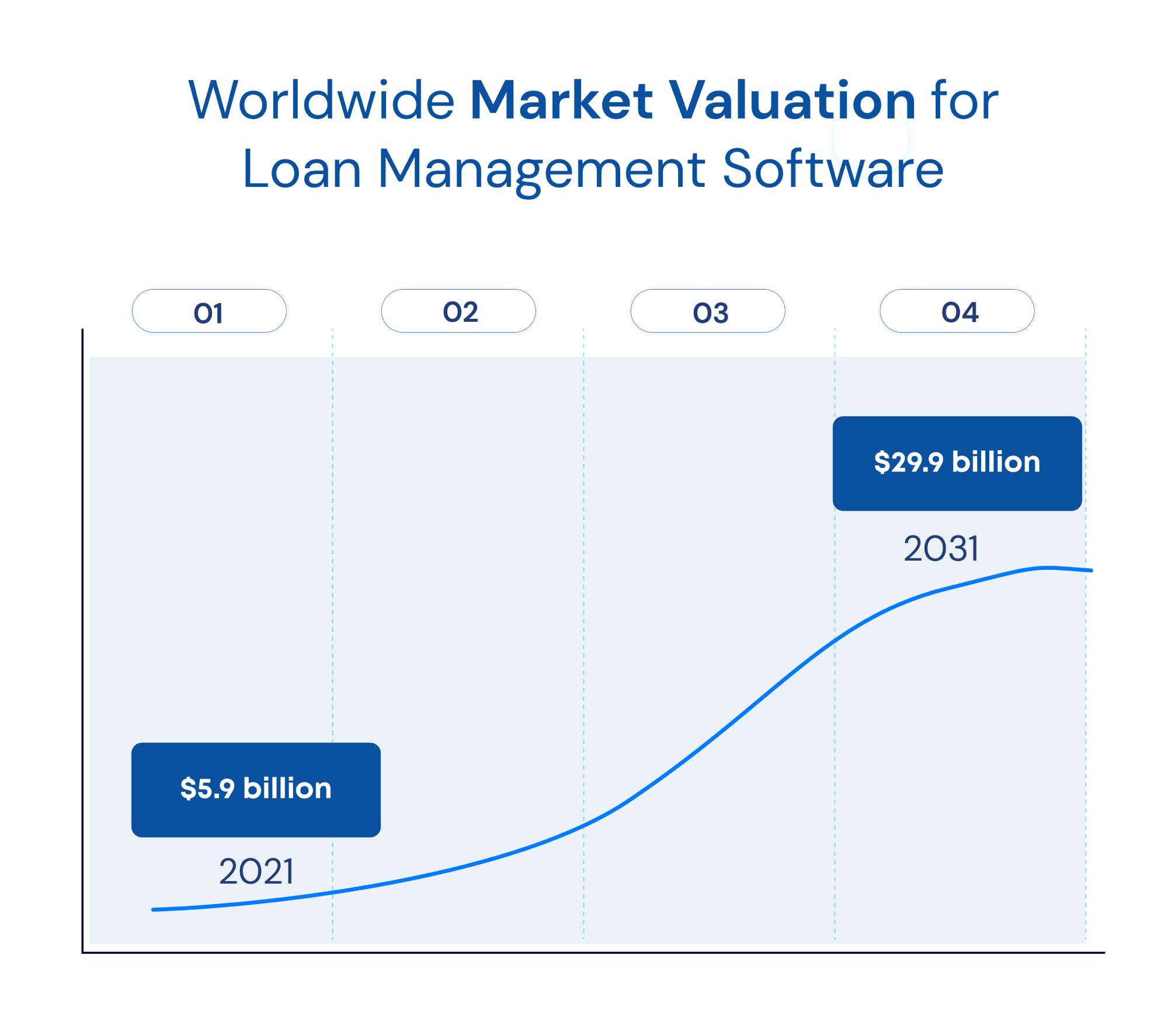
According to Allied Market Research, the global loan management software market is projected to reach $29.9 billion by 2031, growing at a CAGR of 17.8%.

worldwide market valuation for loan management software

Loan management software automates and streamlines the entire lifecycle of a loan, from origination to servicing. It involves designing a platform that ensures a smooth workflow for loan processing and provides digital systems to users.

Financial institutions can automate and manage their loan portfolios effectively in this rapidly advancing world, where technology is reaching new heights.

In this blog, we will discuss and understand what makes good loan management software, so you can design effective solutions for your organization.

What exactly is Loan Management Development Software?

Loan management development software is a digital system that enables lenders automate the loan handling process from the application stage to servicing. It allows financial institutions to gather and verify customer data quickly, offer new loans, manage existing ones, calculate interest, and more.

Banks and various institutions adopted this system, modernizing their operations by implementing digital technologies and automating their systems. By integrating these processes into systems enhances efficiency, accuracy, and regulations for institutions and lenders.

Key Features of a Loan Management System

1. User-Friendly Interface

Loan management software should be user friendly, ensuring that both users and staff can easily navigate the application. It should provide a comprehensive view of metrics and allow access to important information effortlessly.

2. Real-Time Analytics

The application should offer real-time insights into loan processing and servicing. These analytics enable management to make proactive and quick decisions based on current situations.

3. Regulatory Compliance

It is crucial that your application adheres to all regulatory compliance requirements to avoid any legal risks. All loan-related transactions should be conducted transparently.

4. Collateral Management

LMS facilitates real-time tracking of collateral status, ensuring an accurate view of the current portfolio. Automation simplifies the process, allowing collateral to be valued as data is entered into the system.

5. Loan Repayment Management

Digitalization automates loan repayments, including accruing interest and displaying real-time loan status. Early reminders help users stay informed about repayment schedules.

Benefits of Loan Management System

1. Smooth Workflow

A Loan Management System (LMS) helps automate tasks, reducing the need for a manual workforce. This automation enhances accuracy and minimizes the chances of human errors in the system.

2. Customer Satisfaction

In today's competitive world, customer satisfaction is a top priority for businesses. An LMS is structured to provide quick service to consumers by offering a personalized portal accessible anytime, ensuring a positive customer experience.

3. Regulate Cash Flow

A Loan Management System helps regulate cash flow by monitoring payments, calculating accrual interest rates, and sending automated reminders for due payments. Maintaining a healthy cash flow is essential for the smooth functioning of an organization's operations.

4. Ensure Security

A Loan Management System must be designed to ensure the security of consumers by protecting their personal information. Customer data is a business responsibility and should not be transferred to any third party or accessed by unauthorized staff without permission.

5. Cost-Effective

Manual loan management is challenging and resource-intensive. By automating human tasks, an LMS ensures cost savings and allows human resources to focus on more productive work. This reduces the need for extensive staffing, fostering a healthy work environment.

How To Choose The Right Loan Management Software For Your Business?

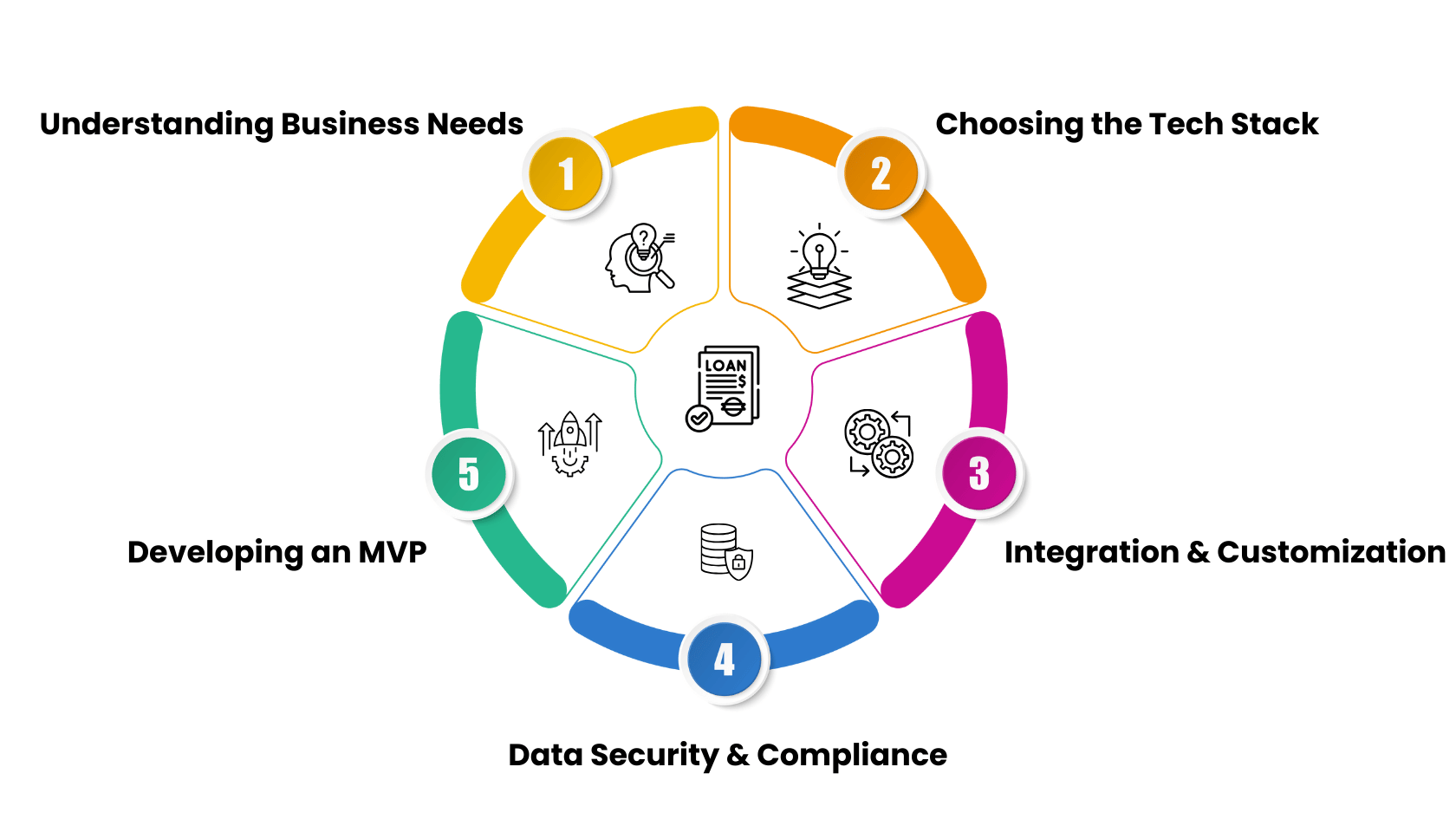
Selecting the right Loan Management System (LMS) is a crucial decision for any business. The choice depends on the size of the organization and its specific needs. Here are the key steps for choosing LMS software:

Loan Management Software For Your Business

1. Understanding Business Needs

This is the most critical step in the process. Assess your business needs, including loan types, user roles, and regulatory compliance. Identify the maximum number of loans you can offer and the duration of those loans. This is the foundation for determining the features your LMS must have.

2. Choosing the Tech Stack

Select the appropriate technology for your software that ensures a good UI/UX interface. Choose designs and structures for the app that are appealing and include all the required features. The right tech stack will ensure scalability and performance.

3. Integration and Customization

Ensure your LMS can integrate with your existing systems. Check if the software offers APIs for easy integration. Customization options in the loan management system are crucial to tailor the system to specific business needs.

4. Data Security and Compliance

Your Loan Management Software should incorporate robust encryption and security measures to protect sensitive user information. Ensure the application adheres to specific compliance standards to maintain system safety.

5. Developing an MVP

Develop an MVP (Minimum Viable Product) to test the core features and functionality of your LMS. An MVP allows you to gather necessary feedback and make adjustments before a full launch. This process helps in identifying and fixing issues, ensuring the final product meets market and user expectations.

What is the Cost of Developing a Loan Management Software?

The cost of building loan management software depends on various factors, including the required features and functionality, software complexity, technology stack, and the development team's skill level and experience. Here's a general breakdown:

Type of Loan Management Software Development Cost
Basic Loan Management Software: $30,000 - $60,000
Mid -Level Basic Loan Management Software: $60,000 - $150,000
Advanced Loan Management Software $150,000+

How can Trigma Help in Building a Successful Loan Management Software?

At Trigma, we stand at the forefront of innovation by continuously advancing our technological capabilities. As technology evolves, we aim to provide our clients with the best solutions to ensure their utmost satisfaction.

Our Offerings:

  • Customized Solutions: Tailored to meet your specific business needs.
  • User-Friendly Interface: Intuitive and easy to navigate for both staff and customers.
  • End-to-End Support: Comprehensive assistance from implementation to ongoing maintenance.
  • Cost-Effective Solutions: High-quality technology that maximizes value and reduces operational costs.

Trigma delivers highly cost-effective solutions that enhance customer satisfaction and seamlessly integrate advanced technologies into your system.