performance icon
Top IT Services Company 2025 Top Software Developers 2025 Top Generative AI Company 2025 G2 High Performer Winter 2025 G2 Leader Winter 2025 AI Deployment Company 2024 Top Software Development Company in USA for 2024 Top ReactJs Company in USA for 2024
trigma-logo

How Blockchain Will Shape Cybersecurity in 2025

Cyberattacks are no longer rare threats; they have become a daily reality, where every single day, some data gets hacked. The global impact of cybercrime is significant and estimated to rise from $9.2 trillion in 2024 to $13.82 trillion by 2028. Traditional defenses, such as passwords, centralized databases, and firewalls, are struggling to keep up with increasingly sophisticated attackers.

However, blockchain stood up as an emerging helper in this cybercrime world. Often associated with just cryptocurrencies, blockchain is more than just a financial ledger. It is a core, tamper-proof, decentralized, and transparent record-keeping system. In other words, once the information is written onto a blockchain, it can’t be secretly altered or erased, a property that has a massive potential for cybersecurity.

Let’s discuss and explore in this blog how exactly blockchain will shape the cybersecurity landscape in 2025.

Why Blockchain Matters in Security?

Here are the reasons why security in blockchain matters.

Think of traditional cybersecurity as a bank vault. The vault is strong, but it has one door, and if hackers break in, everything inside is compromised. Blockchain, on the other hand, spreads data across thousands of doors (nodes). To tamper with it, an attacker would need to break into most of them simultaneously, and that’s somehow impossible.

  • Immutability: Once data is recorded, it can’t be altered.
  • Decentralization: No single point of failure or central database to target.
  • Transparency: Every transaction is verifiable, which builds trust and accountability.

These features are now being applied to enterprise security in innovative ways.

Significance of Blockchain in Cybersecurity
Blockchains role in Cybersecurity

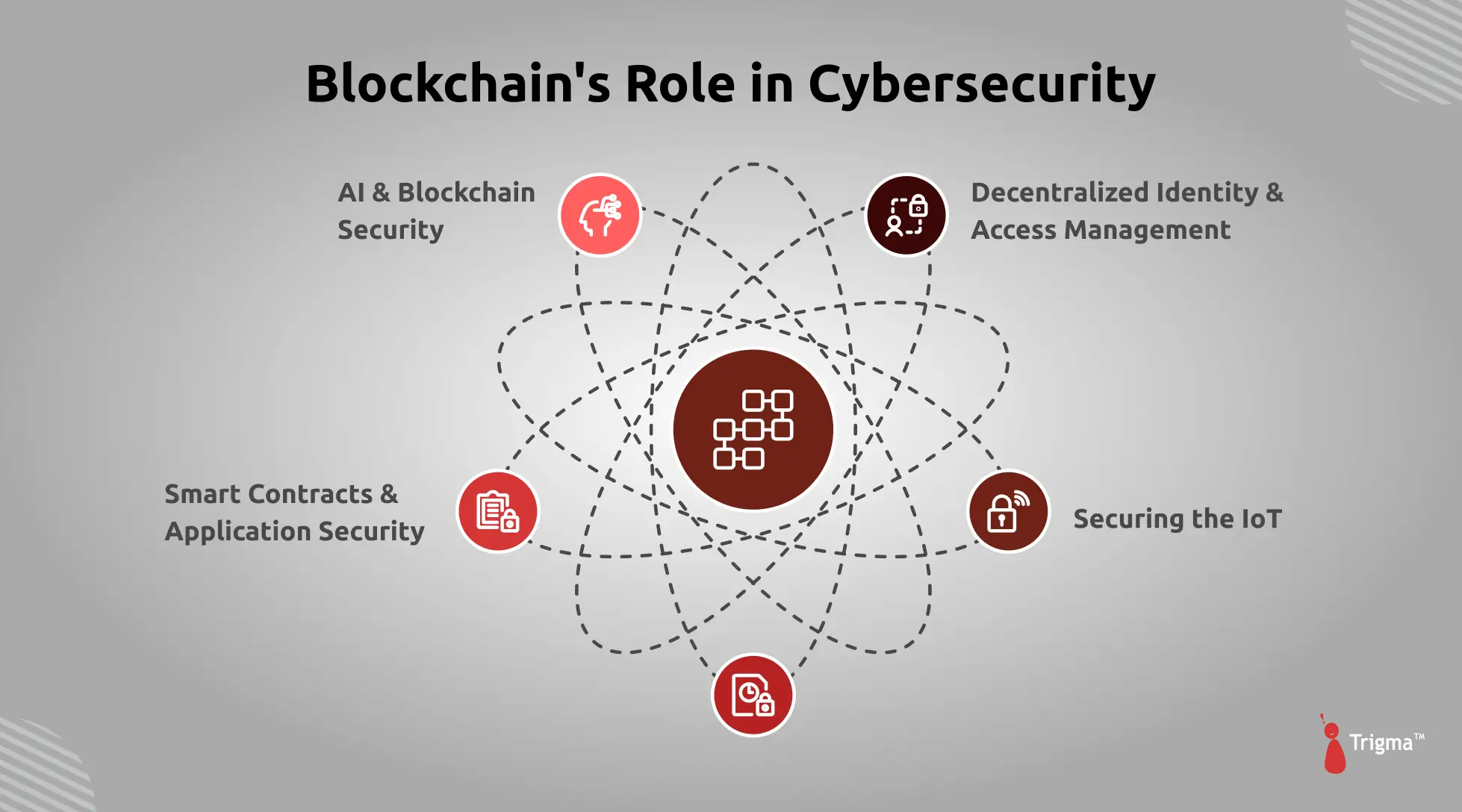
1. Decentralised identity and access management

Passwords have been the weakest link in cybersecurity. In 2024, billions of records containing usernames and passwords were leaked, showing how fragile centralized security systems are.

In 2025, enterprises will be shifting to decentralized identity (DID) systems, where users control their own credentials on the blockchain. Instead of relying on a vulnerable central database, each person or device has a cryptographic key stored securely. If one system is breached, attackers can’t steal millions of identities at once. The Malaysian government has already launched blockchain-powered digital ID apps, and companies like Microsoft and IBM are investing heavily in self-sovereign identity solutions.

2. Securing the IoT

In 2025, there will be over 30 billion IoT devices, from smart cameras to medical sensors. Each one is a potential entry point for hackers. Traditional IoT security struggles because many devices are cheap, unpatched, and easy to hijack.

Blockchain changes that by giving each device a unique, verifiable identity on the blockchain. Devices can “check in” with each other, proving they are legitimate before sharing data. Only verified devices can join the network, drastically reducing the risk of rogue devices. Experts highlight that blockchain’s immutability makes tampering with IoT data instantly visible, creating a transparent audit trail.

3. Immutable logs and compliance

In cybersecurity, logs are everything. They tell you who accessed what, when, and how. The real problem with traditional logs can be altered or deleted, especially by insiders. Blockchain fixes this with immutable audit trails. When logs are recorded on a blockchain, they cannot be changed without detection.

Investigations become more accurate, and compliance (GDPR, HIPAA, ISO standards) becomes easier. Several security firms are already integrating blockchain into SIEM (Security Information and Event Management) systems. Immutable logs will soon become a compliance expectation, not just a best practice.

4. Smart contracts and application security

Smart contracts, self-executing code on blockchains, are revolutionizing industries from finance to supply chain. But they also introduce new security risks. In 2024, billions were lost to DeFi hacks exploiting buggy smart contracts.

In 2025, enterprises will prioritize formal verification, regular audits, and blockchain-based code integrity checks. Companies are now anchoring software builds to blockchains, ensuring that if malicious code is injected, it can be detected immediately. Organizations must integrate blockchain hashing into their CI/CD pipeline to guarantee software integrity.

5. The rise of AI & blockchain security

AI is now central to both cyber defense and cybercrime. Blockchain helps make AI trustworthy by securing training data, model versions, and outputs. Threat intelligence shared on a blockchain is tamper-proof. AI models stored on blockchain registries ensure no one has secretly altered them.

From the industry outlook, startups will start offering AI & blockchain-powered threat detection and fraud prevention in 2025.

Challenges Ahead
key-challenges-facing-blockchain-technology

Blockchain is powerful, but not perfect.

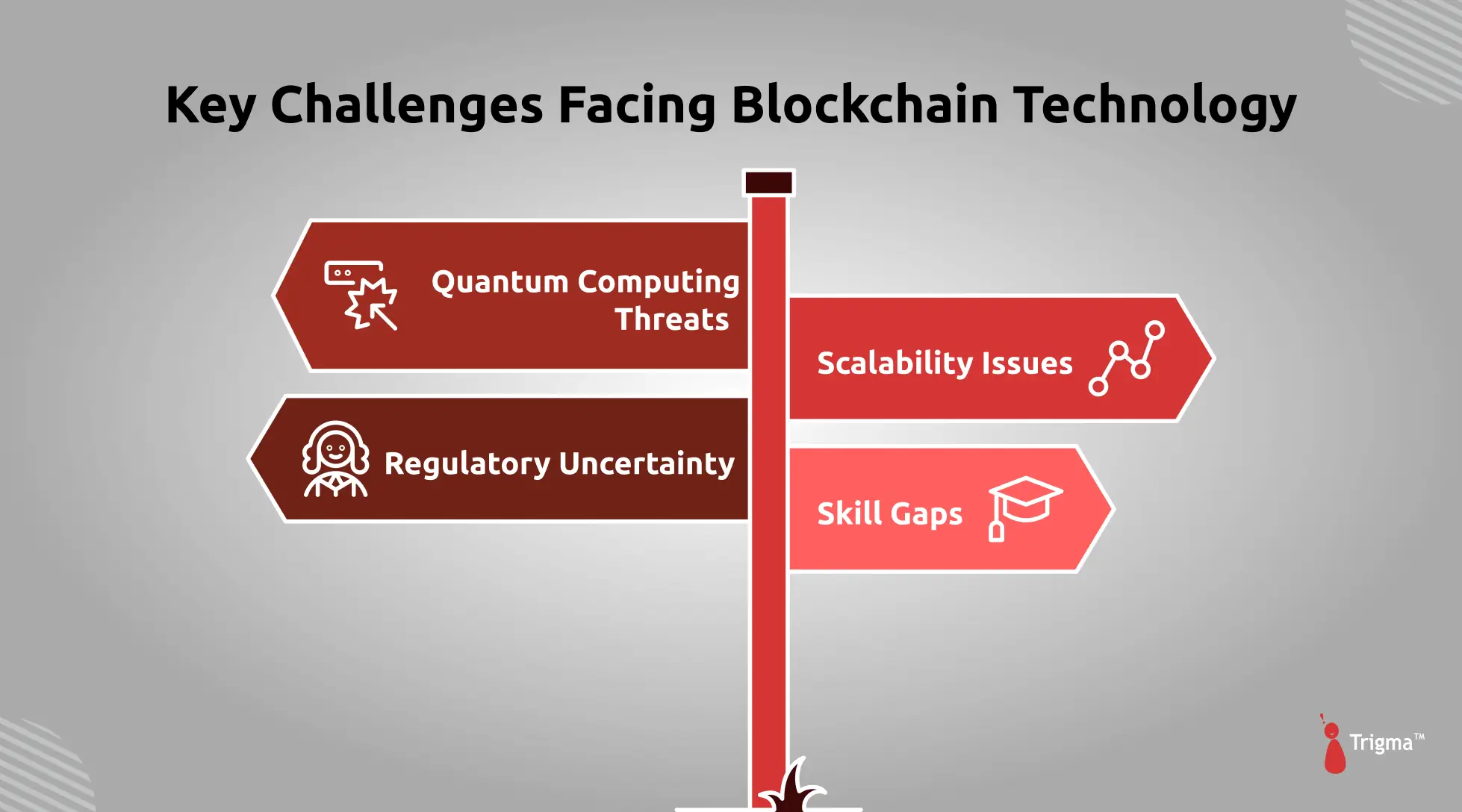
  • Quantum Computing Threats: Future quantum computers may crack today’s blockchain encryption, so post-quantum algorithms will be necessary.
  • Scalability Issues: Public blockchains can be slow; enterprises may need permissioned or hybrid systems.
  • Regulatory Uncertainty: Standards are still evolving, making compliance tricky in some regions.
  • Skill Gaps: Many teams still lack blockchain expertise, which could slow adoption.

Early adopters will gain a strategic advantage by experimenting now, rather than waiting for regulations or competitors to set the pace.

Conclusion

In 2025, blockchain will no longer be just a buzzword; it will be a cornerstone of enterprise cybersecurity. From decentralized identity to tamper-proof logs and IoT security, blockchain offers practical solutions to some of the toughest challenges in digital defense.

Cybersecurity’s future is decentralized, transparent, and blockchain-powered.

If you’re an enterprise leader, start small today. Pilot a blockchain-based identity system, test immutable logging, or explore blockchain-secured IoT solutions. The companies that prepare now will be the ones setting the cybersecurity standard in 2025.

Strengthen Your Cybersecurity with Blockchain

At Trigma, we help enterprises integrate next-gen blockchain-powered security solutions from decentralized identity to immutable logs and IoT protection.

Let’s future-proof your cybersecurity for 2025.
How Startups Can Use AI to Drive Business Growth

Building a business in a highly competitive world can be challenging. Agility, innovation, and speed are seen as strong pillars and often separate successful ventures from the rest. In this race, Artificial Intelligence (AI) has emerged not as a support tool, but as a strategic growth engine. From automating repetitive tasks to uncovering customer insights and driving product innovation, AI for startup growth has become a necessity.

Whether you’re building a SaaS product, launching a consumer tech brand, or scaling a D2C venture, understanding how startups use AI can unlock massive efficiency, scale, and profitability. In this blog, we’ll break down the ways AI can drive business growth and how early-stage startups can implement AI effectively.

Turn Your Startup Vision into an AI-Driven Success Story

Why AI Matters For Startups in 2025?

Surrounded by a data-driven economy, startups are already sitting on a goldmine. From user behaviour to marketing analytics, every touchpoint holds a valuable insight. AI is the key that unlocks these insights and turns them into action.

With the advancement of Generative AI, Agentic AI, AI/ML-powered automation, and predictive analytics, AI is no longer for large enterprises. It’s accessible, scalable, and customized for startups.

Business growth with AI is accelerating across industries, as companies that are opting for intelligent solutions are seeing significant cost savings on repetitive manual tasks, faster go-to-market speed, and enhanced customer experience and personalization.

Key Areas Where Startups Can Use AI

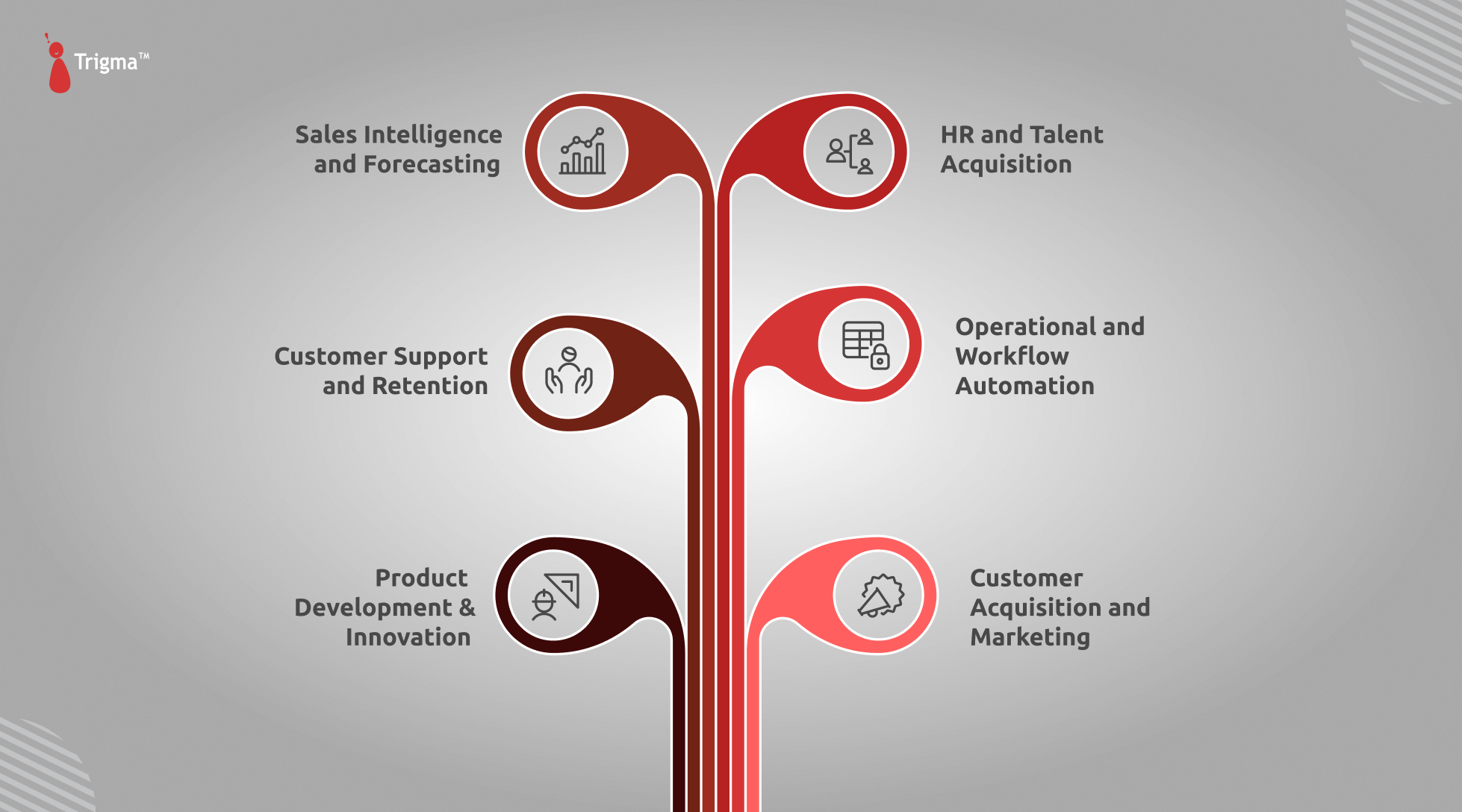
Let’s break down how startups can practically use AI across various business functions:

Key Areas Where Startups Can Use AI

1. Product development & innovation

AI can help businesses and startups in understanding market trends, customer pain points, and user feedback at scale, incorporating smarter product decisions.

Real use-cases

  1. AI-driven product recommendation engines
  2. Feature prioritization based on user sentiment analysis
  3. Testing UI/UX variations with AI-generated design ideas

Example

A fintech startup uses AI to analyze support tickets and user feedback to detect bugs or prioritize product features, leading to faster iterations and higher user satisfaction.

2. Customer acquisition and marketing

Marketing budgets are tight in early-stage startups. AI for startups shines by optimising customer acquisition through data. This data is proven to be a secret sauce for many businesses if used and targeted correctly.

Real use-cases

  1. AI-powered ad campaign optimization (Google Ads, Meta Ads)
  2. Predictive lead scoring and targeting
  3. Personalization of content, emails, and landing pages
  4. Conversational AI (Chatbots and voice assistants)

Example

An e-commerce startup integrates AI to auto-generate personalized product emails and social media content, resulting in higher engagement and reduced CAC.

3. Customer support and retention

Delivering consistent, high-quality customer support is a challenge when you’re small. AI helps scale this and build trust with your user.

Real use-cases

  1. AI chatbots for 24/7 instant support
  2. Sentiment analysis to proactively address customer dissatisfaction
  3. Automated follow-ups or ticket classification

Example

A SaaS startup implements a multilingual AI chatbot and reduces workload by 60%, allowing the human team to focus on complex queries.

4. Operational and workflow automation

AI helps reduce the manual burden of routine operations, giving back time for strategy and execution.

Real use-cases

  1. Automated invoice generation and accounting via OCR
  2. Smart inventory and supply chain management
  3. AI-generated reports, dashboards, and documentation

Example

A logistics startup uses AI to optimize delivery routes based on traffic data and reduce fuel costs.

5. Sales intelligence and forecasting

AI can sharpen your sales efforts by analyzing behavior, identifying conversion patterns, and even forecasting future sales.

Real use-cases

  1. Lead prioritization using predictive analytics
  2. Real-time CRM insights
  3. Sales pipeline forecasting using historical data

Example

A B2B SaaS startup integrates AI into its CRM to automatically recommend the next-best action for each deal, boosting closure rates.

6. HR and talent acquisition

Recruiting and retaining top talent is a bottleneck for most startups. AI streamlines hiring, employee engagement, and retention.

Real use-cases

  1. Resume parsing and intelligent candidate screening
  2. AI-assisted performance analytics
  3. Predictive modeling

Example

An early-stage startup uses AI to scan 10,000+ resumes and shortlists the top 100 candidates in minutes, saving weeks of effort.

Roadmap For Startups to Get Started With AI

If you’re wondering how to get started, you don’t need a big data science team or a massive budget. Start small, scale fast.

Roadmap For Startups to Get Started With AI

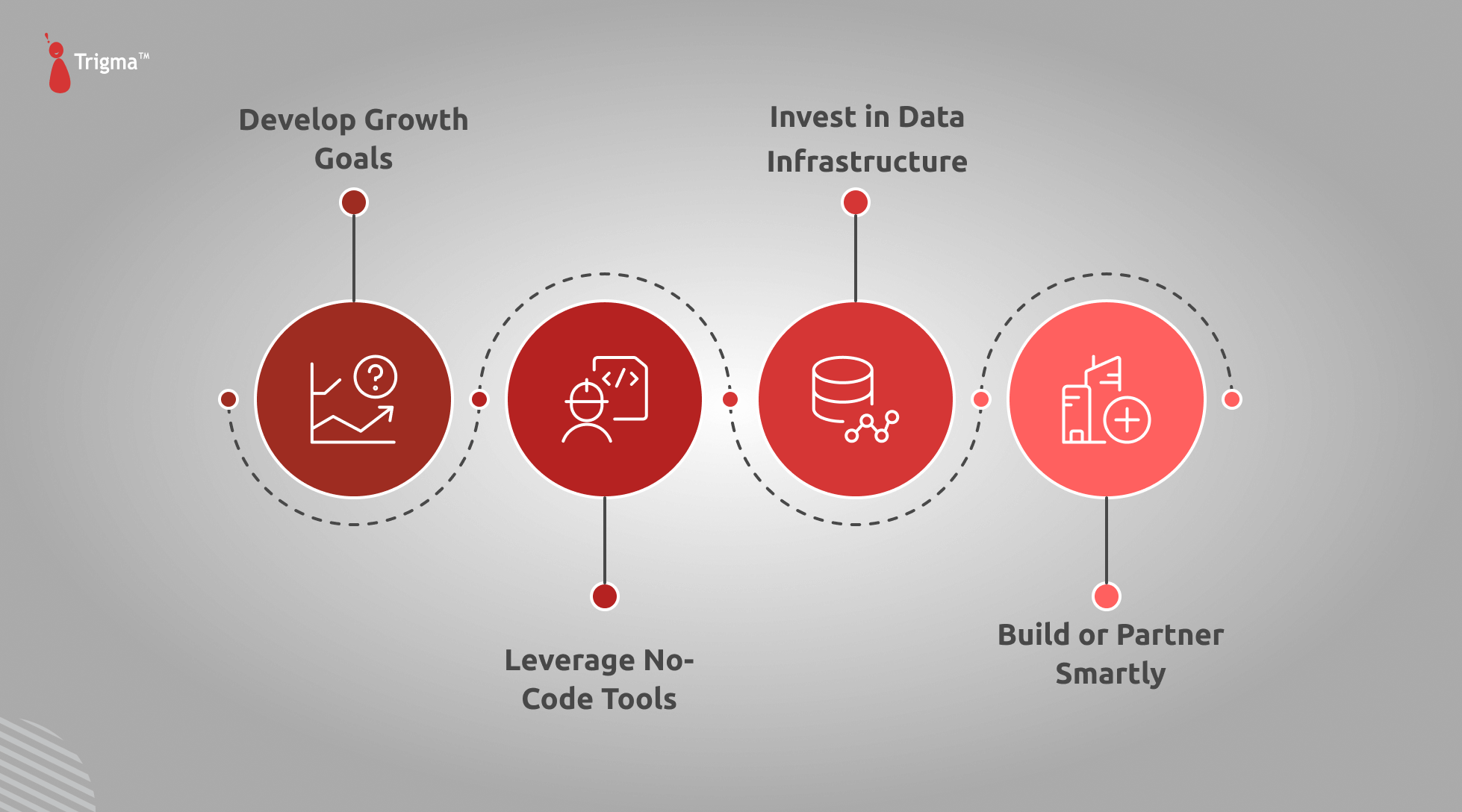
1. Develop your growth goals

Identify your business bottlenecks. Is it lead generation? Customer churn? Product feedback? Map out which areas AI can solve efficiently.

2. Leverage no-code tools

Leveraging these platforms enables rapid prototyping, cost-efficiency, and faster time-to-market for AI-driven solutions.

3. Invest in data infrastructure

AI usually works on data. Ensure you’re tracking relevant user data, behavior, and analytics.

4. Build or partner smartly

If you’re not ready to step into the market alone, partner with the right tech partners who specialize in AI for startup growth. You can also go for a white-labeled solution for faster deployment.

The Future of AI in Startups

The role of AI in startups is just getting started. As technologies like agentic AI, autonomous workflows, and multi-modal AI models evolve, the future will empower startups to run leaner, faster, and more intelligently than ever before.

Expect startups to move beyond using AI just for automation or analytics. The next wave will involve AI acting as co-founders, making strategic decisions, managing operations, and even building products end-to-end. With tools becoming more intuitive and open-source models more accessible, even bootstrapped teams will compete with industry giants, fueled by AI.

Moreover, with responsible AI development gaining momentum, ethical AI adoption will become a key differentiator. Startups that focus on transparency, fairness, and data privacy will build more trust and long-term value.

In short, AI won't just support startup growth; it will define how startups are built, launched, and scaled in the future.

Final Thoughts

AI is no longer a futuristic concept, it’s a practical, scalable growth partner for startups ready to move fast and make smarter decisions. When it is properly integrated, AI doesn’t just optimize your operations, it transforms how you innovate, compete and scale. Whether you’re bootstrapping your first MVP, or preparing to scale globally, now is the prime time to make AI a core part of your strategy.

At Trigma, we specialize in helping startups harness the full potential of AI, from idea to execution. Whether you’re building your first MVP, refining your product, or scaling to new markets, we bring our technical expertise and help to get your business succeed.

Partner with Trigma to turn your startup vision into an AI-driven success story.

From building intelligent solutions to driving automation, personalization, and growth, we help startups move from idea to impact, faster.

Benefits of Starting with a GCC Pilot at Trigma

Global capability centres (GCC) have moved far beyond just cost-saving offshore hubs. Presently, they’re driving innovation, product development, customer experience, and much more. For global brands looking to expand and grow their business, setting up a GCC in India has become a highly strategic move.

But like any important decision, setting up a GCC is a researchable question- What if a GCC won’t work out? How will we get the right talent? What will the returns look like?

And in all this, GCC pilots can change their perspective.

Let’s understand what a GCC pilot is and how it can benefit in setting up an effective GCC.

What is a GCC Pilot?

GCC pilot is essentially a test run - a short-term, small-scale version of the full Global Capability Centre (GCC). Instead of going all in at once, you get to experiment, evaluate, and refine your approach before scaling up.

At Trigma, we offer a tailored GCC pilot program that gives you a low-risk, high-impact entry into the competitive market. Our pilot program is designed to help you:

  1. Validate your business case
  2. Test team performance
  3. Understand operational dynamics
  4. Build local market confidence

Benefits of starting GCC Pilot with Trigma

Here are the reasons why starting a GCC pilot with Trigma is a strategic move.

Benefits of starting GCC Pilot with Trigma

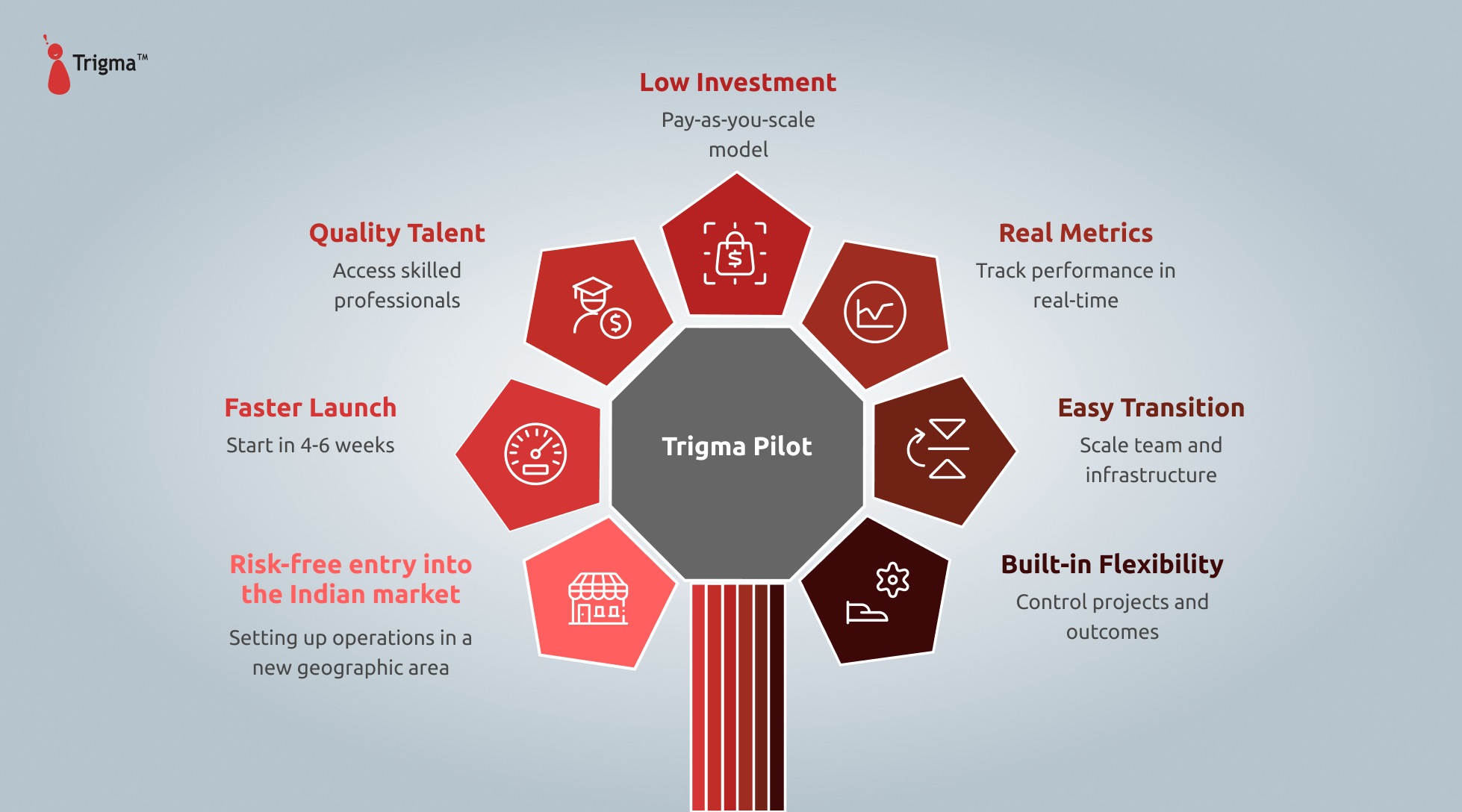
1. Risk-free entry into the Indian market

Setting up operations in a new geographic area can be challenging. Regulations, hiring, infrastructure, and cultural differences all pose major challenges. With a Trigma pilot you don’t need to worry.

We handle everything end-to-end:

  1. Recruitment and onboarding
  2. Compliance and legal formalities
  3. Office set up
  4. HR, payroll, and IT support
  5. You get to test the waters without committing major resources upfront. If things go well,
  6. you can scale smoothly

2. Faster go-to-market time

One of the biggest challenges in global expansion is time. A full GCC setup can take 6-12 months. But with our pilot program, you can start in just 4-6 weeks. We have ready-to-use infrastructure and an active talent pipeline, so you don’t have to start from scratch. Your pilot team can be up and running in record time, delivering results while your long-term GCC plans take shape.

This speed can give your business a critical first-mover advantage.

3. High-quality talent

India has a rich pool of tech and business talent — engineers, data scientists, digital marketers, designers, CX specialists, and more. But hiring the right talent needs local know-how. At Trigma, we’ve spent over 15 years building high-performance teams for clients across the U.S., Europe, and Asia. We don’t just look at technical skills — we focus on culture fit, communication, and problem-solving ability.

4. Low initial investment

One of the biggest advantages of a pilot is that you don’t need to commit to large capital expenditure right away. No need for big office leases, complex infrastructure, or long-term hiring contracts. Trigma offers a pay-as-you-scale model. You can start with a lean team (say 5–15 members) working on core projects. Based on outcomes, you can choose to scale, modify, or even pivot your GCC strategy.

5. Real-time performance metrics

Our GCC pilot isn’t just about staffing and setup. It’s built around transparent KPIs. We work with you to define:

  • Delivery benchmarks
  • Productivity goals
  • Quality standards
  • Communication protocols

We then track performance in real-time and share detailed reports. This gives you full visibility into how your pilot team is functioning and whether it’s aligned with your expectations.

6. Easy transition to full-scale GCC

Once your pilot is successful, we help you make the transition to a full-fledged GCC in a simpler way.

We help you:

  • Scale up the team
  • Expand infrastructure (custom office, hybrid or remote model)
  • Formalize long-term compliance & governance frameworks
  • Establish local leadership for smoother operations

Since the pilot already aligns with your business processes, scaling must be easier in this case.

7. Built-in flexibility

Unlike traditional outsourcing or rigid partnerships, a GCC pilot at Trigma offers you control of the project from the start.

  • You choose the projects
  • You review the outcomes
  • You own the IP and talent relationships

We act as your local partner, not just a vendor. That means you have all the flexibility you need while we focus on operational activity.

Why Choose Trigma?

We’ve helped startups, SMEs, and Fortune 500 companies set up successful GCCs in India. Our model combines consulting expertise, technology infrastructure, and operational execution, all under one roof.

trigma helped startups

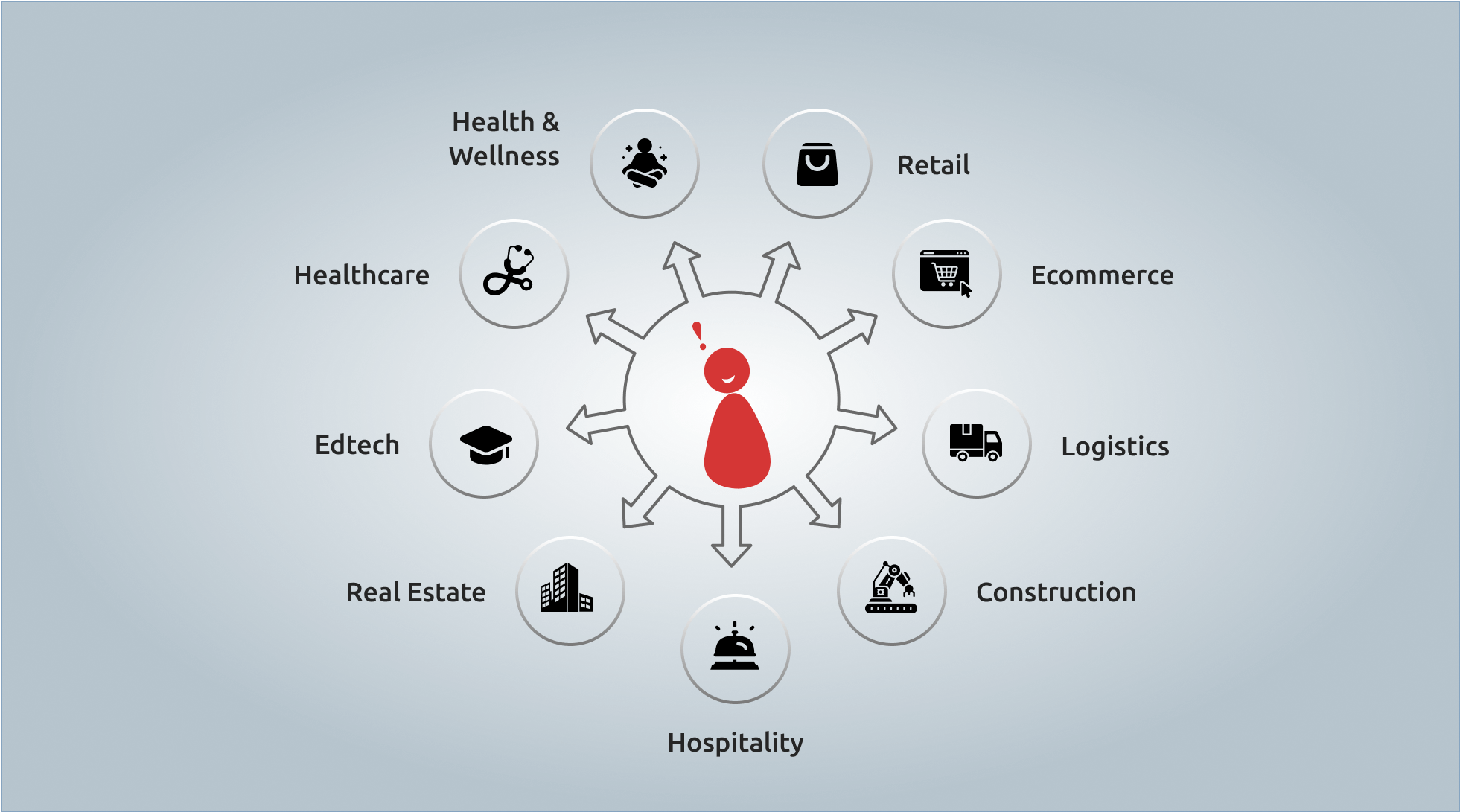
With a presence in both India and the U.S., we understand global expectations and local execution. Our aim is simple — to help you scale smarter, faster, and safer. We have catered to clients across various industries like healthcare, edtech, real estate, hospitality, and more.

With our 15 years of expertise, we put out the best solution for the clients, ensuring their brand continuously grows and achieves success.

Final Thoughts

GCC Pilot at Trigma

In today’s competitive business landscape, agility is key. A GCC pilot at Trigma gives you the flexibility to test, adapt, and grow — without locking into long-term investments too early. You gain access to world-class talent, tested infrastructure, and a trusted local partner who understands how to blend global vision with local execution.

The pilot model isn’t just a stepping stone; it’s a strategic move that positions your business for long-term success. As digital transformation reshapes industries, this approach helps you move faster, stay lean, and lead with confidence.

Thinking about setting up a GCC India?

Start with a customized GCC pilot roadmap at Trigma today!

How Agentic AI is Changing Healthcare Support Systems

The healthcare industry is undergoing a massive digital transformation, and agentic AI is becoming one of the fastest tools to drive this change. Unlike traditional AI systems that just perform fixed tasks based on a specific order, agentic AI introduces a new class of intelligent systems that perceive, reason, plan, and act autonomously to complete complex tasks.

For startups and mid-sized businesses, this is not just a technology upgrade, but a way to improve operational efficiency, enhance patient care, and reduce the growing burden of medical staff.

In this blog, we will explore how agentic AI is reshaping healthcare support systems across clinical operations and why this shift marks a turning point in the future of digital health.

What is Agentic AI?

Agentic AI refers to artificial intelligence systems that act like digital agents, ie, autonomous, goal-driven entities that can make decisions, adapt to changing contexts, and interact with tools or the environment to achieve objectives. These agents are designed to function with:

  • Memory and context awareness
  • Autonomous task planning and execution
  • Tools and API integration capabilities
  • Human-in-the-loop collaboration

Agentic AI behaves more like a digital team member as it learns, improves, and takes initiative with a defined goal.

How Agentic AI Is Powering Healthcare Support

Here’s how agentic AI is making a change in the healthcare industry.

Agentic AI Is Powering Healthcare Support

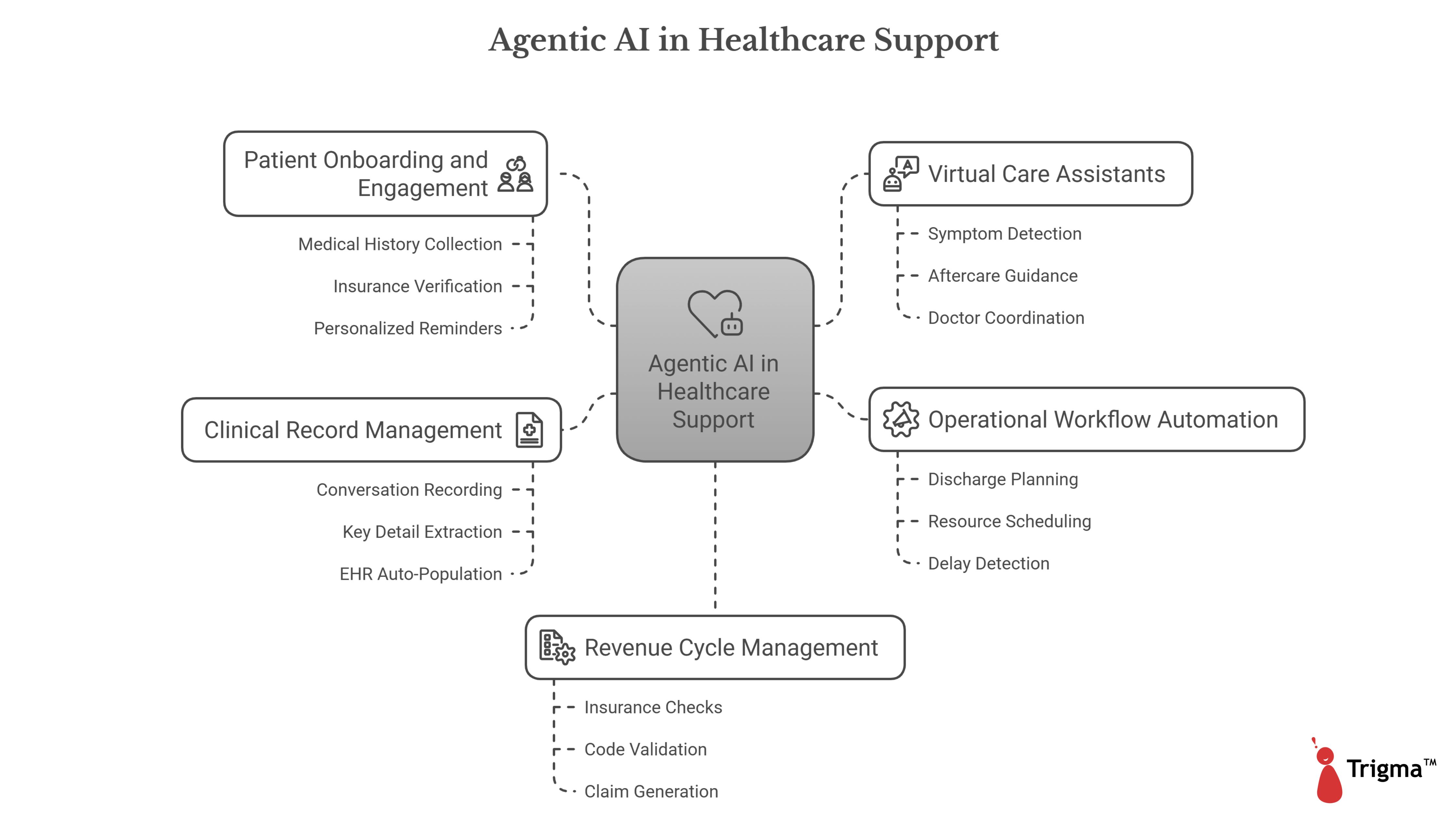
1. Patient onboarding and engagement

Agentic AI streamlines the entire onboarding process, from collecting medical history and verifying insurance to scheduling and sending personalized reminders. It engages patients via chat, email, or SMS, extracts data from forms using intelligent parsing, and integrates seamlessly with Electronic Health Record (EHR) and insurance systems. This reduces front-desk workload, shortens intake times, and ensures error-free, personalized onboarding. The result: faster processes, higher patient satisfaction, and a smoother start to the care journey.

2. Virtual care assistants

Agentic AI empowers virtual care with real-time and intelligent support, detecting symptoms, guiding aftercare, and seamlessly coordinating with doctors for special cases. Using advanced NLP and contextual memory, AI agents engage with patients via chat or voice, interpret complex inputs, and personalize the care systems. The integration of EHRs and decision-making tools enables around-the-clock patient assistance without increasing staff load.

3. Operational workflow automation

Bringing intelligence to backend hospital operations, agentic AI automates everything from discharge planning to resource scheduling, ensuring more efficiency in the operations. These agents monitor real-time tasks, detect delays, resolve bottlenecks, and trigger actions across EMRs and internal systems. Integrated with hospital software, they update status, notify teams, and ensure seamless coordination with better decision making.

4. Clinical record management

Agentic AI streamlines clinical documentation by recording conversations, extracting key medical details, and auto-populating EHRs in real-time. Using speech recognition and NLP, it captures symptoms, diagnoses, and treatment plans with precision. This reduces and frees doctors from unnecessary clutter, ensures timely and accurate records, and allows more time for patient care.

5. Optimizes revenue cycle management

Agentic AI transforms the billing cycle by intelligently automating every step, including insurance checks, code validation, and claim generation. By integrating with billing platforms and payer APIs, AI agents detect errors before submission, adapt to payer-specific rules, and process failed claims. This reduces overhead costs, speeds up reimbursements, and ensures billing accuracy at scale, turning a complex process into a smart workflow.

Why Healthcare Needs Agentic AI?

Below are the reasons that indicate the need for agentic AI in healthcare.

  • Staff shortages and burnout at critical levels are making intelligent automation essential for reducing workload.
  • Administrative burden is rising, with clinicians spending hours on documentation and system navigation.
  • Patients expect faster, more personalized care, which traditional tools struggle to deliver.
  • Regulatory complexity is growing, demanding consistent, accurate, and auditable workflows.
  • Systems remain fragmented, requiring manual coordination between EHRs, billing tools, and care platforms.

Agentic AI addresses these challenges by:

  1. Handling tasks end-to-end with minimal human input
  2. Adapting in real time based on context and patient data
  3. Interacting across systems to create seamless, intelligent workflows
  4. Delivering proactive support that scales with demand

Core Capabilities That Make Agentic AI Effective in Healthcare

This helps agentic AI to function effectively in complex and regulated work environments.

1. Contextual memory

Agents retain context across interactions, whether it’s a patient’s medical history or a delayed task in a care plan.

2. Tool usage

Agents can interact with external systems (EHRs, scheduling platforms, billing software) through APIs, mimicking human-like workflows.

3. Multi-modal inputs

Agentic AI can process text, voice, documents, images, and structured data, creating a more seamless and flexible interface.

Agentic AI: The Path to The Future Tech World

The Path to The Future Tech World

Agentic AI is not a replacement for human care, but a powerful augmentation. It empowers care teams to do more with less effort, streamline back-office tasks, and personalize support for patients in ways previously unscalable.

As these intelligent agents continue to evolve, with deeper reasoning, multimodal understanding, and adaptive capabilities, healthcare will move closer to a model that is proactive, precise, and patient-first.

Ready to Bring Agentic AI into Your Healthcare Ecosystem?

Agentic AI isn’t just the future of healthcare; it’s the bridge between operational efficiency and intelligent, patient-centric care. Whether you're looking to automate clinical workflows, enhance patient support, or streamline backend systems, the opportunity to transform is now.

At Trigma, we specialize in designing and deploying custom agentic AI solutions tailored for the healthcare sector. From strategy and system integration to real-time AI agents that think, act, and adapt, we bring the technical depth and industry insight to make it work in the real world.

Let’s build AI that doesn’t just support your care teams, but empowers them.

How AI Is Turning Traditional EdTech Into Smart Learning Tools

In a fast-forward world, education is no longer bound by old curriculum, but AI technology in education is entering a new era of learning. Traditional edtech, once focused on digitalizing content and virtual classrooms, is now being revolutionized by artificial intelligence, making learning more personalized, predictive, and powerful.

With learners demanding flexibility and institutions striving to keep up with innovation, the integration of AI in EdTech isn’t just a trend; it’s a transformation. There is no doubt that AI is harnessing the potential with robust tech and advancements. A survey conducted by Forbes about the experience of AI in the classroom shows that AI is impacting education significantly at all career stages.

With higher edtech growth, it’s important for every business to leverage the power of AI and adopt a wiser yet approachable way to grow their business. In this blog, we’ll talk and learn how AI is paving the new path in education and making education simpler than ever.

The Shift From Traditional Edtech To Smart Learning

Traditional educational technology was built to digitize and scale access to content. Platforms enable students to read e-books, watch recorded lectures, or submit assignments online. But it lacked one key element - intelligence.

That’s where AI is changing everything.

Modern AI-powered edtech solutions don’t just deliver content; instead, they analyze student behavior, identify gaps in understanding, offer personalized support, and predict future performance. This results to have a smarter, more agile system of learning that adapts to each individual’s pace and style.

Ways AI is Enhancing Education Technology

Below are ways in which AI in EdTech is reshaping the future of learning.

1. Personalized learning paths

AI algorithms track how each student learns best and create dynamic learning paths based on performance, preferences, and pace. This is especially useful in K-12 education and online courses where students have varying levels of understanding. Adaptive quizzes, skill-based content recommendations, and intelligent revision schedules are all part of the personalized education that ensures learners spend time where they need it the most.

2. Smart content creation

AI can generate content like practice questions, flashcards, summaries, and even personalized feedback. Instructors can save time while ensuring the content aligns with students’ learning progress. Some advanced tools use Natural Language Processing (NLP) to turn lecture notes into readable study materials.

3. Automate grading and feedback

By leveraging the power of AI tools, assessments can be graded in seconds. More importantly, AI can provide instant feedback to students, helping them learn from their mistakes in real time.

Want to enhance your existing EdTech product with AI-based grading and analytics? Trigma’s AI integration services can upgrade your platform for efficiency, precision, and scale.

4. Virtual teaching assistants

AI bots can now answer student queries 24/7, provide study guidance, schedule reminders, and suggest resources, all without human intervention. These AI tutors help fill the gaps where humans cannot be available around the clock. This makes learning accessible, especially in self-paced courses or large-scale online programs.

5. Predictive analytics for educators

AI in edtech is not just for students, but it also helps teachers and institutions by identifying at-risk students, highlighting which topics are most challenging, and recommending course adjustments based on performance data. With this data, educators can make informed decisions to improve teaching effectiveness.

Major Challenges of AI in Edtech

Major Challenges of AI in Edtech

1. Data privacy and security

AI systems require access to vast amounts of student data to function efficiently. This raises concern about data breaches, unauthorized access, and misuse of personal information. Educational institutions must comply with regulations like GDPR, COPPA, and FERPA, ensuring sensitive student information is protected.

2. Bias in AI algorithms

AI tools can unintentionally reinforce bias if trained on non-representative data. This may lead to unfair grading or recommendations, or skewed performance analysis. Building inclusive AI models requires diverse datasets and regular auditing for fairness.

3. High implementation costs

Developing or integrating AI into edtech platforms can be costly. It includes initial R&D expenses, licensing and software costs, or maintainances and upgrades. Startups and smaller institutions may find it difficult to afford full-scale AI solutions without external funding.

4. Ethical concerns

From student surveillance to automated decision making, ethical concerns arise around transparency of AI decision-making, consent and autonomy of students, and use of emotional and behavivoral data. Clear and ethical guidelines and governance are needed to build trust in AI systems.

5. Legal and compliance issues

Using AI in education involves navigating legal frameworks that are still evolving. This includes unclear liability for AI-driven decisions, cross border data transfer issues and undefined standards for AI auditability in education. Legal clarity and standardized frameworks are still developing.

Future of AI in Education

Future of AI in Education

The future of AI in EdTech looks promising and deeply transformative. Here’s what’s actually there:

1. Emotion-aware learning tools

AI tools are beginning to integrate emotion recognition to gauge student engagement, frustration, or boredom. This could further personalize the learning experience in real time.

2. Lifelong mentor

An AI mentor that stays with you from school to university to your career; tracking your growth, suggesting learning opportunities, and supporting reskilling throughout life.

3. AI-powered assessments

Future AI systems may evaluate students not just on correct answers, but on how they think that includes analytical reasoning, creativity, and collaboration, all measured in intelligent ways.

4. Voice-first learning experience

Voice-based interfaces will allow hands-free, interactive learning through smart speakers, wearable devices, and conversational AI tutors. AI isn’t replacing education, it’s evolving it. The faster EdTech platforms adapt, the more value they’ll deliver to both learners and educators.

Final Thoughts

The fusion of AI technology in education and edtech is enabling a smarter, fairer, and more accessible way to learn. It’s not just about digitalizing the classroom, but empowering learners with tools that understand them. Whether you're an EdTech founder, educator, or institution, now is the time to explore what AI can do for your learning ecosystem.

Ready to lead the future of learning?

Trigma specializes in building AI-powered education platforms that are intelligent, scalable, and deeply human-centric. From concept to launch, we partner with EdTech innovators to create solutions that truly transform learning.