+91-98558-85133
 +1(702)760-3099

Remember the old days when taking photos was an uphill task requiring the use of complicated software? In this era of cutting-edge innovation and technology, it is all possible within seconds. Many AI tools have emerged, enabling content creation, branding, marketing, and more.
In this fast-paced technological landscape, the global AI image generator market size is expected to grow to USD 917,448 thousand by 2030, with a CAGR of 17.4%.
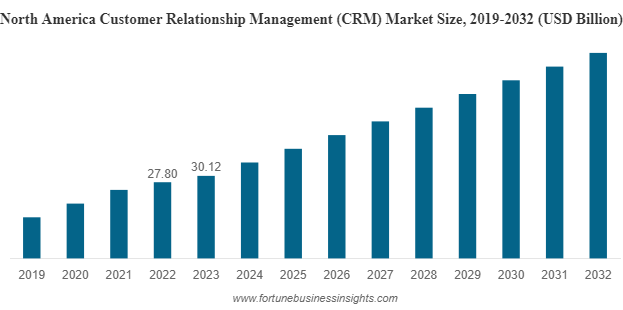
The data shows that many AI image generator software options are evolving in the market, and it is time to choose the best one.
In this blog, we will delve deeper into this discussion to find the best AI image generator software and explain how it works.
Know about AI Image Generator
Before we discuss the best image generators, let's first understand what an AI image generator is.
An AI image generator is a tool that uses artificial intelligence to create images from scratch or modify existing ones. This involves algorithms that interpret input data to produce visual graphic images. These images can be in the form of 2D, 3D, cinematic, or other formats as desired. It is a growing technology that is revolutionizing the IT market with its amazing innovations.
Applications of AI Image Generators in Various Fields
- Marketing
- Digital Art
- Design
- Robotics
- Entertainment
- Medical Imaging
Working of AI Image Generator
Are you wondering how high-resolution images are created and designed by AI? This section explains how developers generate high-quality AI images.
AI image generators use algorithms, particularly Generative AI models like Generative Adversarial Networks (GANs) and Variational Autoencoders (VAEs). These algorithms analyze vast amounts of data to learn the patterns and features that exist in images.
Generative Adversarial Networks (GANs)
GANs help generate realistic content through the use of two networks:
- Generator: Creates new images and content.
- Discriminator: Checks and verifies whether the generated images are real or fake.
The generator and discriminator work together to produce increasingly realistic images over time.
Variational Autoencoders (VAEs)
VAEs are typically used for the latent representation of data. They work as follows:
- Encoder: Converts input data into a vector where each dimension represents a learned attribute of the data.
- Decoder: Automatically takes the encoded values and creates subsequent results for the data.
Deep Reinforcement Learning
Deep reinforcement learning algorithms achieve specific goals by using sequences in the data. These algorithms are primarily applied in fields like gaming and robotics.
Through repetitive training, AI image generators produce increasingly realistic and high-quality images.
Best 5 AI Image Generator
Heading into the Discussion: The Best AI Image Generators for High-Quality Images
Now, let's discuss the best AI image generators that you can use to create high-quality images.
1. DALL-E 3
DALL-E 3 is an image generation model developed by OpenAI. First launched in 2021, its latest release is the third iteration. The model generates images based on the input provided, leading to the creation of high-quality images as per the given commands and inputs.
- Fun Fact: The first version of DALL-E created a "snail made of harp strings" based on a simple text prompt!
| Features | Pros | Cons |
|---|---|---|
| Integration with Chatgpt | Faster processing | Privacy concerns |
| Better context understanding | Chatgpt integration | Higher cost |
| Available to the public for free | User-oriented | Require technical knowledge |
| Improved customized options |
- Pricing: Chatgpt plus subscription, $20 per month
2. Stable Diffusion
Stable Diffusion is a generative AI model that produces unique photorealistic images from provided input. Launched in 2022, it offers new features, including video and animations. This model is based on diffusion technology, which significantly reduces the processing requirements for images, allowing the software to run effectively on a laptop or mobile phone with a good GPU (Graphics Processing Unit).
Stable Diffusion is in high demand because it is easy to use and accessible. For the first time, anyone can download the model and generate images. It is user-friendly, and users don’t need any additional information to generate output images.
| Features | Pros | Cons |
|---|---|---|
| Text-to-image generation | High-resolution output | High cost |
| Image editing | Interactive user interface | Resource intensive |
| Interactive user interface | Batch processing | Ethical and legal concerns |
| API accessibility | API Access | Accessibility issues |
3. MidJourney
MidJourney is another widely used generative AI-based model that creates images from text using specified prompts.
You might be wondering if every software creates images from input, what makes each unique. They differ based on their characteristics. MidJourney stands out due to its adaptive features, which can be mixed and matched to create new styles.
| Features | Pros | Cons |
|---|---|---|
| Artistic styles | High-quality images | High cost |
| Customization options | User-friendly interface | Legal and ethical considerations |
| Text to image generation | Advanced customization options | Dependence on input |
| Adaptive feature | Versatility in design |
4. NightCafe Studio
NightCafe Studio is a software that allows artists to create artistic images and convert their photographs into digital art. It is widely used by artists, designers, and enthusiasts to create visually appealing images from text prompts.
| Features | Pros | Cons |
|---|---|---|
| Text to image generator | High-quality output | Highly resource intensive |
| Neutral style transfer | User-friendly interface | Cost of advanced features |
| Batch processing | Support batch processing | High dependence on input |
| Inbuilt community | Versatile in nature | Limited real effects |
5. Artbreeder
Artbreeder, also known as Ganbreeder, is a collaborative platform that allows users to create and modify images by blending different artworks. It uses Generative Adversarial Networks (GANs) to enable users to combine features from various images and create entirely new graphics.
| Features | Pros | Cons |
|---|---|---|
| Image blending | Creative artistic design formation | Cost |
| Use of generative models | Versatility in designs | Resource intensive |
| High-quality output | User-oriented | Ethical considerations |
| Categories diversification | High-resolution images | Quality control challenge |
What is the best AI image generator?
| Basis | DALLE-3 | Stable diffusion | Midjourney | Night cafe studio | Artbreeder |
|---|---|---|---|---|---|
| Primary role | Text-to-image generation | High-resolution images | Artistic style images | Neural network image transformation | Image blending and evolution |
| Community features | Limited | Strong community collaboration | Community-oriented platform | Collaboration, batch processing | Community driven platform |
| Customization | Limited | Extensive | Versatile, user-friendly | Style and parameter adjustment | Extensive parameter adjustment |
| Cost | Higher cost due to advanced features | Higher cost due to professional usage | Moderate | Varies, premium features available | Varies, premium features available |
| Output quality | High-quality images | High detailed oriented | Artistic styled | High-quality diverse styles | High quality versatile designs |
Let’s Take Another Step In Your Tech Journey
After exploring the leading generative AI tools, you're probably eager to harness innovative software for your business. At Trigma, our team of experts is ready to help you make that leap. As a top-tier provider of generative AI development services, we're here to elevate your business to new heights. Let's collaborate and drive your success forward.