+91-98558-85133
 +1(702)760-3099

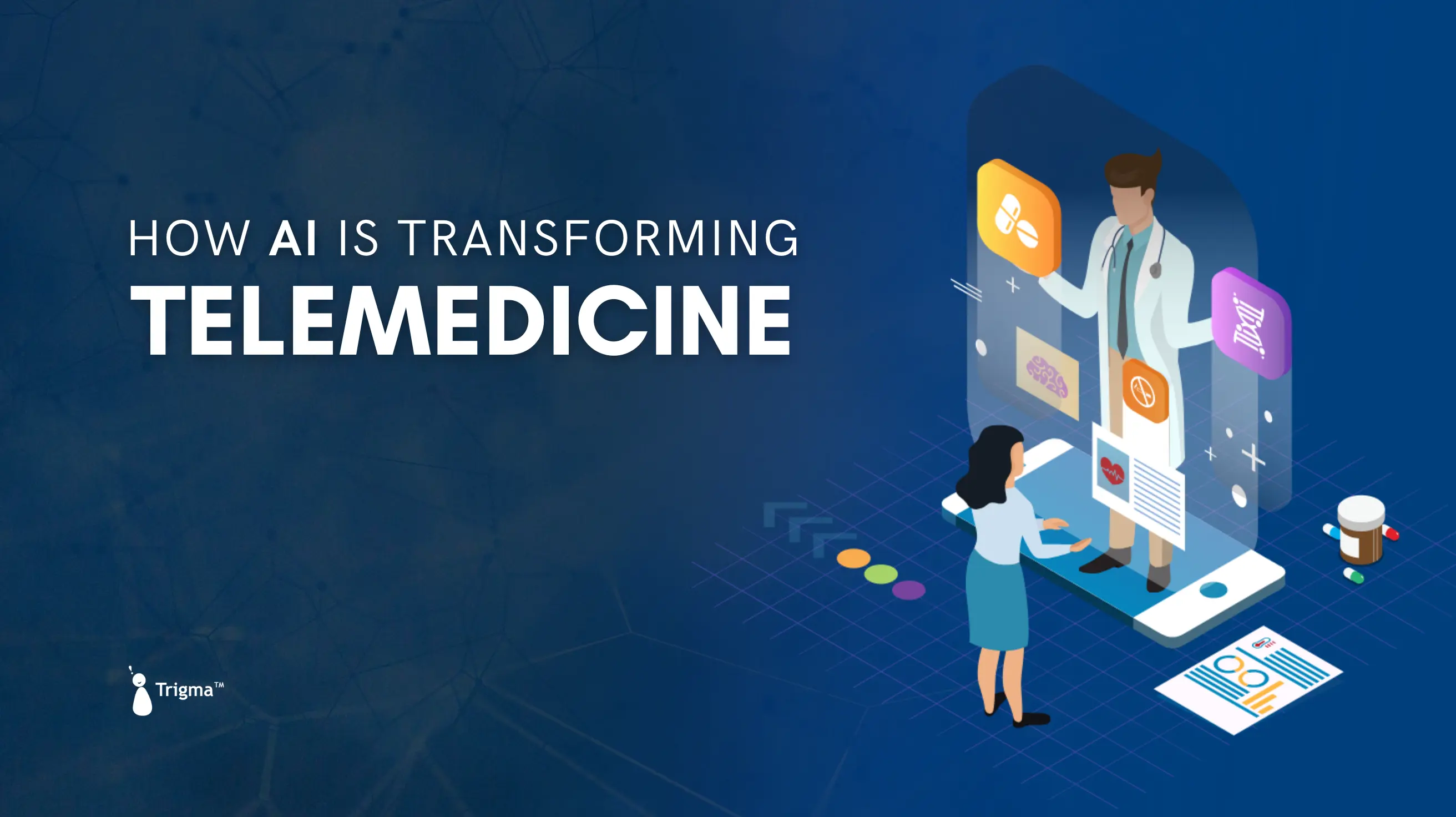
In the digital healthcare landscape, telemedicine has evolved from a convenient option to an essential pillar of modern care delivery. What was once a simple way to connect patients and doctors virtually has now become a sophisticated ecosystem powered by Artificial Intelligence (AI).
AI is not just enhancing telemedicine; it’s redefining how healthcare is diagnosed, delivered, and personalized. From accelerating accurate diagnoses to designing individualized treatment plans, AI is enabling healthcare providers to offer smarter, safer, and more efficient care, all from the comfort of a patient’s home.
In this blog, we’ll walk you through how AI is redefining telemedicine and uncover the ways AI is changing the future landscape.
The Rising Importance of AI In Telemedicine
The role of Artificial Intelligence (AI) in telemedicine is rapidly expanding, transforming what was once a basic virtual consultation model into an intelligent, data-driven healthcare ecosystem. According to Grand View Research, the global telemedicine market, valued at USD 141.19 billion in 2024, is projected to surpass USD 380.33 billion by 2030, largely driven by the integration of AI and automation.
What makes AI so impactful is its ability to process a vast amount of patient data in real-time, offering insights that enhance both clinical accuracy and the patient experience. AI is strengthening telemedicine in several ways:
- Streamlining clinical workflows through automation and smart triage.
- Enhancing diagnostic precision by identifying patterns that often go invisible to humans.
- Predicting health issues using real-time and historical data.
- Improving healthcare accessibility in remote areas.
With the major entrance of AI in healthcare, telemedicine is shifting from being just convenient care to intelligent and preventive care. Therefore, every virtual interaction becomes an opportunity for better health outcomes.
AI In Telemedicine: How It Is Reshaping The Game
Here are the listed ways in which artificial intelligence in telemedicine is transforming the game.
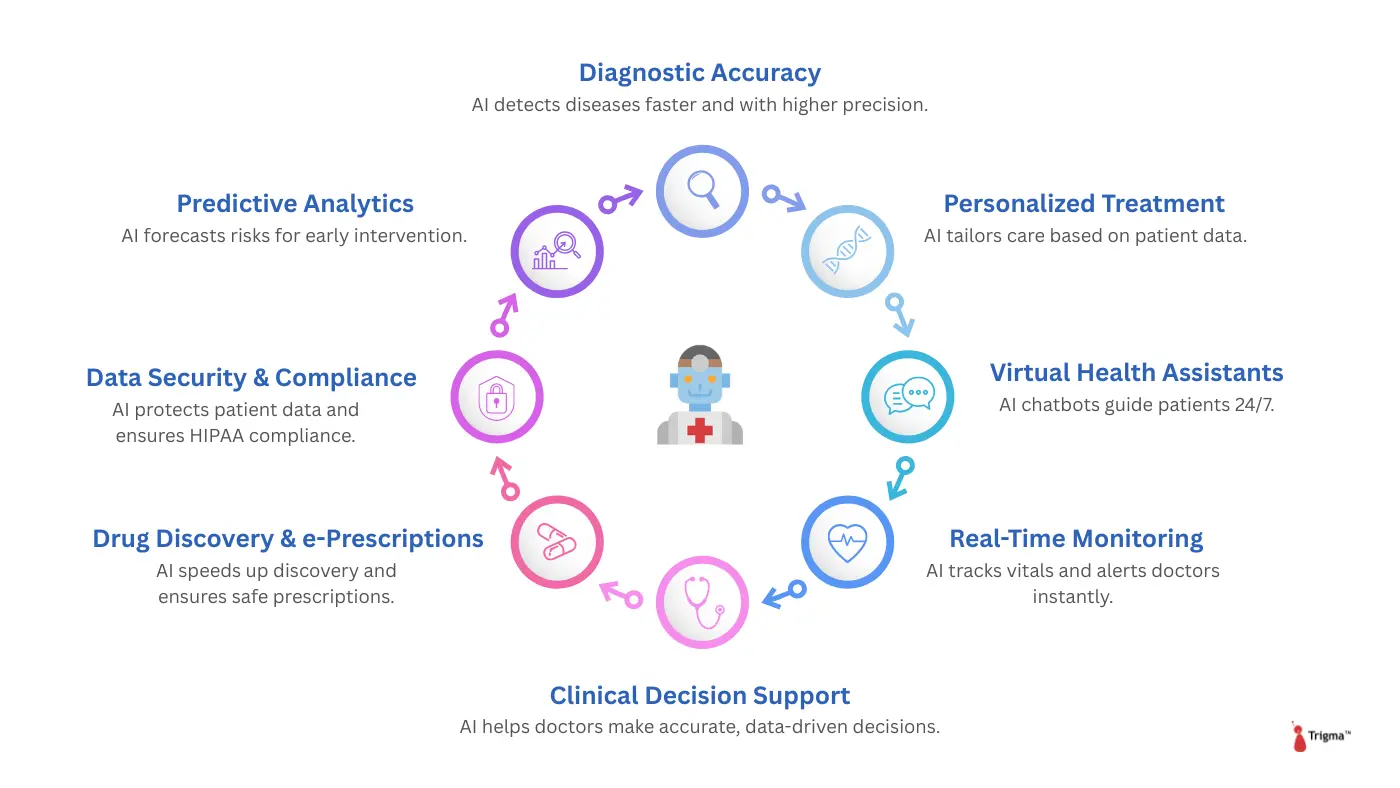
1. Diagnostic accuracy
One of the most significant advantages of AI in telemedicine is its ability to improve precision. AI can process millions of medical images, lab results, and health records within seconds. It involves AI-powered tools that scan anomalies, AI chatbots that assess symptoms and recommend possible conditions, helping prioritize patients more efficiently. This has helped in detecting diseases at an early stage and providing preventive care for the same.
2. Personalized treatment plans
AI didn’t just excel in diagnosis, but it also helps doctors create personalized treatment plans that are adaptive and effective for a patient, too. AI personalizes care by reviewing EHRs, genetic data, and wearable device information to recommend individual treatments. On the other hand, machine learning continuously monitors patients' progress and modifies care plans in real time.
3. Virtual health assistants
AI-powered virtual health assistants and chatbots are transforming how patients interact with healthcare providers. These tools bridge the gap and provide consistent support without overburdening doctors. From booking appointments & answering basic queries to giving medicine reminders to patients, AI chatbots have become the first touchpoint for patients.
4. Real-time patient monitoring
Real-time activity tracking has always been at the top every time. AI is revolutionizing Remote Patient Monitoring (RPM), especially for patients with chronic illnesses such as diabetes, hypertension, and cardiac conditions. It analyzes a continuous stream of data from wearable or IoT devices to alert healthcare professionals to potential health risks.
5. Enhanced clinical decision support
AI assists healthcare professionals in making faster and more accurate decisions.
Clinical Decision Support Systems (CDSS) analyze patient data, research findings, and medical literature to suggest evidence-based recommendations. This helps doctors choose the best course of treatment with greater confidence and ensures consistency in care delivery, especially during virtual consultations.
6. Drug discovery and remote prescriptions
AI is accelerating the process of drug discovery by analyzing large datasets to identify potential compounds faster than traditional methods. In telemedicine, it also supports doctors in issuing e-prescriptions safely by checking drug interactions, allergies, and dosage accuracy in real time.
7. Data security and compliance management
Telemedicine involves handling sensitive data, and AI strengthens data security through real-time threat detection, anomaly detection, and automated compliance checks for regulations like HIPAA and GDPR. AI-driven encryption systems and federated learning models ensure that patient data remains confidential and protected across all platforms.
8. Predictive analytics for early intervention
AI’s predictive capabilities allow healthcare providers to identify potential health risks before symptoms appear. By analyzing historical patient data, genetics, and lifestyle information, AI can forecast the likelihood of diseases such as heart failure, stroke, or diabetes. This proactive approach enables early intervention, reducing hospitalizations and improving overall patient outcomes.
If you’re also exploring how much it costs to develop an AI-powered healthcare app, check out our detailed guide on AI-Powered Healthcare App Development Cost for better planning.
The Future of AI in Telemedicine
The journey of AI in telemedicine has only just begun. As healthcare systems move forward to more predictive and preventive models, AI will continue to shape the future of virtual care, making it faster, more personalized, and more connected than ever before.
Predictive healthcare models
Using patient data to forecast potential health risks before symptoms appear.
Agentic AI systems
AI agents are capable of autonomously managing scheduling, prescriptions, and coordination among care teams.
Multimodal AI
Integrating voice, text, images, and biometric data for holistic diagnostic insights.
AI & IoT synergy
Combining AI algorithms with IoT sensors for continuous, connected care experiences.
The future of telemedicine isn’t just about digital convenience; it’s about intelligent, proactive, and patient-first healthcare. As AI continues to evolve, it will bridge the remaining gaps in access, accuracy, and empathy, empowering healthcare systems to deliver care that is not only advanced but truly human-centered.
Is your business ready to build the future of telemedicine?
If not, then make it today!
Connect with our experts and design and deploy AI-powered telemedicine solutions that make healthcare smarter, faster, and more human.
Challenges and Ethical Considerations
Despite its vast potential, integrating AI in telemedicine brings challenges that must be addressed carefully:
Algorithmic Bias
Training data lacking diversity can lead to inaccurate predictions.
Transparency Issues
Healthcare providers must understand how AI models make decisions.
Human Oversight
AI should assist, not replace, healthcare professionals.
Ensuring ethical implementation and maintaining human empathy in AI-driven care will define the long-term success of telemedicine.
Conclusion
The rise of AI in telemedicine has redefined the healthcare landscape and made the service more convenient, secure, and scalable. It has turned the digital convenience into a smart, data-driven healthcare revolution.
What once seemed futuristic, remote check-ups, virtual health assistants, and predictive analytics, is now the new normal. And as AI continues to advance through machine learning, natural language processing, and agentic automation, telemedicine will only grow smarter, more accessible, and more compassionate.
The real potential of AI in telemedicine lies not just in technology but in empowering doctors and patients alike, bridging gaps in care, saving time, and ultimately improving health outcomes worldwide.
So whether you’re a healthcare provider or a startup, now is the right time to adopt this and redefine the future of digital healthcare.
Healthcare is evolving & your users expect innovation
Bring care closer, faster, and smarter with AI-powered telemedicine.