+91-98558-85133
 +1(702)760-3099

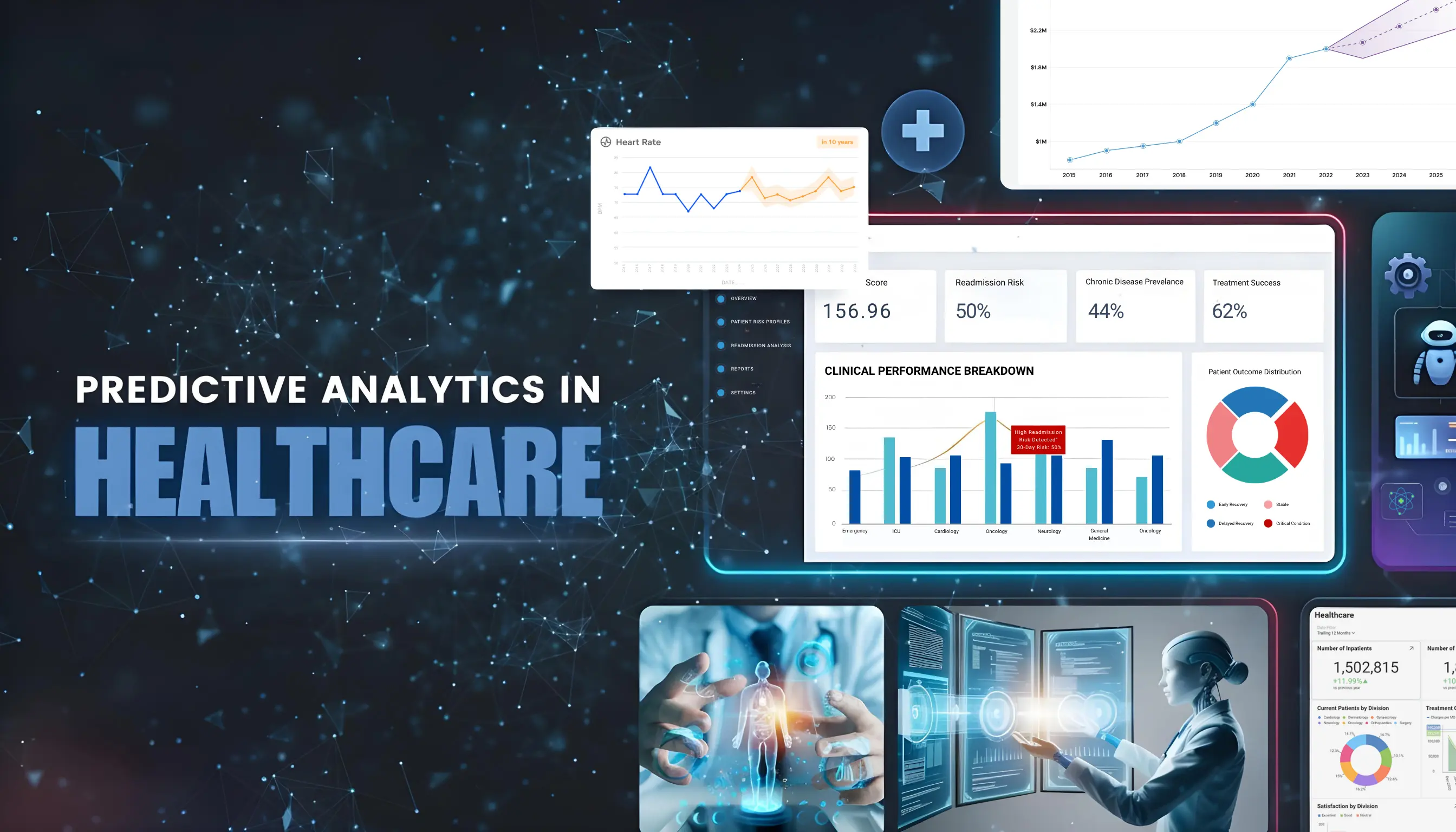
60-Second Summary
- Predictive analytics is transforming healthcare by using AI and machine learning to forecast diseases, prevent hospital readmissions, and personalize patient care.
- Leading organizations like Mayo Clinic, Corewell Health, and MultiCare use predictive models to identify high-risk patients, optimize hospital capacity, and improve clinical outcomes.
- These AI tools help healthcare systems improve decision-making, patient engagement, and operational efficiency while reducing costs.
- However, challenges such as data privacy, algorithmic bias, and clinician adoption remain critical concerns.
- AI-powered, HIPAA-compliant platforms like TellDoc AI help healthcare organizations implement predictive analytics securely and at scale.
What if there's a technology that helps you predict patient illness and take action earlier? In an era where healthcare costs are rising and patient expectations are higher than ever, relying on hindsight is no longer enough.
Gone are the times when medical treatment was considered a science, but now taking data-driven decisions is an art.
With data analytics and predictive models, the healthcare system will become smarter and more responsive to the needs of patients.
In this guide, you'll learn what predictive analytics in healthcare really means, how it works, and how organizations are using it to improve outcomes, efficiency, and patient experience.
What Does Predictive Analytics in Healthcare Mean?
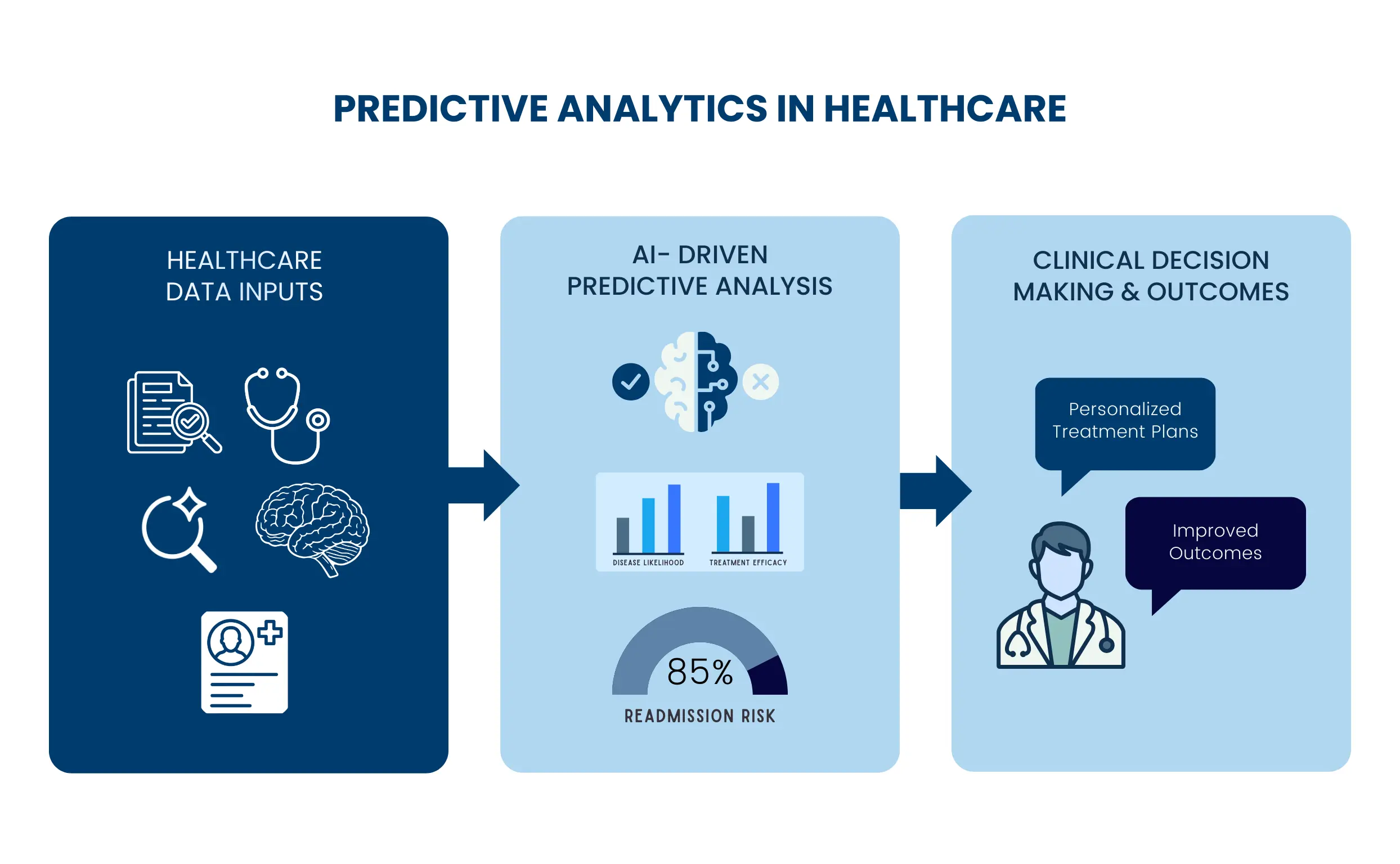
Predictive analytics in healthcare involves using machine learning algorithms and statistical techniques to assess the likelihood of future outcomes based on historical data.
This data can be health surveys, medical records, patient registries, EHRs, and medical imaging systems such as X-rays or scans.
By applying AI-driven predictive analytics, doctors and medical professionals can predict the trends, make clinical decisions, and even assess the likelihood of diseases and create personalized treatment plans for each patient.
Analysis of these data patterns helps doctors and hospitals make data-driven decisions and see:
- Which disease a patient is likely to develop ahead of time
- Which treatments are most likely to work
- Which patients can miss appointments
- Whether the patient will be readmitted to the hospital within 30 days
4 Game-Changing Applications of Predictive Analytics in Healthcare
Using AI-driven predictive analytics, it's more about creating patient-centered care because the models let you discover:
- Which patients are at higher risk
- Predict health problems much earlier
- Tailor treatment plans as per patient's needs
- Spot health issues early
This means doctors need not worry about spending a lot of time on paperwork and administration, and can dedicate more time to patients. This calls for more personalized healthcare, which increases patient satisfaction.
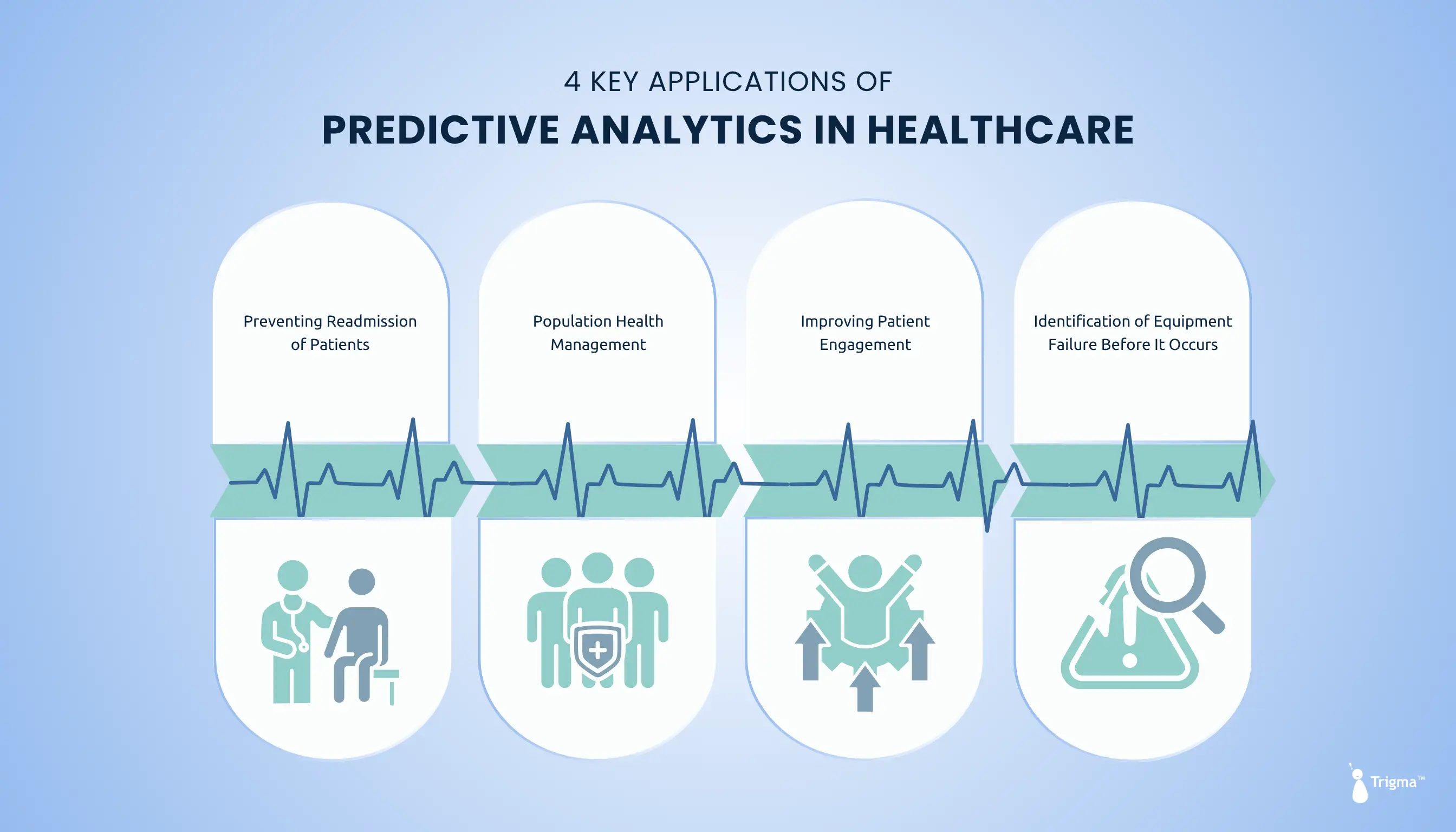
1. Preventing Readmission of Patients
Hospital readmissions are often costly, and these occur mostly when something went wrong, such as missed follow-ups, poor discharge planning, and patients not taking medicines properly.
Not only are these readmissions bad for patients, but they also incur a significant cost for their families. As per research, in the US, 1 out of 5 patients had to return to the hospital within 30 days of being discharged.
Such unplanned readmissions cost $15 billion to $20 billion, plus hospitals also need to pay a hefty penalty. In fact, 82% of hospitals under the Medicare Hospital Readmission Reduction Program have been penalized.
Solution? That's where predictive analytics can help doctors keep an eye on those patients who're more likely to come back.
They can then give these patients extra follow-ups, better medical care, and personalized discharge instructions.
2. Population Health Management
Population health management is about adopting a proactive approach to patient care.
By looking at data (from medical histories to clinical records), you can identify the patients who are at higher risk, who require intensive care, or who are at risk of hospital readmission.
This way, you can provide personalized treatment plans to prevent unnecessary hospitalizations and emergency department visits.
3. Improving Patient Engagement
Predictive analytics in healthcare isn't confined to treating patients, but it's also about how you can provide better care to them.
Instead of waiting for patients to miss appointments or stop following the treatment plan, predictive algorithms take a proactive approach.
They use previous patient data (their appointment history and behavior) to see how likely they are to engage with your communication platform.
The healthcare data then decides who needs outreach, what kind of messages will work best, and when to send them.
This is what benefited Sparta Community Hospital by using predictive analytics. By identifying patient needs, care providers started sending personalized reminders and notifications to them.
Doing this, the hospital noticed a reduction in no-shows from 15% to 9%.
4. Identification of Equipment Failure Before It Occurs
Just as predictive analytics detects mechanical issues in jet engines 15-30 days before flights, it plays a similar role in healthcare.
For instance, MRI scanners degrade over time, so replacing their parts on time is essential. This proactive maintenance prevents service disruptions that could delay or affect patients' treatment plans.
Examples of Predictive Analytics in Healthcare
Here's how healthcare companies and clinics are using AI-powered predictive analytics (combining data with AI) to deliver better, more personalized care and make data-driven decisions:
Mayo Clinic
After using predictive analytics, Mayo Clinic was able to identify the patients who are at higher risk of having sepsis disease.
Identifying the risk probability of each patient having sepsis helped the healthcare staff see a reduction in sepsis-related deaths by 20%.
Corewell Health
Corewell Health used predictive modeling to predict the likelihood of which patients are most likely to return to the hospital within 30 days of being sent home.
Instead of just predicting alone, the system analyzes the social factors and medical records and then gives doctors a risk score.
For patients with higher risk probability, hospitals provided extra support to them, such as personalized follow-up care and better discharge planning.
Such a proactive approach resulted in preventing 200 hospital readmission visits and saved $5 million over 2 months.
MultiCare Health System
MultiCare Health System is a not-for-profit organization in Washington that used predictive analytics to perform 3,200 additional surgeries in a single year.
As they were operating 13 hospitals across Washington, they faced a visibility problem.
If Hospital A had an empty room because surgery finished early, but Hospital B was at full capacity with patients waiting in a queue, there was no way to see which rooms were open and which were booked.
But by implementing the LeanTaaS iQueue platform ( AI/ML solution) and integrating it with their EHR, hospitals and administrative staff can now open slots and rooms in real time.
As the system uses machine learning technology, they can see how long each surgery would take, which rooms will be unused, and allow the doctors to forecast the demand and staff rooms.
Northern Light Health Hospital
Northern Light Health Hospital in Maine used predictive analytics during the COVID-19 pandemic to predict hospital crowding in 4, 8, and 12 hour windows.
This allowed doctors and nurses to prepare the staff and beds in advance so they could provide faster care to them.
Challenges of Implementing Predictive Analytics in Healthcare
Implementing predictive analytics for hospital operations comes with certain challenges, which are as given below:
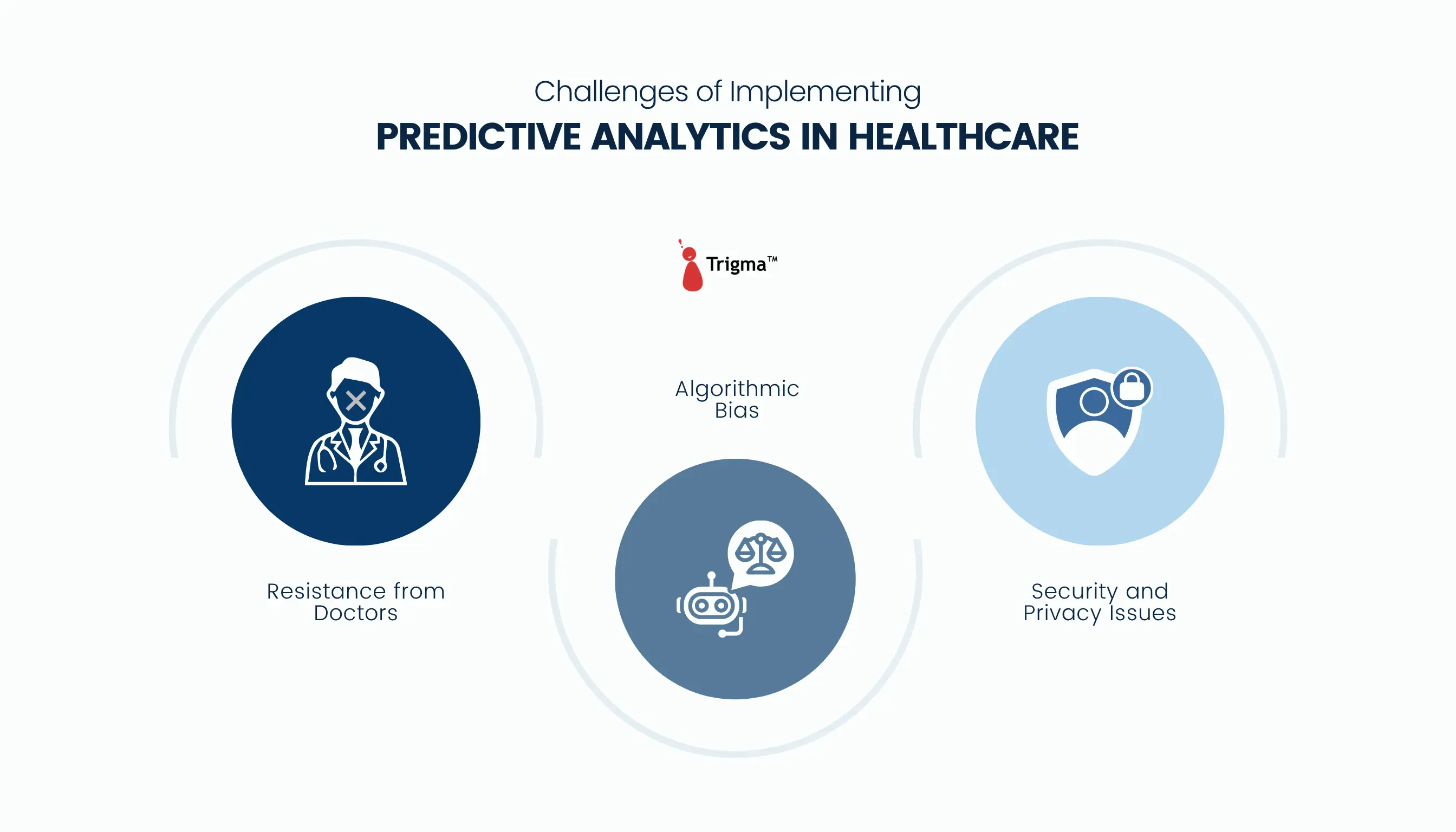
1. Resistance from Doctors
What if healthcare app development companies create sophisticated analytics models, but nurses and administrative staff don't know how to use them and interpret those predictive insights?
Then, there will be underutilization of predictive tools. Why? It's not just because it requires a shift in mindset or doctors resist using these tools. It might be because of a lack of training programs.
Clinicians should understand not just how to read model outputs but should know how to use these AI-driven analytics systems for patient care.
2. Algorithmic Bias
AI models also run through algorithm biases, and this happens when they're trained on low-quality data.
For instance, if the model is trained on a biological factor called race, the data says that most Black people are likely to have kidney dysfunction in later stages of their life.
While Asian people can have severe lung damage, this means that the data on which it's trained is made on assumptions and biases.
Doctors and healthcare staff need to conduct regular audits of their healthcare systems, and adding a "human in the loop" element is super important.
The healthcare developers at Trigma will ensure that your predictive model will be free from biases (because of regular health audits) and ensure that there will be fair treatment for all patients.
3. Security and Privacy Issues (Major Hurdle)
Though healthcare models like predictive analytics are trained on patients' data, which is highly confidential, including their demographic details, lifestyle factors, health status, and other chronic diseases (if any).
What if the health provider you partner with doesn't comply with regulations? Then it can result in major repercussions, which is loss of patients' data along with heavy fines.
Even a research study from IBM states that the cost of data breaches accounted for USD 9.77 million in 2024, and the number is almost twice as compared to breaches in other industries.
Note:
Ensure that the technical vendors you collaborate with comply with HIPAA regulations and protect patients' information by implementing encryption and other data protection measures.
How Trigma Helps You Build AI-Powered Predictive Analytics Software for Healthcare
As a healthcare app development company, we carry 16 years of experience in using advanced AI algorithms for creating HIPAA-compliant predictive analytics solutions.
Even Clutch appreciated the skills of our health and wellness app developers for bringing digital transformation in healthcare.
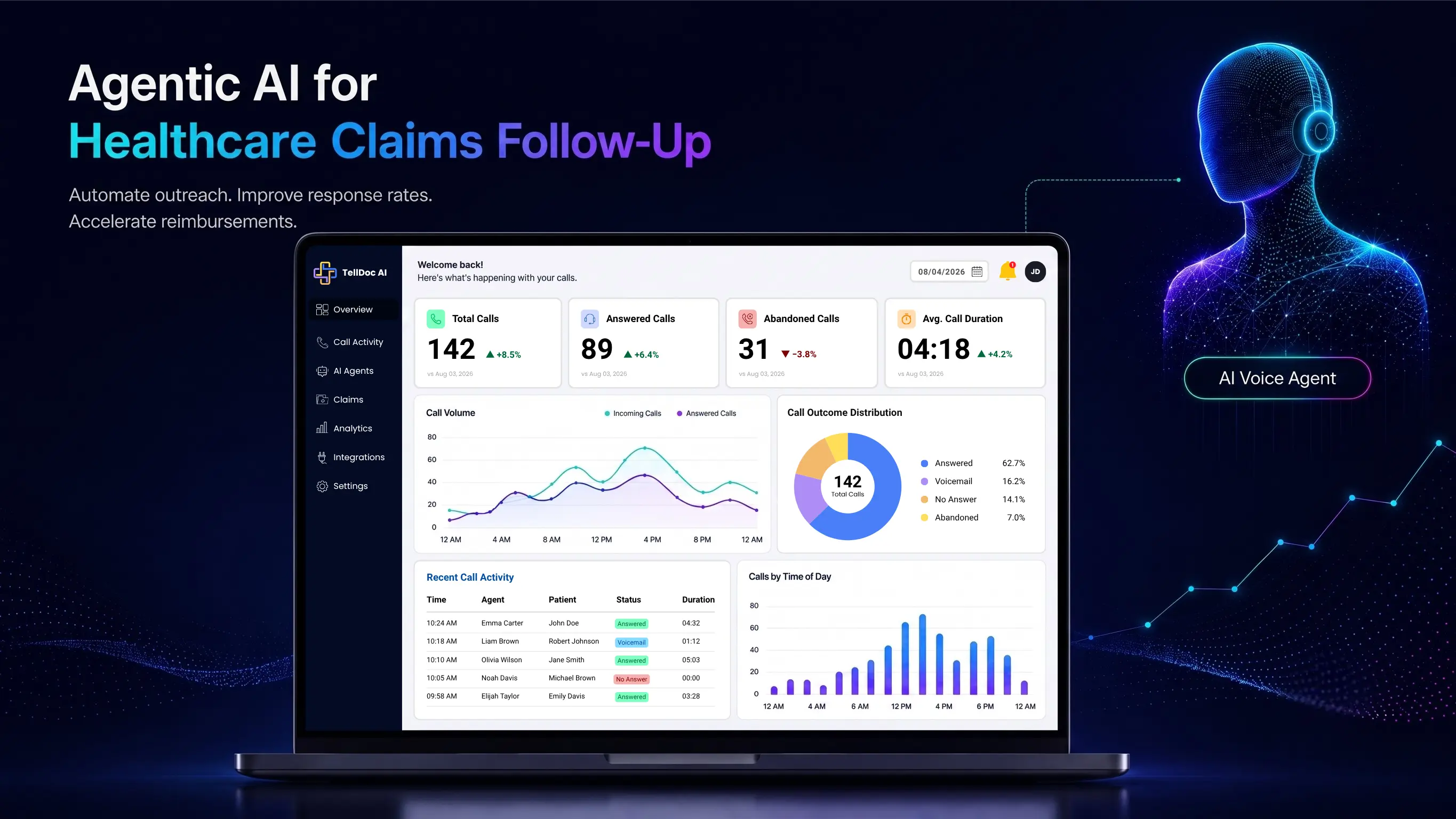
In fact, to meet the needs of digital-first patients, we provide ready-to-deploy healthcare AI solutions (TellDoc AI).
With TellDoc AI, you can do the following:
- Provide remote care to patients through virtual consultations
- Send personalized treatment plans and wellness reminders
- Real-time dashboards for checking patients' healthcare status
FAQs
What Technologies Do You Use for Predictive Analytics in Healthcare?
Here are a few technologies that we use while creating AI-driven predictive analytics solutions:
- Natural language processing (NLP)
- Cloud Computing
- Edge AI
- Big data platforms
How Do You Protect Our Patients' Privacy While Creating Predictive Analytics Solutions?
To ensure that your patients' data remains protected, our app developers follow strict data protection protocols such as encryption, implementing access control, and conducting regular audits of your healthcare solutions.
How Do Healthcare Organizations Reduce Bias in Predictive Analytics Algorithms?
Algorithm bias can be reduced in predictive analytics solutions through regular audits and performance monitoring to identify disparities across patient groups.