+91-98558-85133
 +1(702)760-3099


Key Takeways
- The cost to develop an AI-powered mobile app ranges between $30,000 to $400,000, depending on the complexity and needs.
- Developing HIPAA-compliant apps is essential to ensure data privacy and security, but it adds to the total cost.
- Partnering with Trigma ensures reliability, scalability, and compliance-focused healthcare app development.
- The level of AI integration, such as machine learning, NLP, or medical imaging, directly impacts both pricing and performance.
- The cost of building a healthcare mobile in 2026 varies based on multiple factors like types, AI features, compliance requirements, and complexity.
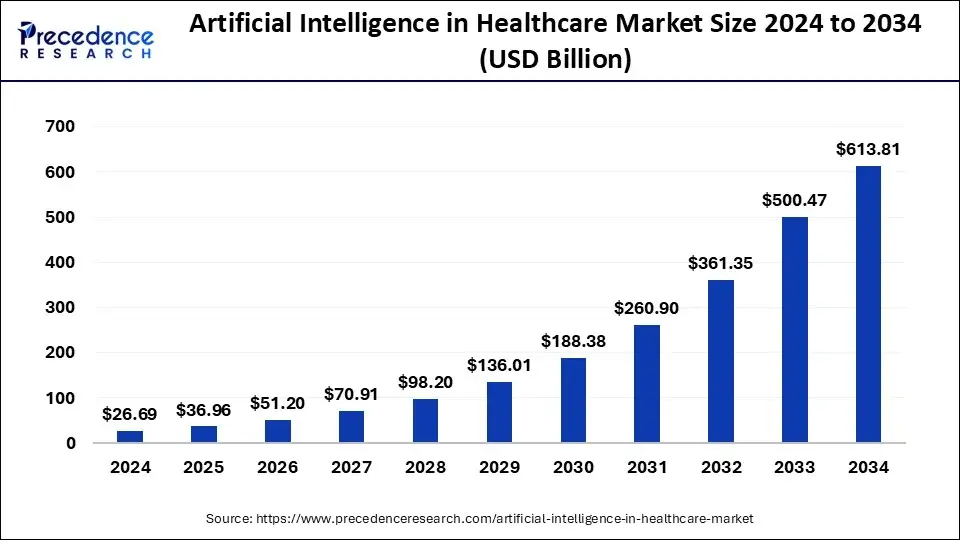
- The AI in healthcare market is growing rapidly and is expected to reach $613.81 billion by 2034.
- The future of healthcare apps will focus on personalized care, generative AI, and cloud-based efficiency for better patient outcomes.
When it comes to healthcare app development, this question keeps health tech startups and hospitals awake at night: How much does it cost to build an AI-powered healthcare mobile app that meets today’s standard of innovation, accuracy, and compliance?
However, it’s absolutely a fair concern. Building a healthcare system isn’t just about coding; rather, it’s a fine balance between AI-driven intelligence, user experience, data privacy, regulatory compliance, and budget.
With AI restructuring the landscape of healthcare, it’s crucial to understand the cost structure of such apps in 2026.
On average, AI-powered healthcare mobile app development in 2026 can range from $30,000 for basic solutions to over $400,000 for complex, HIPAA-compliant healthcare platforms equipped with predictive analytics, IoT integration, and real-time monitoring. For enterprise-level apps, costs may even surpass $400,000, depending on several factors discussed later.
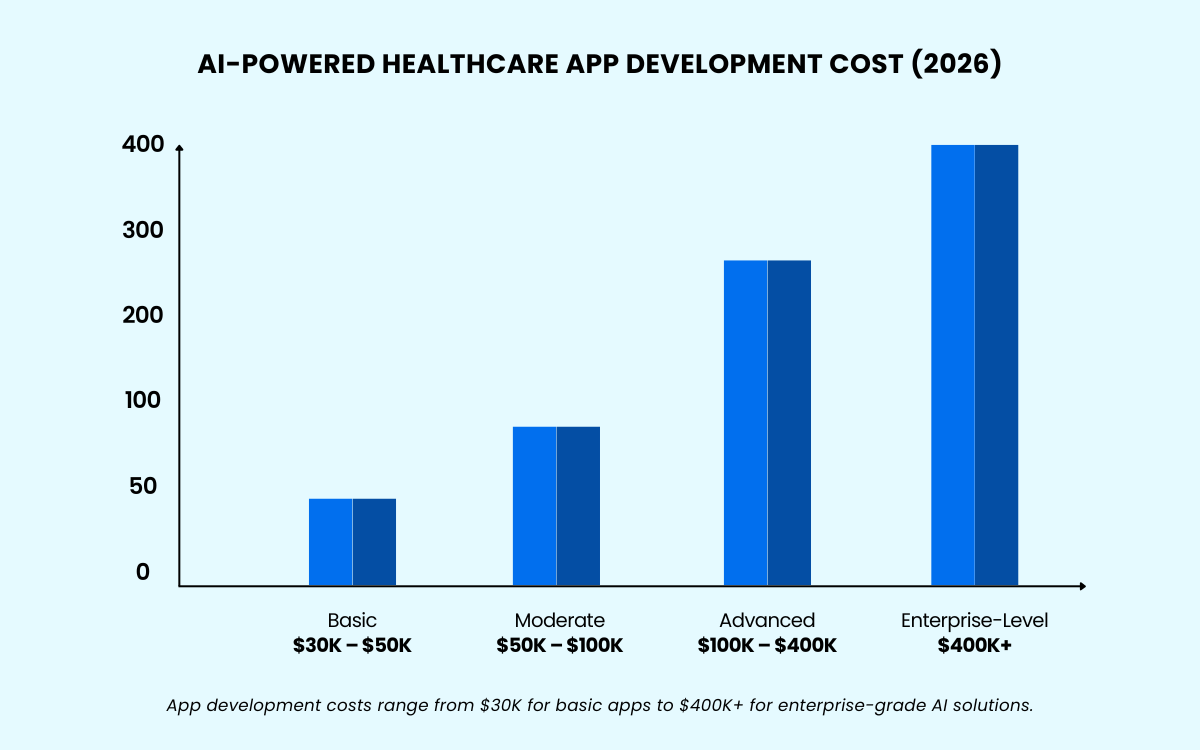
Let’s look at these concepts in more detail and build a future-ready, responsive healthcare mobile app in 2026.
Average Cost Breakdown for AI Healthcare App Development
Let’s get straight to the point and discuss the average cost of building a healthcare mobile app. Here is the estimated cost with the required timeline.
| App complexity | Estimated Cost | Development Time |
|---|---|---|
| Basic Level | $30,000 - $50,000 | 3-6 months |
| Moderate Level | $50,000 - $100,000 | 6-9 months |
| Advanced Level | $100,000 + | 9-12 months |
These costs vary as per the complexity and structure of the project.
Factors Affecting AI Healthcare App Development Cost
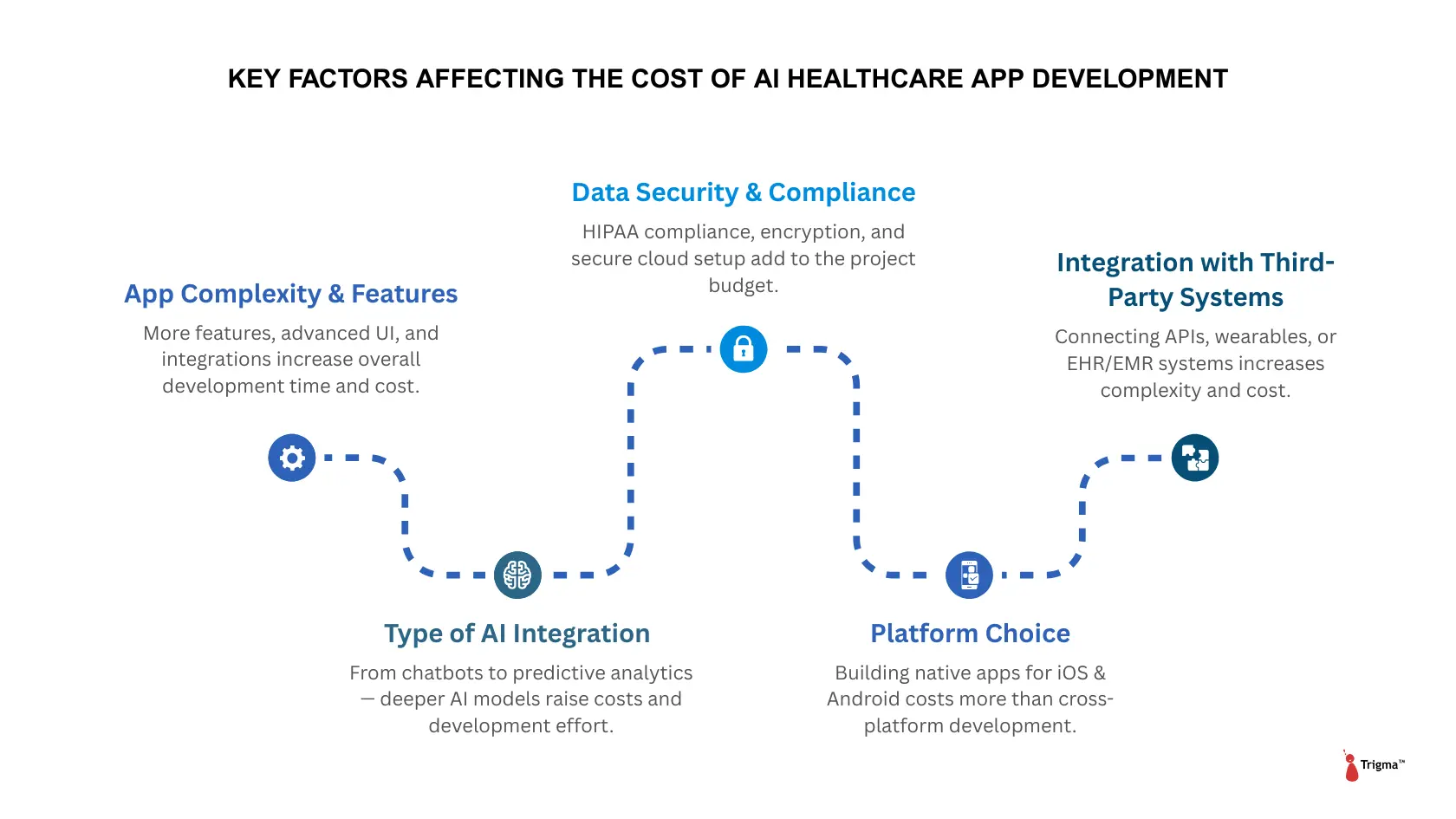
The cost of developing an AI-powered healthcare app varies based on its complexity, compliance needs, and AI integration depth. Here are the primary factors that determine a project’s overall cost:
1. App complexity and features
Features in an app usually determine the cost of its development. The more features the app includes, like virtual consultation, AI-based symptom checker, or wearable device integration, the higher the development cost. Simple apps with limited functionality are more affordable, while advanced AI-driven platforms require more time and deep technical expertise.
2. Type of AI integration
The type and depth of AI integration significantly impact costs. Whether it’s about predictive analytics and medical imaging analysis to chatbots and personalized health recommendations, all these affect the cost directly. For example, apps powered by machine learning (ML) and natural language processing (NLP) need custom model training, which can raise the investment.
3. Data security and compliance
Healthcare apps must follow strict data privacy regulations, especially HIPAA-compliant apps designed for the US market. Implementing end-to-end encryption, secure cloud storage, and a user consent management system ensures data safety but also adds to the overall cost.
4. Platform choice
Building separate native apps for iOS and Android increases development time and expense. Many startups prefer cross-platform frameworks like Flutter and React native to balance performance and cost-efficiency.
5. Integration with third-party systems
If your app connects with EHR/ EMR systems, wearable devices, or telemedicine platforms, the integration cost will vary depending on the API complexity and requirements.

Growing Demand For AI in Healthcare Apps
In recent years, artificial intelligence has significantly revolutionized the healthcare industry, and 2026 is all set to take this transformation even further. From early disease detection to personalized treatment plans, AI is redefining the way care is delivered, accessed, and managed. According to the Precedence Research, the global artificial intelligence (AI) in healthcare market size is expected to reach USD 613.81 billion by 2034. Between 2025 to 2034, this market is expected to mark a growth rate of CAGR of 36.83%.
With patients demanding more convenient and data-driven solutions, and providers seeking ways to reduce manual workloads, the demand for AI healthcare apps has skyrocketed. Hospitals, healthcare providers, fitness platforms, and even insurance companies are heavily investing in AI mobile apps that deliver faster, scalable, and efficient.
Through machine learning algorithms and predictive analytics, AI can identify health risks, recommend preventive care, and assist doctors in making accurate decisions. These AI-driven apps hold the ability to learn from data and improve the patient experience.
At the same time, maintaining trust and privacy remains essential. Developers must ensure their solutions are HIPAA-compliant apps, equipped with robust data protection measures, encryption standards, and secure cloud storage systems to safeguard sensitive medical information.
As we move toward a more digital and patient-centric healthcare model, AI isn’t just an add-on feature anymore; it’s becoming the foundation of next-generation healthcare solutions. Businesses that invest early in AI-powered healthcare apps are not only staying ahead of the curve but also shaping the future of global health innovation.
Cost Breakdown by App Type
| App Type (AI Integrated) | AI Integration Level | Estimated Cost |
|---|---|---|
| Symptom checker | Basic | $30,000 - $50,000 |
| Health monitoring app | Intermediate | $50,000 - $100,000 |
| Diagnostic app | Advanced | $120,000 - $250,000 |
| Telemedicine app | Intermediate | $90,000 - $180,000 |
| Mental health app | Intermediate | $70,000 - $130,000 |
| Medical imaging app | Advanced | $150,000 - $350,000 |
Wondering where your app fits in this cost range?
Connect with our experts and request a custom quote today
The Future of AI Healthcare Apps in 2026 and Beyond
Here is the breakdown of how AI in healthcare would redefine the coming era.
1. Personalized patient care through predictive analytics
AI will enable hyper-personalized treatment plans by predicting health risks early using real-time patient data, wearables, and genomics. This shift will make AI healthcare app development increasingly data-driven and outcome-focused.
2. Integration of agentic AI for autonomous decision making
Next-gen apps will move beyond reactive systems to agentic AI models that take proactive actions, such as adjusting medication reminders or alerting healthcare providers automatically.
3. Use of generative AI in diagnostic and virtual care
Generative AI will assist doctors in interpreting scans, drafting clinical summaries, and even generating patient education material, significantly improving operational efficiency.
4. Affordable AI solution with cloud edge computing
As cloud and edge AI technologies evolve, healthcare startups and organizations will be able to deploy intelligent, cost-effective apps faster and more securely.
Real World AI Healthcare Apps & Why They Are Costly
Thinking about creating an AI-powered healthcare app, but finding them costly? Let’s explore what makes the innovations truly worth the investment.
Google DeepMind Health
Designed to detect diseases such as diabetic retinopathy and breast cancer with high precision. It requires deep neural networks trained on large datasets, continuous validation, and HIPAA-compliant data handling, which automatically increases its cost.
IBM Watson Health
Uses advanced AI and machine learning to analyze complex medical data and assist in clinical decision-making. It’s costly as it requires massive data integration, regulatory compliance, and ongoing algorithm training to maintain accuracy and reliability.
Ada Health
This offers an AI symptom checker that personalizes health treatments for users. Natural language processing, complex system matching algorithms, and multilingual processing make it costlier.
Buoy Health
This uses conversational AI to guide users through symptom analysis and connect them to appropriate care. It requires real-time AI-driven interactions, extensive backend infrastructure, and regular medical content updates that define its maximized cost.
Path AI
Provides AI-powered pathology solutions for faster and more accurate diagnosis. It is costly as it relies on deep learning models, medical image annotation, and integration with clinical workflows.
Final Thoughts
As AI continues to evolve, healthcare apps will become more autonomous, predictive, and deeply personalized, empowering both patients and providers. The future lies in creating intelligent, HIPAA-compliant apps that combine innovation with trust, ensuring every decision made by the algorithm serves human well-being.
Whether you’re a healthcare startup or an established provider, investing in the development of an AI healthcare app means staying ahead of the curve, where technology meets compassion, and data transforms into care.
If you’re ready to build a future-ready AI-powered healthcare app, our team can help you bring it to life with end-to-end strategy, compliance, and innovation expertise. With over 16+ years of experience in the competitive market, we can help you transform your healthcare business. Book a free consultation call with our AI experts today and let your business take a forward leap.
FAQs
What kind of ROI can you expect from an AI healthcare app?
ROI usually depends upon factors like user adoption, reduction in manual processes, improved patient outcomes, and enhanced operational efficiency. Therefore, ROI can vary, but it must be balanced against the cost of development, compliance, and maintenance.
Are there any recurring costs after the healthcare app is launched?
Absolutely. There are post-launch costs for model retraining, updates, server/cloud hosting, data security upgrades, and user support. These ongoing costs are essential to keep the app effective and secure.
How long does it take to make the app HIPAA compliant?
This depends upon the infrastructure, data architecture, security protocols, legal review, and audit readiness. Building a HIPAA-compliant backend, secure data flows, and user consent mechanisms can add significant development time.
How much does it cost to develop an AI-powered healthcare mobile app?
The average cost ranges from $30,000 to over $400,000, depending on the app’s complexity, AI features, and level of compliance. Basic apps like symptom checkers are more affordable, while advanced solutions with predictive analytics, IoT, and real-time monitoring require a higher investment.
How long does it take to develop an AI healthcare app?
Development time usually ranges between 3 to 12 months, depending on the project size and technical requirements. Simple apps take around 3-6 months, while enterprise-grade, AI-driven platforms can take up to a year or more.
Can AI healthcare apps be customized for hospitals or startups?
Yes, AI healthcare can surely be customized for hospitals or startups. AI-powered healthcare apps can be tailored for hospitals, clinics, telemedicine providers, or startups, depending on their use cases, like patient monitoring, virtual consultations, or diagnostic support.