+91-98558-85133
 +1(702)760-3099

A single mid-sized RCM team can spend hundreds of hours a month on one task. Calling insurance payers to ask "what's the status of this claim?"
It's a question that gets asked thousands of times a week across the industry. Until recently, the only way to get an answer was a human on the phone.
Agentic AI is changing that. In healthcare claims processing, it refers to AI systems that can independently carry out multi-step claims workflows: placing calls to payers, navigating IVR menus, interpreting responses, and logging structured outcomes. No human has to manage each step.
Traditional rule-based automation only works within fixed scripts. Agentic AI adapts in real time to how a payer representative actually responds, which is what makes it capable of handling claim status checks, denial follow-up, and prior authorization calls at scale.
Quick Summary
- Claim follow-up calls are one of the most labor-intensive, repetitive tasks in revenue cycle management (RCM), and traditional automation can't handle the variability of live payer conversations.
- Agentic AI voice agents place the calls themselves, hold real conversations with payers, and capture claim status, denial reasons, and authorization details directly into billing or PM systems.
- The healthcare claims management market is projected to grow from $50.32B (2025) to $62.11B (2026), reaching approximately $413B by 2035, a 23.43% CAGR between 2026 and 2035.
- Administrative costs across the health insurance industry rose 4.4% ($5.8B) in 2025 alone, adding pressure on RCM teams to find efficiency gains that don't require adding headcount.
- Trigma has built and deployed this exact kind of system in production for a US healthcare RCM company, detailed further below with a full case study.
Why Claims Follow-Up Is Under So Much Pressure Right Now
Every submitted insurance claim eventually needs a follow-up call, sometimes several. Someone has to verify status, ask about denial reasons, confirm pending documentation, and log all of it accurately. At scale, across a multi-specialty practice or an outsourced billing operation, this adds up to thousands of calls a month, and the volume only grows with claim complexity.
The financial pressure behind this is measurable, and the industry's own investment confirms it. Administrative costs are already climbing, and healthcare organizations are pouring resources into claims management technology to keep up.
Rising costs on one side and rising investment in tooling on the other point to the same conclusion. Manual capacity alone can't keep pace with either. That's the gap agentic AI is built to close.
Still Making These Calls Manually?
Share your claims follow-up challenges, and one of our AI specialists will review your requirements and get back to you.
What Makes This “Agentic,” Not Just Automated
Traditional claims automation, IVR trees, RPA bots, keyword-matching scripts, works fine for structured, predictable tasks like data entry or routing a document to the right queue. It breaks down the moment a conversation doesn't follow a fixed script.
That's exactly what happens on a real payer call.
A payer representative might ask a clarifying question mid-call, put you on hold, or phrase a denial reason no keyword-matcher would catch. Agentic AI handles this differently.
Instead of matching against a decision tree, it runs a conversational engine that interprets intent, asks follow-up questions, and confirms details back before ending the call. It's the difference between a system that executes a script and one that can actually hold a conversation.
This distinction matters for a specific, practical reason: claim follow-up calls are structured enough to automate (the questions being asked are largely the same every time) but variable enough that a rigid script fails constantly. Agentic AI sits in exactly that gap.
How an Agentic AI Voice Agent Actually Handles a Claims Call
A production-grade agentic AI system for claims follow-up typically runs through a few consistent steps on every call:
Outbound call initiation.
The system dials the payer for a queued claim, working through a batch of calls in parallel rather than one at a time.
Real-time speech-to-text.
As the payer representative speaks, their response gets converted to text in near real time, fast and accurate enough that nothing downstream is working off a delayed or garbled transcript.
Conversational reasoning.
The AI interprets what was said, decides whether it needs a follow-up question, a rephrase, or has what it needs, and holds context across the entire call so it doesn't ask for the same detail twice.
Text-to-speech response.
The agent's next question or confirmation gets spoken back naturally, with round-trip latency low enough that it doesn't feel like talking to a machine on a delay.
Structured data capture.
Claim status, denial reason, authorization detail, whatever the call was for, gets logged in a structured format and pushed into the billing or practice management system, no manual re-entry required.
Escalation when needed.
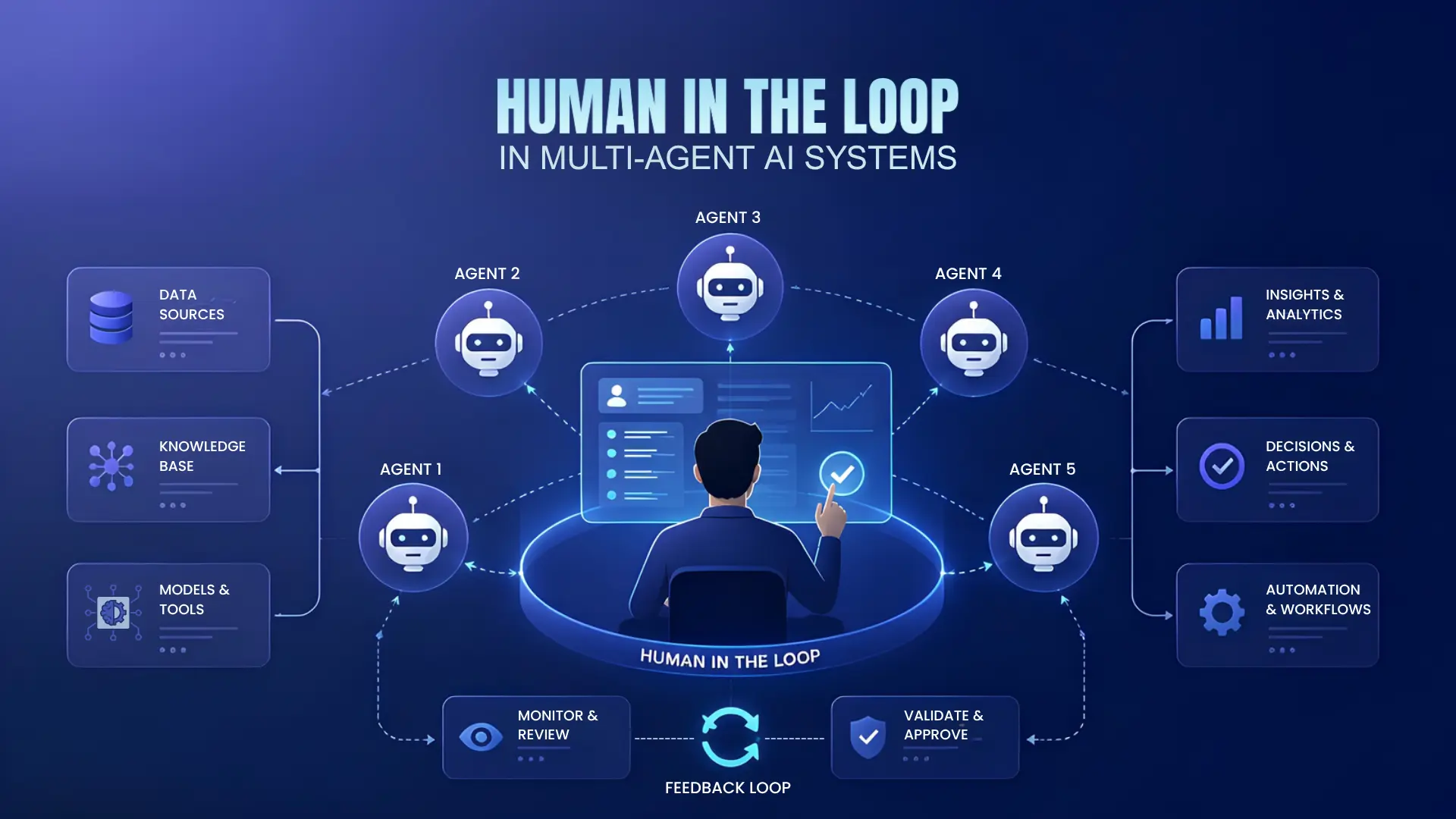
If a call hits something genuinely ambiguous or outside its scope, it routes to a human specialist rather than guessing. This isn't a fully unattended system, and it shouldn't be, the goal is removing humans from the repetitive part of the job, not from oversight entirely.
This general approach, real conversation over rigid scripts, is covered in more depth in Trigma's broader guide to AI voice agents, and it maps closely to the kinds of questions RCM and billing teams are actively asking right now, how to get structured data back into billing software without manual re-entry, how to navigate payer IVRs without a human on the line, and how to keep HIPAA compliance intact while doing it.
Where Agentic AI Fits Across the Claims Lifecycle
Claim status follow-up is the clearest starting point, but the same underlying approach extends to several adjacent, high-volume RCM workflows:
1. Denial management
Instead of a human calling to ask why a claim was denied and manually logging the reason, an agent can place that call, capture the specific denial code and explanation, and route it directly into a resubmission workflow.
2. Eligibility and benefits verification
Confirming coverage, deductible status, and remaining balances before a service is rendered is another high-volume, repetitive call type that fits the same pattern.
3. Prior authorization follow-up.
Chasing authorization status with a payer, often across multiple calls per case, is one of the more time-sensitive workflows in RCM, and one where faster turnaround directly affects patient care timelines.
4. Credentialing calls
For practices onboarding new providers or launching new locations, credentialing status checks with payers are another recurring, structured call type that scales poorly with manual staffing.
5. A/R backlog reduction
For practices facing an aging accounts receivable backlog, the bottleneck is often simply call volume, more claims need follow-up than staff have hours to make calls for. Automating the call itself is what unlocks faster backlog reduction, not just faster individual call handling.
What to Look For When Evaluating an Agentic AI Voice Platform for RCM
If you're evaluating vendors in this space, a few criteria separate a genuinely production-ready system from a proof of concept:
Agentic AI in Production for Healthcare Claims (A Working Example)
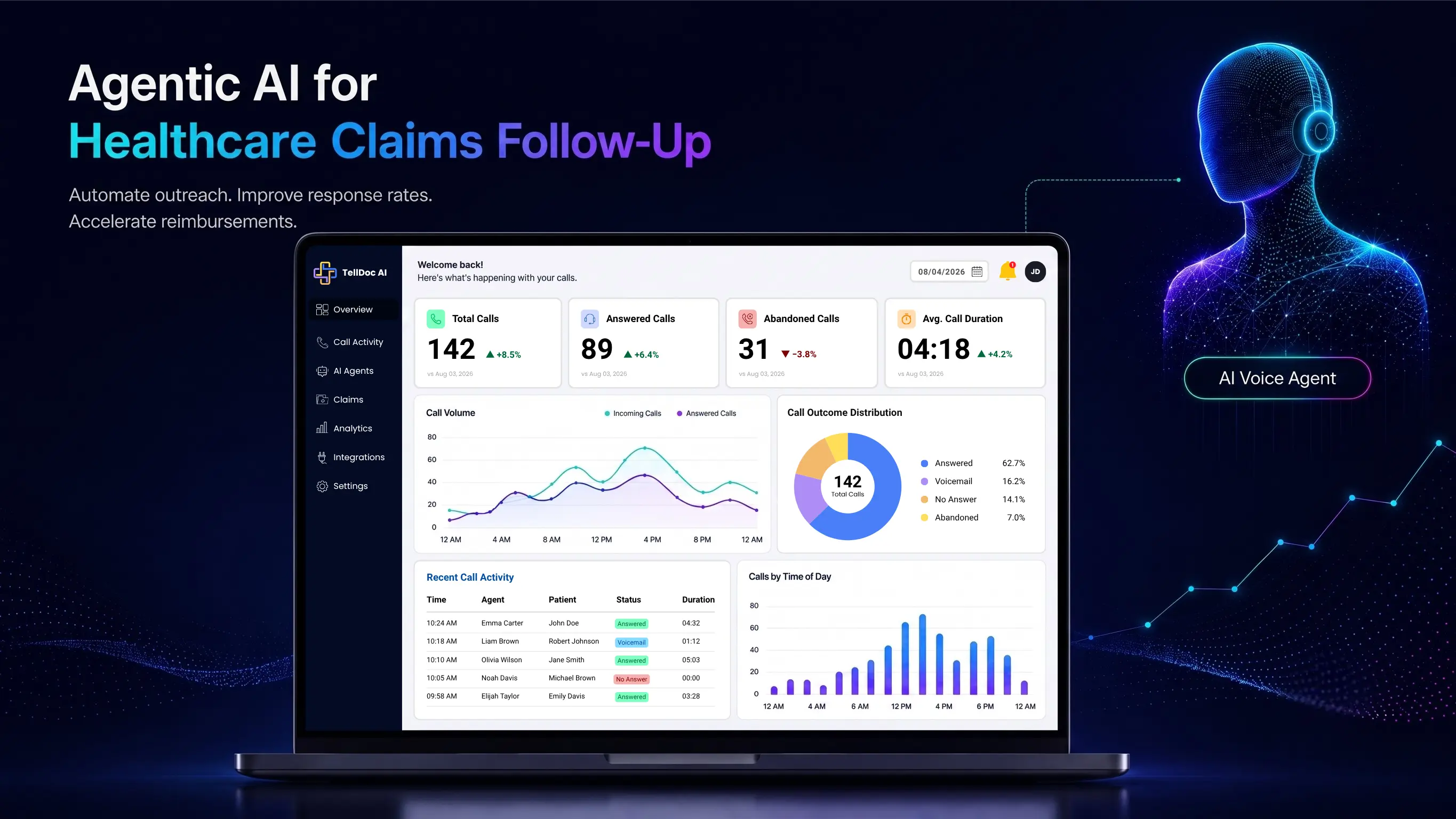
Trigma designed and built exactly this kind of system for a US-based healthcare revenue cycle management company. The AI voice agent places outbound calls to payers, holds real-time conversations, and captures claim status, denial reasons, and authorization details, with escalation to a human specialist for cases outside its scope. The platform runs calls in parallel at scale, with a unified dashboard giving the operations team live visibility into every call, batch, and outcome.
The full breakdown of the problem, the architecture, and the results is documented in the case study:
How Trigma Helps Healthcare and RCM Organizations Implement This
Trigma works as a technology and development partner for healthcare organizations and RCM companies integrating agentic AI into claims operations. That can mean building a new voice agent from the ground up, integrating one into an existing EHR or practice management system, or extending an existing automation stack with agentic capabilities for denials, eligibility checks, or credentialing.
If your team is evaluating where to start, claim status follow-up is typically the highest-leverage first deployment. High call volume, well-defined structure, and a clear cost baseline to measure results against.
From there, the same architecture extends naturally into denials, prior auth, and credentialing.
FAQs
What is agentic AI in healthcare claims processing automation?
Agentic AI in healthcare claims processing automation uses AI agents that reason and act independently across documentation, coding, submission, and follow-up workflows, rather than just executing a fixed script. Instead of reacting to claims after something goes wrong, agentic AI works to prevent errors and revenue leakage before a claim gets denied.
How is agentic AI different from traditional claims automation or RPA?
Traditional automation and RPA follow static, pre-programmed rules. Agentic AI adapts dynamically, learning from payer behavior, denial patterns, and claim outcomes, which makes claims processing smarter over time, not just faster in the moment.
How does agentic AI reduce claim denials?
Agentic AI analyzes documentation quality, coding accuracy, and payer-specific rules to flag denial risk before a claim reaches adjudication. Instead of finding out about a problem after a denial letter arrives, the system intervenes early and corrects the kinds of issues that typically cause avoidable denials.
Can agentic AI integrate with existing EHR, billing, and practice management systems?
Yes. Agentic AI is built to integrate with EHRs, billing platforms, clearinghouses, and payer portals, including major systems like Epic, rather than replacing what a practice already runs on. Integration capability varies by platform, so it's worth confirming pre-built connectors exist for your specific EHR or PM system before committing to a vendor.
What compliance requirements apply to agentic AI voice agents handling claims calls?
Any vendor processing call audio or claims data needs a signed Business Associate Agreement (BAA) under HIPAA. In a multi-vendor stack, that requirement applies separately across each layer, speech-to-text, the reasoning engine, and text-to-speech, so it's worth verifying subcontractor coverage rather than accepting a general compliance label at face value.
How does speech recognition accuracy affect claims call outcomes?
Accuracy matters most on the details that drive downstream decisions: claim IDs, denial codes, and payer-specific terminology. If those are transcribed incorrectly, the structured data logged into your billing system will be wrong too. Testing accuracy against your own real call recordings, not just a vendor's headline accuracy number, is the more reliable way to evaluate this.
Is agentic AI suitable for specialty clinics and larger healthcare networks?
Yes. Agentic AI systems are configurable by specialty, payer mix, and care setting, which makes them workable both for a single specialty clinic and for a larger healthcare network running claims across multiple locations and payers.
How much latency is acceptable during a live claims call?
The practical threshold is the point where a payer representative starts talking over the system, since that's what makes a call feel broken rather than natural. A useful benchmark is keeping round-trip response latency under one second, and testing performance under realistic call load rather than relying on average-case latency alone.
Will agentic AI replace human claims and billing staff?
No. Agentic AI is built to take on the repetitive, high-volume part of claims follow-up, not replace the team handling it. The goal is freeing staff to focus on complex cases, payer negotiations, and exceptions that genuinely need human judgment, with the AI escalating anything it can't resolve on its own.
How quickly can a healthcare organization deploy an agentic AI voice agent for claims?
Deployment timelines typically range from a few weeks to a couple of months, depending on workflow complexity, the number of systems it needs to integrate with, and compliance validation requirements. A narrow first deployment, like claim status follow-up for a single payer, generally goes live faster than a broader rollout across denials, prior auth, and credentialing at once.